
Government Raises Petrol Tax Burden to Historic Levels
Pakistan’s fuel consumers are now facing a significantly heavier tax burden after the federal government sharply increased the petroleum levy on petrol and high-speed diesel. The latest revision has pushed the total tax component on petrol to Rs. 117.41 per liter, representing an increase of nearly 50 percent compared to the Rs. 78 per liter recorded in May 2025.
The major jump in petroleum taxation comes at a time when global oil prices remain relatively moderate compared to previous international energy crises. Despite some fluctuations in international crude markets, many consumers expected local fuel prices to remain stable or decline. Instead, the government introduced another major increase in taxes and levies, pushing retail fuel prices to new highs across the country.
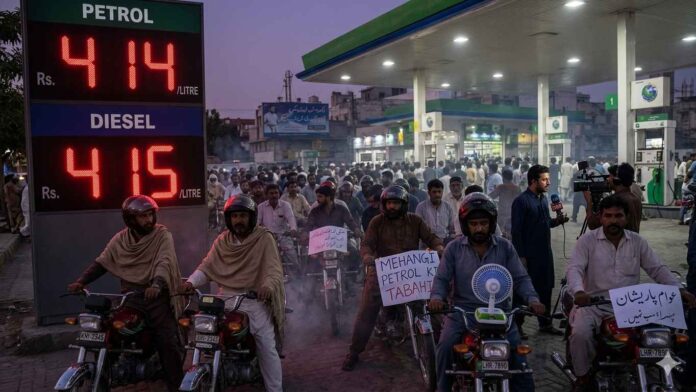
Under the latest notification effective from May 9, 2026, petrol prices increased by Rs. 14.92 per liter, taking the new rate to Rs. 414.78 per liter. High-speed diesel also became more expensive, with prices rising by Rs. 15 per liter to Rs. 414.58.
The announcement has triggered widespread concern among consumers, transporters, businesses, and economic analysts who fear the increase could fuel inflationary pressure across multiple sectors of the economy.
Petroleum Levy Emerges as Major Revenue Source
The petroleum levy has increasingly become one of the government’s most important non-tax revenue sources. Over the past several years, authorities have relied heavily on fuel taxation to strengthen fiscal revenues, reduce budget deficits, and meet financial targets.
According to official figures, the petroleum levy on petrol was raised by Rs. 13.91 per liter, climbing from Rs. 103.50 to record levels. High-speed diesel also saw a major increase in the levy, which rose from Rs. 28.69 per liter to Rs. 42.60.
The sharp increase indicates the government’s growing dependence on fuel-related charges to generate additional income. Unlike direct taxation measures, petroleum levies are often easier to implement because they are collected through fuel sales and passed directly to consumers.
Economic experts note that fuel taxation affects nearly every segment of society because transportation and energy costs are deeply linked to overall economic activity. Any increase in petrol or diesel prices eventually impacts food prices, industrial production costs, freight charges, public transportation fares, and household expenses.
While authorities may view fuel levies as a necessary fiscal measure, critics argue that the burden disproportionately affects middle-income and lower-income households already struggling with inflation and rising living costs.
Fuel Price Hike Raises Inflation Concerns
The latest increase in fuel prices is expected to intensify inflationary pressures throughout Pakistan’s economy. Petrol and diesel are essential components of transportation, logistics, agriculture, manufacturing, and commercial activity, meaning higher fuel costs usually spread quickly across supply chains.
Transport operators often raise fares following fuel price hikes, increasing travel expenses for commuters and businesses alike. Similarly, goods transported through road networks become more expensive due to higher freight charges, contributing to rising retail prices for food and consumer products.
Agricultural production may also face additional pressure because diesel is widely used in farming machinery, irrigation systems, and goods transportation. Increased fuel costs can eventually raise the prices of vegetables, grains, fruits, and other essential commodities.
Manufacturing industries that depend on transportation and energy inputs are also likely to experience higher operational expenses. Businesses facing rising costs may transfer those expenses to consumers, adding further pressure to inflation.
Economists warn that repeated fuel price hikes could weaken consumer purchasing power and reduce household spending capacity. Rising transportation and utility costs leave families with less disposable income for other needs, potentially slowing economic activity in certain sectors.
Consumers Face Growing Financial Pressure
For ordinary Pakistanis, the latest petrol price increase represents another financial challenge during a period already marked by inflation and rising living expenses. Many households rely heavily on motorcycles, cars, and public transportation for daily commuting, making fuel prices a direct concern for millions of citizens.
Motorcycle riders, ride-hailing drivers, delivery workers, transport operators, and small business owners are expected to feel the immediate impact of higher fuel prices. Commercial transport companies may also revise fare structures and freight charges in response to increased diesel costs.
Middle-income families are particularly vulnerable because transportation expenses form a significant part of monthly household budgets. Rising fuel prices can also indirectly increase education costs, healthcare expenses, grocery bills, and utility charges.
Public concern over fuel pricing has intensified as many consumers compare local petrol rates with international crude oil trends. Although global oil prices remain lower than peak crisis levels seen in previous years, local consumers continue facing rising costs due to taxation and currency-related pressures.
Many citizens believe the increasing share of taxes and levies within fuel prices has become a major factor driving retail petrol costs upward.
Why Fuel Taxes Continue Rising in Pakistan
The government’s decision to increase petroleum levies is closely connected to broader fiscal and economic challenges facing Pakistan. Authorities continue working to strengthen revenue collection, manage debt obligations, and stabilize the national economy under difficult financial conditions.
Petroleum levies provide the government with a relatively quick and stable source of income because fuel consumption remains consistently high across the country. Unlike certain taxes that depend heavily on economic growth or business activity, fuel levies generate regular revenue from daily consumer demand.
Economic analysts say fuel taxation also helps authorities manage fiscal deficits without immediately introducing politically sensitive direct tax reforms. However, the downside is that petroleum taxes affect all consumers regardless of income level, making them regressive in nature.
Pakistan’s dependence on imported petroleum products further complicates the issue. Since fuel imports are purchased in foreign currency, fluctuations in international oil prices and exchange rates directly influence local fuel pricing mechanisms.
Currency depreciation has also contributed to rising fuel costs over time. Even when international oil prices decline slightly, the weakening value of the rupee can offset potential relief for consumers.
Diesel Price Increase Could Hit Supply Chains Hard
The rise in high-speed diesel prices may have especially serious consequences for Pakistan’s transportation and logistics sectors. Diesel is widely used by trucks, buses, agricultural machinery, and industrial transport systems, making it a critical component of the country’s supply chain network.
Higher diesel prices often result in increased freight costs, which can raise prices for goods transported across cities and provinces. Food supply chains are particularly sensitive to diesel price fluctuations because agricultural products rely heavily on road transport for distribution.
Transporters and logistics companies may revise rates in response to rising operational expenses, potentially affecting wholesalers, retailers, and manufacturers nationwide.
Agriculture experts also warn that higher diesel costs could increase farming expenses during cultivation and harvesting seasons. Farmers already dealing with fertilizer prices, electricity costs, and climate-related challenges may face additional financial strain.
Businesses Concerned About Rising Operating Costs
Businesses across multiple sectors are expected to face higher operating expenses following the latest fuel adjustment. Commercial enterprises that rely on transportation, delivery services, logistics, or machinery operations may need to revise pricing structures to absorb increased costs.
Retailers, food suppliers, e-commerce companies, manufacturers, and construction firms are among the sectors likely to feel the impact of rising fuel prices. Increased transportation expenses can affect inventory movement, distribution efficiency, and overall profitability.
Small businesses may face particular difficulties because they often operate with limited financial flexibility. Rising operational costs combined with slower consumer spending could create additional pressure on already struggling enterprises.
Some business groups have called for broader economic reforms aimed at reducing dependence on indirect taxation and supporting sustainable economic growth. They argue that excessive reliance on fuel taxation can suppress business activity and weaken market confidence over time.
Global Oil Prices Remain Comparatively Stable
One of the most debated aspects of the latest fuel price increase is the fact that international oil markets are not currently experiencing the extreme volatility seen during earlier global crises.
Crude oil prices worldwide have remained comparatively moderate in recent months despite ongoing geopolitical uncertainty and market fluctuations. This has led many consumers and analysts to question why domestic fuel prices continue rising so sharply.
Economic observers point out that local fuel pricing in Pakistan depends not only on international crude prices but also on exchange rates, taxes, petroleum levies, inland freight costs, and dealer margins.
As a result, even when global oil prices soften, domestic consumers may not always receive proportional relief if taxes or currency pressures increase simultaneously.
Fuel Pricing Remains Politically Sensitive Issue
Petrol prices have long remained one of the most politically sensitive economic issues in Pakistan. Fuel costs directly affect daily life, public transportation, inflation, and business operations, making price changes highly visible to the public.
Governments often face criticism whenever petrol or diesel prices rise sharply, particularly during periods of economic hardship. Opposition parties, business groups, and consumer organizations frequently challenge fuel taxation policies and call for relief measures.
At the same time, authorities argue that difficult fiscal realities require tough economic decisions to maintain financial stability and meet national obligations.
The balancing act between revenue generation and public affordability continues to remain one of the government’s biggest economic challenges.
Future Outlook for Fuel Prices Remains Uncertain
The future direction of fuel prices in Pakistan will depend on several key factors, including international oil market trends, exchange rate stability, fiscal policy decisions, and domestic economic conditions.
If global oil prices rise again or the rupee weakens further against the dollar, local fuel prices could face additional upward pressure. Conversely, stronger currency stability or reductions in taxation could provide some relief to consumers.
For now, the latest increase has reinforced concerns about inflation, transportation costs, and household financial pressure across the country. Consumers, businesses, and investors are expected to continue monitoring fuel pricing decisions closely as energy costs remain one of the most influential drivers of economic activity in Pakistan.
The sharp rise in petroleum levies has once again highlighted the growing burden of indirect taxation on fuel consumers, even during periods when international oil prices remain comparatively manageable.
Read More
Gold Rate Drops Further in Pakistan During Ongoing Price Correction