
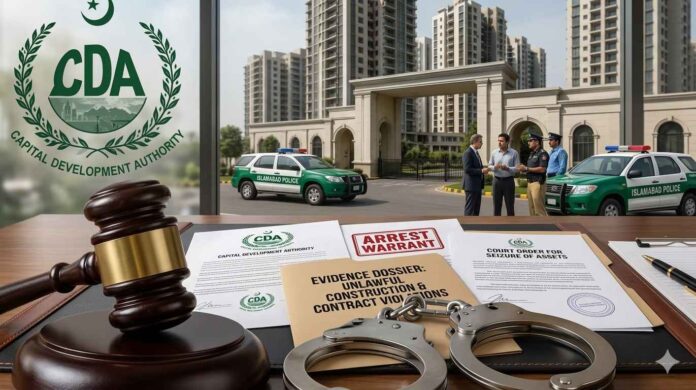

Court Takes Major Action Against Housing Society Operators in Islamabad
A court in Islamabad has ordered a major crackdown on the operators of 16 housing societies over alleged non-payment of dues amounting to nearly Rs. 1.8 billion owed to the Capital Development Authority. The latest development marks a significant escalation in regulatory action against private housing schemes operating in and around the federal capital.
The court issued arrest warrants for the operators after authorities claimed the housing societies failed to clear outstanding liabilities related to extension charges, commercialization fees, and other financial obligations payable to the civic authority. The decision reflects growing pressure on real estate developers and housing scheme managements to comply with legal and financial requirements set by regulators.
Senior Special Magistrate Sardar Mohammad Asif directed the relevant Station House Officers to arrest the operators and present them before the court on May 14. The order came after the Capital Development Authority’s Housing Directorate reportedly referred the matter to the court for legal action following repeated non-compliance by the housing societies.
The case has attracted widespread attention within Islamabad’s real estate sector, where concerns over regulatory enforcement, unauthorized developments, pending approvals, and unpaid dues have become increasingly prominent in recent years.
Housing Sector Faces Intensified Regulatory Oversight
The action against the 16 housing societies signals a broader trend of stricter oversight within Islamabad’s rapidly expanding real estate market. Authorities have increasingly focused on ensuring that housing schemes comply with development regulations, financial obligations, and approved planning requirements.
Over the years, the federal capital and surrounding areas have witnessed a major increase in private housing developments as demand for residential and commercial properties continued to rise. However, concerns have also emerged regarding unauthorized projects, delayed approvals, illegal commercialization, and disputes over land ownership and development permissions.
Regulatory authorities have repeatedly warned housing societies against violating planning rules or failing to meet financial commitments. Outstanding dues related to extension fees, commercialization charges, development permits, and other regulatory payments have become a major issue in several ongoing disputes between developers and authorities.
Officials believe stronger enforcement measures are necessary to maintain order within the real estate sector and protect public interests, particularly in cases where housing societies continue operating despite unresolved legal or financial issues.
Unpaid Dues Become Growing Concern for Authorities
The alleged non-payment of Rs. 1.8 billion in dues represents one of the larger financial disputes involving housing societies in Islamabad in recent months. Authorities argue that unpaid fees negatively affect urban planning, infrastructure development, and administrative operations managed by the Capital Development Authority.
Extension fees and commercialization charges are considered essential components of regulatory compliance for private housing schemes. These payments help fund infrastructure services, urban development planning, road networks, utilities, and civic facilities required to support expanding residential areas.
When housing societies fail to clear dues, authorities often face difficulties in implementing development projects and maintaining organized urban growth. Officials say delayed payments also create administrative complications and weaken regulatory discipline within the property sector.
The growing backlog of unpaid charges has prompted stricter action against developers accused of violating agreements or delaying settlements for extended periods.
Real Estate Sector Under Pressure
The Islamabad real estate market has experienced rapid growth over the past decade, with dozens of new housing projects launched to meet rising demand for residential properties. Investors, overseas Pakistanis, and middle-income families have increasingly turned toward private housing schemes for long-term investment and home ownership opportunities.
However, the sector has also faced recurring controversies involving legal disputes, approval delays, unauthorized advertisements, and regulatory violations. Buyers often express concerns regarding project transparency, possession delays, documentation issues, and infrastructure development commitments.
Authorities have intensified monitoring efforts to ensure housing societies fulfill legal requirements before selling plots or expanding commercial activities. Regulatory agencies believe stricter oversight is essential to restore public confidence and improve accountability within the sector.
The latest court action could send a strong signal to developers that non-compliance with regulatory obligations may lead to serious legal consequences.
Impact on Property Investors and Buyers
The crackdown on housing societies may create uncertainty among investors and plot buyers associated with the affected projects. Legal disputes involving developers can sometimes delay development work, possession schedules, transfer processes, and approval procedures.
Real estate investors often closely monitor regulatory developments because court cases and enforcement actions can influence market sentiment and property values. Buyers generally prefer projects with clear legal standing and approved documentation to minimize future risks.
Experts say stronger enforcement may ultimately benefit genuine investors by improving transparency and reducing irregularities within the housing sector. However, ongoing legal disputes can temporarily affect confidence, especially among buyers already concerned about project reliability.
Many property buyers have called for greater regulatory transparency and stronger consumer protection mechanisms to ensure developers fulfill commitments and comply with approved regulations.
Commercialization Fees Remain Key Issue
Commercialization charges have emerged as a major source of disputes between authorities and housing societies in Islamabad. These fees are typically imposed when residential properties or areas are converted into commercial use or when developers seek approval for commercial activities within housing projects.
Authorities argue that commercialization must remain regulated to maintain urban planning standards, traffic management, infrastructure balance, and environmental considerations. Uncontrolled commercial expansion can place pressure on roads, utilities, parking systems, and public services.
Housing societies often seek commercial permissions to increase project profitability and meet growing demand for business spaces within residential communities. However, disputes may arise when commercialization activities proceed without proper approvals or required fee payments.
The current case highlights the growing importance of commercialization regulation within Islamabad’s evolving urban landscape.
Urban Expansion Creates Regulatory Challenges
Islamabad’s rapid urban expansion has created significant administrative and planning challenges for authorities responsible for managing the city’s growth. Increasing population pressure, rising housing demand, and expanding commercial activity have accelerated the development of private housing schemes in surrounding areas.
Managing this growth requires careful coordination between developers, regulators, infrastructure providers, and local authorities. Issues such as zoning compliance, land use planning, road connectivity, utility services, environmental protection, and financial accountability have become increasingly complex.
Urban experts say weak enforcement in the past allowed some housing projects to proceed without complete approvals or proper compliance measures. As a result, authorities are now attempting to strengthen oversight mechanisms and enforce stricter standards across the sector.
The legal action against housing societies reflects broader efforts to improve urban governance and ensure more organized development within the capital region.
Authorities Aim to Strengthen Compliance
Regulatory officials believe that stronger legal enforcement will encourage greater compliance among developers operating in Islamabad’s real estate sector. Authorities have repeatedly emphasized the importance of timely fee payments, approved development plans, and adherence to zoning regulations.
The court’s decision to issue arrest warrants demonstrates the seriousness of the allegations and the growing willingness of authorities to pursue legal action against defaulters.
Officials argue that consistent enforcement is necessary to discourage future violations and ensure all housing societies operate under the same regulatory framework. Failure to take action against defaulters could weaken institutional authority and encourage further non-compliance within the sector.
Many analysts believe the government may continue intensifying enforcement efforts against unauthorized developments and financial defaulters in the coming months.
Housing Sector Plays Major Role in Economy
The real estate and housing sector remains one of Pakistan’s most important economic industries, contributing significantly to employment, construction activity, investment flows, and related businesses. Housing developments support demand for cement, steel, electrical equipment, labor services, and construction materials.
Private housing societies have become particularly popular in Islamabad and surrounding regions due to increasing urbanization and growing demand for secure residential communities.
However, the sector’s rapid expansion has also increased the need for effective regulation and accountability. Property disputes, unauthorized schemes, and delayed development projects can undermine investor confidence and create long-term administrative challenges.
Experts say sustainable growth in the housing sector depends on stronger legal compliance, transparent governance, and improved coordination between developers and regulatory authorities.
Legal Proceedings Expected to Continue
The court has directed law enforcement authorities to arrest the operators of the housing societies and produce them before the court on May 14. Legal proceedings are expected to continue as authorities pursue recovery of outstanding dues and examine the extent of alleged violations.
The case may also prompt closer scrutiny of other housing schemes operating in Islamabad and nearby areas. Regulatory agencies could intensify audits, fee recovery efforts, and compliance inspections across the sector.
Real estate stakeholders are likely to monitor the outcome closely because the case may influence future regulatory policies and enforcement practices affecting housing developers throughout the capital region.
Investors Urged to Verify Legal Status of Housing Projects
The latest developments have once again highlighted the importance of verifying the legal and regulatory status of housing societies before making property investments. Real estate experts advise buyers to carefully review approvals, ownership records, development permissions, and payment histories associated with housing projects.
Consumers are increasingly encouraged to rely on officially approved projects that comply with development regulations and maintain transparent documentation practices.
Legal experts say stronger awareness among investors can help reduce the risks associated with unauthorized or financially troubled housing schemes.
As Islamabad’s real estate market continues evolving, regulatory oversight is expected to play an even larger role in shaping the future of housing development within the federal capital. The latest court action against 16 housing societies represents another major step in the ongoing effort to enforce accountability, recover outstanding dues, and strengthen governance within Pakistan’s rapidly growing property sector.
Read More
Pakistanis Now Paying 50% More Petrol Tax Despite Global Oil Price Relief


