
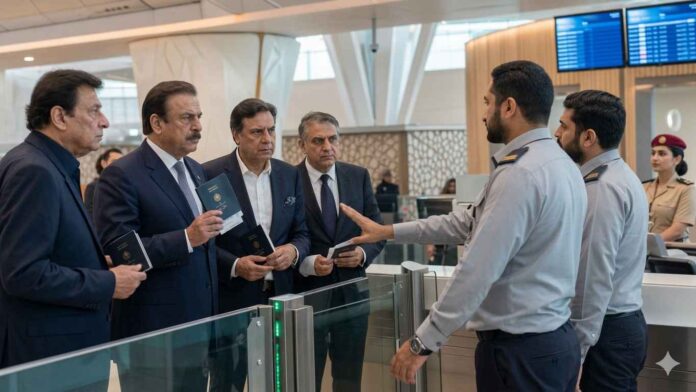

Concerns over the treatment of Pakistani official passport holders during international travel have come under the spotlight after lawmakers raised the issue during a parliamentary committee meeting focused on interior affairs. Members of the committee expressed frustration over reports that parliamentarians, government officials, and even diplomats have faced difficulties while traveling through airports in the United Arab Emirates despite carrying official passports.
The issue has sparked debate about international travel protocols, diplomatic relations, immigration screening procedures, and the treatment of holders of official travel documents. Several lawmakers argued that the growing number of complaints indicates a broader problem that requires immediate attention through diplomatic engagement and policy coordination.
The discussion comes at a time when immigration authorities around the world are strengthening security measures, increasing passenger verification processes, and implementing stricter travel compliance standards. While these measures are generally aimed at improving border security and preventing document fraud, concerns have emerged regarding their impact on legitimate travelers carrying official government-issued passports.
The parliamentary debate reflects a broader concern about ensuring that public representatives and government officials can perform their duties without facing unnecessary obstacles while traveling abroad.
Growing Concerns About Travel Delays and Airport Offloading
One of the primary issues raised during the committee meeting was the reported increase in cases involving Pakistani parliamentarians and officials being stopped, questioned, or delayed at foreign airports.
Lawmakers highlighted instances in which travelers carrying official passports reportedly faced additional scrutiny despite possessing valid travel documentation. According to committee members, such incidents have caused inconvenience and raised questions regarding the status and recognition of official travel documents.
Many lawmakers expressed concern that the situation could affect not only individual travelers but also the broader image of Pakistan’s official institutions. They argued that elected representatives and government officials traveling on official assignments should not face avoidable complications when fulfilling diplomatic, parliamentary, or governmental responsibilities.
Committee members emphasized that any issues involving official passport holders should be addressed promptly to ensure smooth international mobility and maintain confidence in the country’s travel documentation system.
The concerns raised during the meeting suggest that travel-related difficulties have become significant enough to attract attention at the highest levels of government oversight.
Understanding the Role of Official Passports
Official passports, often referred to as blue passports in Pakistan, are issued to government officials, parliamentarians, and certain public servants for official travel purposes.
These passports differ from ordinary passports because they are intended to facilitate travel undertaken in connection with governmental duties. While they do not provide the same privileges as diplomatic passports, they are generally recognized as official government travel documents and are often accompanied by specific travel protocols.
The purpose of issuing official passports is to streamline travel arrangements for individuals engaged in official state business. Holders frequently participate in international conferences, parliamentary exchanges, diplomatic engagements, trade missions, and government-related activities.
Because of their official status, many travelers expect a smoother experience during immigration and security procedures. However, modern border security practices increasingly focus on individual verification and risk assessment rather than relying solely on passport categories.
This shift has led to situations where even official passport holders may be subject to additional checks depending on prevailing security requirements and immigration policies.
Parliamentarians Call for Formal Resolution
During the committee meeting, lawmakers urged the government to engage directly with foreign authorities to resolve the issue.
Several members stressed the importance of ensuring consistent treatment of Pakistani parliamentarians and their accompanying family members during international travel. They argued that uncertainty regarding travel procedures creates confusion and undermines confidence among those required to travel frequently for official purposes.
Committee members called for a structured diplomatic effort aimed at clarifying expectations, improving coordination, and preventing unnecessary disruptions in the future.
Many lawmakers emphasized that while security measures are important, there should also be mechanisms to ensure that legitimate travelers are not subjected to excessive inconvenience.
The discussion reflected a broader desire for greater transparency regarding how official passport holders are treated by foreign immigration systems and what steps can be taken to facilitate smoother travel experiences.
Questions Raised About International Travel Arrangements
The committee also examined whether any informal understandings or unofficial arrangements existed between Pakistani authorities and foreign immigration agencies.
Lawmakers sought clarification regarding the procedures used to address complaints and whether specific agreements governed the treatment of official passport holders abroad.
Government representatives informed the committee that communication with foreign authorities is conducted through established diplomatic and official channels rather than through informal mechanisms.
Officials explained that travel-related concerns are generally addressed through coordination involving relevant ministries, embassies, and diplomatic missions. These channels are designed to facilitate communication and resolve issues affecting citizens and government representatives traveling internationally.
The clarification aimed to reassure lawmakers that concerns regarding official travel receive appropriate attention and are managed within established diplomatic frameworks.
The Impact of Enhanced Global Immigration Controls
The concerns raised by lawmakers must also be viewed within the context of changing global immigration practices.
Over the past decade, countries around the world have significantly strengthened border security procedures. Enhanced screening technologies, biometric verification systems, data-sharing arrangements, and risk-based passenger assessments have become increasingly common.
Airports now conduct more detailed checks on travelers regardless of nationality or passport category. Immigration officers often review travel histories, visa records, itinerary details, and other factors when assessing passengers.
These developments reflect broader international efforts to combat document fraud, illegal migration, human trafficking, and other forms of transnational crime.
As a result, even travelers carrying official or diplomatic documentation may occasionally encounter additional scrutiny depending on the circumstances of their travel.
While these measures are intended to enhance security, they can also create challenges for legitimate travelers who expect expedited processing based on their official status.
Concerns Over Misuse of Official and Diplomatic Passports
Another important issue discussed during the committee meeting involved allegations regarding the misuse of official and diplomatic travel documents.
Immigration authorities informed lawmakers that instances of suspicious travel activity involving holders of official passports had been identified at various international airports. According to officials, some cases involved irregular travel records, unusual travel patterns, or concerns regarding the use of government-issued travel documents.
Authorities stressed that maintaining the credibility of official passports requires strict oversight and enforcement measures.
Any misuse of such documents can have serious consequences, including increased scrutiny for legitimate travelers and potential damage to the international reputation of the passport system.
The issue highlights the importance of ensuring that official travel documents are used exclusively for authorized purposes and in accordance with established regulations.
Government officials indicated that monitoring efforts continue to identify and address any instances of abuse or misuse.
Balancing Security and Travel Facilitation
The debate surrounding official passport holders underscores a broader challenge facing governments worldwide: balancing security requirements with travel facilitation.
On one hand, immigration authorities must maintain robust screening procedures to protect national security and prevent unlawful activities. On the other hand, legitimate travelers expect efficient and predictable processing when crossing international borders.
Finding the right balance requires close cooperation between governments, airlines, immigration agencies, and diplomatic missions.
Travel facilitation initiatives often involve information sharing, improved communication channels, and enhanced traveler awareness. These measures can help reduce misunderstandings and minimize disruptions while preserving necessary security standards.
For official passport holders, effective coordination becomes particularly important because many travel on tight schedules related to governmental responsibilities and international engagements.
Diplomatic Channels Expected to Play a Key Role
Government representatives assured lawmakers that diplomatic channels would be utilized to address concerns regarding the treatment of Pakistani official passport holders.
Diplomatic engagement remains one of the most effective tools for resolving travel-related issues between countries. Through embassies, consulates, and foreign ministries, governments can communicate concerns, seek clarifications, and negotiate solutions that benefit travelers from both sides.
Officials indicated that discussions with relevant foreign authorities would continue with the aim of improving travel facilitation and ensuring that legitimate concerns are addressed appropriately.
Such engagement may involve reviewing existing procedures, sharing information regarding travel documentation standards, and exploring ways to enhance cooperation on immigration matters.
Diplomatic efforts are often critical in maintaining positive bilateral relations and ensuring that practical issues affecting citizens and officials are resolved efficiently.
Implications for International Mobility
The issue has broader implications beyond parliamentarians and government officials.
Travel experiences involving official passport holders often attract public attention because they can reflect broader trends in international mobility and border management. Any increase in travel restrictions or screening measures may influence perceptions regarding visa policies, immigration procedures, and bilateral relations.
For Pakistan, ensuring smooth international mobility remains important not only for government representatives but also for business leaders, professionals, students, and ordinary citizens traveling abroad.
Efforts to strengthen passport security, improve document integrity, and enhance international cooperation can contribute to greater confidence in the country’s travel documentation system.
At the same time, continued dialogue with foreign partners remains essential for addressing concerns and facilitating lawful travel.
Strengthening Confidence in Official Travel Documents
One of the key lessons emerging from the parliamentary discussion is the importance of preserving confidence in official travel documents.
Official passports serve as an important tool for government representatives engaged in international activities. Their effectiveness depends not only on the quality of the documents themselves but also on the trust and recognition they receive from foreign authorities.
Maintaining that confidence requires ongoing efforts to prevent misuse, strengthen verification systems, and ensure compliance with international standards.
Governments worldwide continue to invest in secure passport technologies, biometric identification systems, and information-sharing frameworks designed to enhance document integrity and reduce fraud.
These initiatives help protect legitimate travelers while supporting broader security objectives.
Government Pledges Continued Engagement
The parliamentary committee concluded its discussion with assurances from government representatives that the matter would remain a priority.
Officials reiterated their commitment to engaging with foreign counterparts, addressing concerns raised by lawmakers, and ensuring that official passport holders receive appropriate facilitation during international travel.
At the same time, authorities emphasized the need to maintain vigilance against any misuse of official travel documents, recognizing that document integrity is essential for preserving international trust and cooperation.
The issue highlights the evolving nature of international travel, where security considerations, diplomatic relations, and traveler facilitation must be carefully balanced. As governments continue to adapt to changing global realities, effective communication and collaboration will remain critical to ensuring smooth and secure travel experiences for all legitimate travelers.
The discussions in parliament have brought renewed attention to these challenges and underscored the importance of proactive diplomatic engagement in addressing concerns affecting Pakistani officials traveling abroad. Moving forward, both domestic authorities and international partners are expected to work closely together to improve travel procedures, strengthen cooperation, and ensure that official passport holders can carry out their responsibilities with greater ease and confidence.
Read More
FIA Says Some Pakistanis Are Using Study Visas as a Route to Europe and Africa


