

Islamabad: Zubair Kasuri: Pakistan’s policy of promoting local mobile phone manufacturing and assembly through tax incentives and other concessions was introduced to reduce dependence on imports, strengthen domestic manufacturing, and make smartphones more affordable for consumers. However, a sharp increase in mobile phone prices over the past few months has raised fresh questions about whether these policy objectives are being achieved.
According to available official data, the Pakistan Telecommunication Authority (PTA) has licensed 36 mobile phone manufacturing and assembly companies operating in the country. These include international and local brands such as Samsung, Xiaomi, Redmi, Vivo, Oppo, Realme, TECNO, Infinix, itel, Nokia, VGO TEL, QMobile, G’Five and several others.
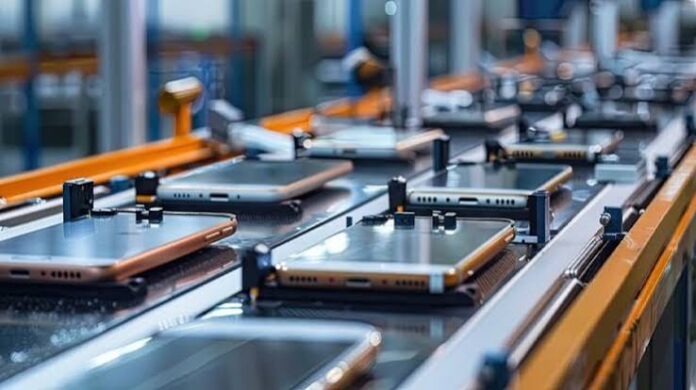
PTA data shows that during 2025, more than 30.2 million mobile phones were locally manufactured or assembled in Pakistan, while imports of completely built units (CBUs) stood at approximately 2.37 million. More than 15.6 million smartphones were assembled locally, and around 95 percent of all mobile phones sold in the country were supplied through local manufacturing and assembly.
Despite this significant local production capacity, prices of several smartphone models have increased sharply in recent months. Market surveys indicate that some handsets previously selling for around Rs25,000 are now being offered at Rs45,000 to Rs50,000, with several other models also recording substantial price increases.
When contacted, representatives of various mobile phone manufacturers and assemblers attributed the increase to higher global prices of memory chips and other electronic components, saying that rising production costs had forced almost all major brands to revise their prices upward rather than a single company acting independently.
Available records also indicate that the government’s incentives have helped expand Pakistan’s local manufacturing base and significantly reduce dependence on imported finished handsets. However, despite record local production and lower reliance on imports, consumers have yet to experience the expected benefit of lower retail prices.
PTA’s latest annual report states that Pakistan now has more than 200 million telecom subscriptions and over 150 million broadband subscribers, making it one of the region’s largest mobile markets. Against this backdrop, the continued rise in handset prices has intensified scrutiny of pricing trends, production costs, and the overall effectiveness of Pakistan’s local mobile manufacturing policy.