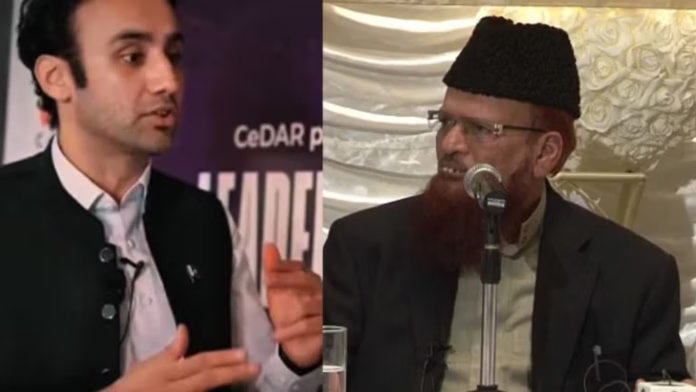

Chairman of the Pakistan Virtual Assets Regulatory Authority (PVARA), Bilal Bin Saqib, met with renowned Islamic scholar Mufti Muhammad Taqi Usmani on Saturday to discuss cryptocurrencies, blockchain technology, and other digital assets. The meeting took place after Mufti Taqi Usmani’s recent religious ruling, which declared cryptocurrency trading to be impermissible (haram) under Islamic law. His fatwa started a nationwide discussion about the future of digital assets and cryptocurrency in Pakistan.
The meeting was seen as an important step because the government is working on a regulatory framework for digital assets, while many people are also looking for guidance on whether these technologies are acceptable under Islamic principles.
After the meeting, Bilal Bin Saqib shared details on his official X (formerly Twitter) account. He said that both he and Mufti Taqi Usmani agreed that protecting the public should be the top priority. They discussed the need to safeguard Pakistanis from fraud, financial scams, exploitation, and other risks that can exist in the digital asset market.
Bilal explained that many people think all digital assets are the same, but this is not true. He said blockchain technology, cryptocurrencies, stablecoins, tokenized real-world assets, and other digital financial tools are different from each other and should not be treated as one single category.
According to him, blockchain is a technology that can be used in many industries, including banking, supply chains, healthcare, education, and government services. Similarly, stablecoins are digital currencies that are designed to maintain a stable value, while tokenized real-world assets represent physical assets such as property, gold, or other investments in digital form. Because these technologies have different purposes and uses, each one should be studied separately.
Bilal Bin Saqib said that before making any final decisions about these technologies, experts should carry out detailed technical reviews along with thorough Shariah examinations. He believes that understanding how each technology works is just as important as examining whether it complies with Islamic teachings.
He also said that the digital asset industry is changing very quickly around the world. New technologies and financial products are being introduced every year, making it important for Pakistan to continue studying these developments instead of making broad assumptions.
Bilal emphasized that the country should encourage regular discussions between Islamic scholars, government regulators, technology experts, financial professionals, and industry leaders. Such cooperation, he said, can help Pakistan develop balanced policies that protect the public while also supporting innovation and technological progress.
He added that future decisions about digital assets should be based on both Islamic principles and a clear understanding of how modern technologies work. This approach would help policymakers make informed decisions that are suitable for Pakistan’s financial system and religious values.
Despite the positive discussions, there was no indication that Mufti Muhammad Taqi Usmani had changed his earlier religious opinion. His previous fatwa, which declared cryptocurrency trading impermissible under Islamic law, remains unchanged.
The statement released after the meeting also did not mention any new fatwa or updated religious ruling regarding cryptocurrencies or other digital assets. Instead, the meeting appeared to focus on exchanging views and improving understanding between religious scholars and government officials.
The discussion comes at a time when Pakistan is exploring ways to regulate digital assets and blockchain technology while ensuring that financial innovation remains safe, transparent, and in line with national laws and Islamic values.
The meeting highlights the importance of ongoing dialogue between religious scholars, regulators, and technology experts as Pakistan considers the future of cryptocurrencies and other digital financial technologies. While no immediate policy or religious changes were announced, the discussions may help shape future regulations and encourage a more informed approach to the country’s growing digital asset sector.