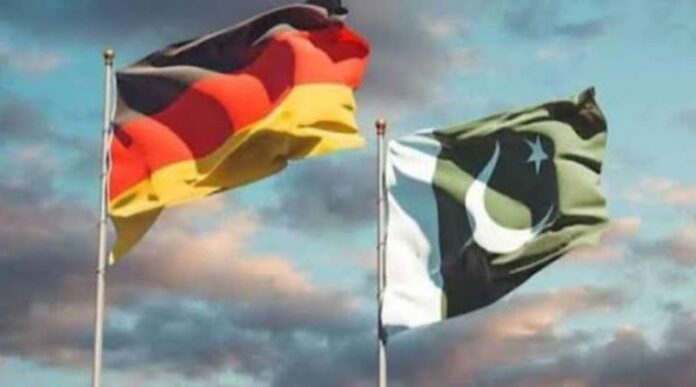

Germany is showing growing interest in expanding its business and economic relationship with Pakistan, as both countries look for new opportunities in trade, investment and cooperation between companies.
German Ambassador to Pakistan Ina Lepel recently expressed support for stronger economic links between the two countries during a meeting with Federal Finance Minister Muhammad Aurangzeb. The discussion came at an important time for Pakistan, as the government continues efforts to improve economic stability, attract foreign investment and create a better environment for businesses.
The meeting showed that Germany sees more room for cooperation with Pakistan. German companies are already present in the Pakistani market, but both sides believe there is potential to develop stronger links in several sectors.
The German ambassador also appreciated Pakistan’s recent economic progress and welcomed improvements in the country’s financial outlook. She noted that Pakistan had continued its reform efforts despite difficult regional conditions and wider geopolitical challenges.
Pakistan and Germany have maintained close relations for many years. Their relationship is not limited to diplomacy and development support, as trade and business have also become an important part of their partnership. Germany is Pakistan’s biggest trading partner within the European Union, and the two countries already have a strong base on which they can build further economic cooperation.
According to Germany’s Federal Foreign Office, bilateral trade between Pakistan and Germany reached around €3.3 billion in 2024. Pakistan mainly exports textiles and leather products to Germany, while Germany exports machinery, chemicals, electrical goods, vehicles and iron products to Pakistan.
Meeting Between Finance Minister and German Ambassador
During her meeting with Finance Minister Muhammad Aurangzeb, Ambassador Ina Lepel congratulated Pakistan on its recent sovereign credit rating upgrade by Moody’s.
The improved rating was seen as a positive sign for Pakistan’s economy. A better international credit rating can help improve confidence among foreign investors, lenders and international businesses. It may also make Pakistan appear more attractive to companies looking for new investment opportunities.
Lepel said the rating improvement reflected greater confidence in Pakistan’s economic outlook and the reforms being introduced by the government. She also appreciated Pakistan’s economic progress despite the difficult regional situation.
For Pakistan, improving international confidence is an important part of its wider economic strategy. The country has faced several economic problems in recent years, including pressure on foreign exchange reserves, high inflation, rising debt and challenges in attracting foreign investment.
The government is now trying to bring greater stability to the economy while also making changes that could support long-term growth.
Pakistan Highlights Economic Progress
During the meeting, Finance Minister Muhammad Aurangzeb discussed Pakistan’s improving economic position and the government’s plans for the future.
He highlighted improvements in the country’s foreign exchange buffers and said the government was focused on maintaining financial discipline. He also stressed the importance of continuing economic reforms instead of stopping once temporary stability has been achieved.
The finance minister said Pakistan wanted to build on recent progress by improving its economic structure and creating a better environment for investors and businesses.
For foreign companies, economic stability is one of the most important factors when deciding where to invest. Businesses usually look at issues such as exchange rate stability, tax policies, government rules, access to foreign currency and the ease of starting and running a business.
Pakistan is therefore trying to show that it is working towards a more stable and predictable business environment.
Aurangzeb also stressed the importance of policy continuity. This means that major economic and business policies should remain consistent instead of changing frequently. Long-term investors generally prefer countries where government policies are clear and predictable.
Pakistan also wants to reduce unnecessary difficulties for businesses. Easier business procedures, faster government approvals and better coordination between institutions could help attract more foreign companies.
More Opportunities for German Companies
One of the main points of discussion was the role of German multinational companies already working in Pakistan.
Germany is known around the world for its strong industrial sector, engineering skills, manufacturing quality and advanced technology. These areas could provide important opportunities for cooperation with Pakistan.
Pakistan needs greater investment in modern industry, machinery and technology to improve productivity and compete more effectively in international markets. Stronger partnerships with German companies could help Pakistani businesses gain access to modern technology and better production methods.
There is also potential for cooperation in areas such as renewable energy, engineering, manufacturing, technical education and industrial development.
Pakistan has a large and young population, while Germany has advanced technology and strong industrial experience. Supporters of stronger Pakistan-Germany ties believe that cooperation between the two countries could benefit both sides.
Pakistan can offer a large market, a growing workforce and access to regional opportunities. Germany, meanwhile, can provide advanced technology, industrial knowledge and business experience.
This kind of partnership could become especially useful if both countries focus on long-term business relationships rather than only buying and selling goods.
Recent discussions between Pakistani and German business groups have also pointed towards greater cooperation in technology, engineering, manufacturing and technical education. Business leaders have said stronger links could help Pakistani exporters move towards higher-value products and expand their access to European markets.
Need for Business Reforms
The finance minister also explained that Pakistan was working on reforms to make business operations easier.
Many foreign investors consider government procedures before making investment decisions. Complicated rules, delays and unclear policies can discourage companies from entering a market.
Pakistan wants to improve this situation through institutional reforms and better use of technology.
Aurangzeb stressed that creating a more business-friendly environment would be important for attracting greater foreign investment. The government wants to reduce barriers and make it easier for companies to operate.
For Pakistan, attracting investment from countries such as Germany could bring benefits beyond money. Foreign investment can also bring modern technology, new management methods, training opportunities and better connections with global markets.
German investment could also support local companies through partnerships and joint projects. Pakistani firms may benefit by working with international companies and learning from their experience in manufacturing, technology and business management.
Focus on FBR Digitalisation
Another important topic discussed during the meeting was the digitalisation of Pakistan’s tax system.
The finance minister briefed the German ambassador on efforts to modernise the Federal Board of Revenue. Pakistan has been working to use more technology in tax administration.
Digital systems can help improve transparency, reduce unnecessary delays and make tax collection more efficient. They can also reduce direct contact between taxpayers and officials, which may help improve accountability.
A stronger and more transparent tax system is important for both local and foreign businesses. Companies prefer clear rules and simple procedures. Digital reforms could make tax-related processes easier and reduce the time businesses spend dealing with government departments.
The government believes that technology can play an important role in improving public institutions. Better digital systems could support tax collection, increase transparency and improve efficiency.
For foreign investors, such reforms can send a positive message. International companies often examine the quality of institutions and government systems before making long-term investments.
Germany’s Important Role in Pakistan’s Trade
Germany already holds an important position in Pakistan’s international trade.
Pakistan’s textile and leather industries are among the main sectors exporting goods to the German market. At the same time, Pakistan imports machinery and industrial products from Germany.
However, many business leaders believe that the current level of trade does not fully reflect the potential between the two countries.
Pakistan has several industries that could increase their exports to Germany and other European markets. These include textiles, garments, sports goods, surgical instruments, leather products, information technology services and engineering products.
At the same time, Pakistan could benefit from more German investment in modern manufacturing and industrial technology.
Recent business events involving the German-Pakistan Chamber of Commerce and Industry have focused on bringing Pakistani and German companies closer together. In Sialkot, the chamber has worked with exporters and trade groups to create new business links and encourage greater cooperation.
There has also been growing discussion about helping smaller Pakistani companies enter European markets. Many small and medium-sized businesses in Pakistan produce quality goods but face difficulties in finding international buyers or meeting certain market requirements.
Stronger links with German business organisations could help such companies understand European market needs and develop better international connections.
Pakistan’s Export Potential
Pakistan’s exports remain an important source of foreign exchange. Increasing exports is necessary for reducing pressure on the country’s external finances.
Germany could become an even more important market for Pakistani products if trade relations continue to grow.
However, experts and business leaders believe Pakistan must also improve the quality and value of its exports.
Instead of focusing only on low-cost products, Pakistani companies are being encouraged to use better technology, improve quality and develop internationally recognised brands.
This approach could help Pakistani businesses earn more from global markets.
During recent meetings with business leaders, Pakistan’s Planning Minister Ahsan Iqbal encouraged exporters to adopt technology and move towards higher-value products. He said stronger cooperation with Germany could support Pakistan in areas such as engineering, manufacturing and technical education.
This is particularly important for export-focused cities such as Sialkot, Lahore, Karachi and Faisalabad.
Sialkot already has a strong international reputation for sports goods, surgical instruments and other manufactured products. With greater access to technology and European markets, local companies could have opportunities to further increase their exports.
Skills and Technical Education
Another area with strong potential for Pakistan-Germany cooperation is technical education.
Germany has a well-known system for vocational and technical training. Pakistan, meanwhile, needs more skilled workers in several sectors.
A stronger partnership could help Pakistan improve training programmes and prepare workers for modern industrial jobs.
Pakistan has a large young population, and creating jobs for young people is one of the country’s major economic challenges.
If young workers receive better technical training, they may have more opportunities in local industries and international markets.
German companies investing in Pakistan could also create training and skill-development opportunities for local workers.
This could help Pakistan improve productivity and build a more skilled workforce.
Stronger Ties Could Benefit Both Countries
The latest meeting between the German ambassador and Pakistan’s finance minister showed that both sides are interested in moving towards a stronger economic partnership.
Germany appears ready to explore more opportunities for business cooperation, while Pakistan wants to use its recent economic stability as a foundation for attracting investment.
The success of this relationship will depend on Pakistan’s ability to continue reforms, maintain policy stability and improve the overall business environment.
Foreign investors need confidence that economic policies will remain consistent and that business rules will be clear.
Pakistan will also need to continue improving its institutions, tax system and investment procedures.
At the same time, stronger connections between Pakistani and German companies could create new opportunities in manufacturing, technology, trade, education and other important sectors.
Invitation to Asia-Pacific Conference
During the meeting, Ambassador Ina Lepel also invited Finance Minister Muhammad Aurangzeb to attend the 19th Asia-Pacific Conference of German Business, which is expected to be held in Seoul later this year.
The event could provide another opportunity for Pakistan to present its economic potential to international businesses and investors.
Such international platforms are important because they allow government officials and business leaders to meet, discuss opportunities and develop new partnerships.
For Pakistan, participation in such events can help improve its image as a destination for investment and business.
Looking Ahead
Germany’s interest in expanding business relations with Pakistan is a positive sign for the country’s economy.
Pakistan has strong potential because of its large population, young workforce, growing technology sector and important location.
However, turning this potential into real investment and business growth will require continued effort.
The government will need to maintain economic stability, continue reforms and ensure that investors receive clear and consistent policies.
If Pakistan successfully improves its business environment, German companies could find more reasons to invest and expand their operations in the country.
Stronger Pakistan-Germany business relations could also help Pakistani companies gain access to advanced technology and wider European markets.
The latest discussions show that both countries see opportunities for closer cooperation. Germany is looking to deepen its business links with Pakistan, while Islamabad is trying to show that economic reforms are creating a stronger base for future investment.
If both sides continue working together, the relationship could grow beyond traditional trade and develop into a wider partnership based on investment, technology, skills and long-term business cooperation.
For Pakistan, stronger economic ties with Germany could support the country’s goal of increasing exports, attracting foreign investment and building a more competitive economy. For Germany, Pakistan offers a large market and opportunities for business expansion.
The coming months will show how these discussions turn into practical agreements and new investment. But one thing is clear: Pakistan and Germany have strong reasons to expand their economic relationship, and both countries appear interested in building a bigger and more active business partnership for the future.
Read Also: check