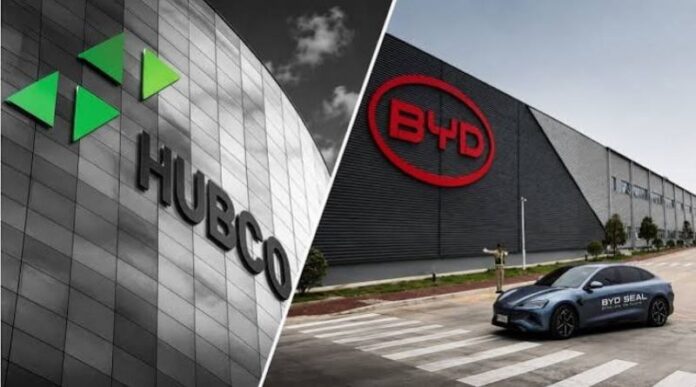

The Hub Power Company Limited (HUBC) has reported a strong financial performance for the fiscal year 2026, with its profit after tax reaching Rs. 48.6 billion, close to the Rs. 50 billion mark. The company’s yearly profit increased by 8 percent compared with Rs. 46 billion recorded in the previous fiscal year.
The improvement in HUBC’s earnings was supported by better contributions from its associate businesses, particularly Prime and the company’s involvement in BYD’s growing operations in Pakistan. The company also performed strongly in the final quarter of the fiscal year, helping it close FY26 on a positive note.
The latest results show that HUBC is continuing its move beyond its traditional power generation business. While some of its older power assets have faced pressure, the company’s investments in other businesses are becoming more important for its overall earnings.
Strong Finish in the Final Quarter
HUBC delivered an especially strong performance during the fourth quarter of FY26. The company’s profit after tax for the quarter rose to Rs. 16.5 billion.
This represented a 39 percent increase compared with the same quarter of the previous year. On a quarter-on-quarter basis, profit increased by 53 percent, showing a major improvement in the company’s performance during the final three months of the financial year.
The strong fourth-quarter result played an important role in lifting HUBC’s full-year profit to Rs. 48.6 billion.
One of the main reasons behind the better quarterly earnings was the higher contribution from the company’s associate businesses. HUBC’s share of profit from associates reached Rs. 13 billion during the fourth quarter, compared with Rs. 11 billion during the same period a year earlier.
According to market analysis, stronger contributions from BYD-related operations and Prime helped support this increase.
BYD Contribution Becomes More Important
HUBC’s connection with BYD has become an important part of its business growth strategy. The company is gradually expanding its presence in Pakistan’s new energy vehicle market through Mega Motor Company and related business arrangements.
The growing contribution from the BYD side of the business shows how HUBC is working to reduce its dependence on traditional electricity generation. As Pakistan’s market for electric vehicles and plug-in hybrid vehicles develops, the company appears to be positioning itself for new opportunities.
BYD has already started building its presence in Pakistan through the launch and sale of its vehicles. The company is also working on a local assembly facility near Karachi. The plant is expected to support the assembly of electric vehicles in Pakistan and increase local business activity in the sector.
Reports have indicated that the facility will have the capacity to produce around 25,000 vehicles annually when operating in two shifts.
For HUBC, this expansion is important because it creates another possible source of earnings outside the power sector.
Higher Gross Profit Supports Quarterly Earnings
Apart from better income from associates, HUBC also recorded improvement in its gross profit during the fourth quarter.
The company’s quarterly gross profit increased by 22 percent. This growth was mainly supported by a higher period-weighting factor for Lalpir Energy Limited, also known as LEL.
Lalpir Energy’s better operational contribution helped strengthen HUBC’s overall performance during the quarter. The higher gross profit gave further support to the company’s final quarterly earnings and added to the strong result for the full financial year.
The performance shows that even though HUBC is moving into new sectors, its existing energy-related businesses continue to play an important role in generating profits.
The company is trying to maintain a balance between its traditional power assets and its newer investments in electric vehicles, energy, mining and other areas.
Revenue Rises on Better Plant Utilisation
HUBC’s consolidated revenue increased by 10 percent year-on-year during the fourth quarter, reaching Rs. 20.5 billion.
The rise in revenue was mainly linked to better utilisation of several power plants.
Narowal Energy Limited, or NEL, recorded a major improvement in utilisation. The plant operated at a utilisation level of 17 percent during the fourth quarter of FY26, compared with only 3 percent in the same quarter of FY25.
China Power Hub Generation Company, or CHPGC, also operated at a higher utilisation level of 29 percent. Its performance was affected by disruptions and changes in seasonal electricity demand, but the higher utilisation still contributed to improved revenue.
Meanwhile, Thar Energy Limited and ThalNova Power Thar Private Limited continued to operate at high utilisation levels. Their utilisation rates stood at 83 percent and 79 percent, respectively.
Lalpir Energy Limited also showed a sharp improvement. Its utilisation increased to 75 percent during the fourth quarter of FY26, compared with 52 percent in the same quarter a year earlier.
The improved utilisation of these plants helped HUBC generate stronger revenue during the quarter.
Lower Finance Costs Provide Further Relief
Another major positive factor for HUBC was the decline in finance costs.
The company’s finance costs fell by 18 percent on a year-on-year basis during the fourth quarter. The reduction was supported by continued loan repayments related to CPEC investments.
Lower interest rates also helped reduce the company’s financing burden.
Finance costs can have a major impact on the profitability of companies that operate large power and infrastructure projects. Such businesses often require significant borrowing for construction and expansion.
Therefore, the fall in HUBC’s finance costs provided useful support to the company’s bottom line.
The continued repayment of loans has helped the company reduce some of its financial pressure. At the same time, lower interest rates have made borrowing costs more manageable.
This combination allowed HUBC to retain a larger share of its earnings as profit.
Lower Tax Rate Helps Profit Growth
The company’s earnings also received support from a lower effective tax rate during the final quarter.
HUBC’s effective tax rate stood at 1.4 percent in the fourth quarter of FY26. This was much lower than the 18.8 percent recorded during the same period of the previous year.
The lower tax rate was mainly because a large part of the company’s tax obligations had already been recognised in the previous quarter.
As a result, the tax burden during the fourth quarter was lower, which helped increase the company’s reported profit.
This was one of the reasons why HUBC was able to post a strong 39 percent year-on-year increase in quarterly profit.
Cash Dividend Announced for Shareholders
HUBC also announced a cash dividend of Rs. 5 per share for the quarter.
The dividend will be welcomed by shareholders, especially those who depend on regular income from their investments.
The company’s dividend income during the quarter also increased. It stood at Rs. 0.55 billion, compared with Rs. 0.42 billion during the same period of the previous year.
This provided additional support for the company’s ability to make payments to shareholders.
For investors, dividends remain an important part of the return received from shares. HUBC’s decision to announce a cash dividend shows that the company remains focused on providing value to its shareholders while also investing in new business opportunities.
The company’s investor information and financial disclosures are available through HUBCO’s official investor page and the Pakistan Stock Exchange’s HUBC profile.
HUBC Continues to Change Its Business Model
HUBC has traditionally been known as one of Pakistan’s major power generation companies. However, its business model is now changing.
Some of the company’s older power operations have faced pressure due to changes in power purchase agreements, tariff structures and lower contributions from legacy assets.
At the same time, HUBC has been expanding into new areas.
The company is increasing its involvement in electric and hybrid vehicles through BYD-related operations. It also has interests in energy, mining and other business sectors.
This shift is important for the company’s future.
In the past, HUBC depended more heavily on income from its major power plants. Now, associate companies and new investments are becoming a bigger part of its earnings.
Analysts have noted that income from associates, lower finance costs and diversification are helping support the company as its traditional power business goes through changes.
Electric Vehicle Market Offers New Opportunities
Pakistan’s electric vehicle market is still at an early stage, but it is expected to grow in the coming years.
Higher fuel prices and increasing interest in cleaner transport options have created more attention around electric and hybrid vehicles.
The government has also introduced measures to support the sector, including steps related to electric vehicle charging.
For HUBC, its link with BYD gives it an opportunity to benefit from this growing market.
BYD is one of the world’s major electric vehicle manufacturers, and its expansion in Pakistan could help create a strong new business segment for HUBC.
The company is not only focusing on vehicle sales. The wider ecosystem may also create opportunities in local assembly, charging infrastructure, maintenance and other related services.
HUBC has already been expanding the charging network through its green energy business and has installed fast chargers at different locations in Pakistan.
This shows that the company is looking beyond traditional power generation and trying to build a wider presence in the clean energy and transport sector.
Outlook Remains Focused on Growth and Diversification
HUBC’s FY26 performance shows that the company is making progress during a period of business change.
The full-year profit of Rs. 48.6 billion was higher than the previous year’s Rs. 46 billion, while the final quarter showed particularly strong momentum.
The biggest support came from stronger contributions from associate businesses, including the BYD-related business through Prime. Higher plant utilisation, improved gross profit, lower finance costs and a lower effective tax rate also helped strengthen the final result.
The company now faces the challenge of maintaining this growth in the future.
Traditional power generation may not provide the same level of growth as before. However, HUBC’s investments in electric vehicles and other sectors could create new sources of income.
The success of the BYD business in Pakistan will be closely watched by investors. If the demand for electric and hybrid vehicles continues to rise, HUBC could benefit from its early move into this market.
Final Thoughts
HUBC’s financial results for FY26 show a company that is successfully trying to adjust to a changing business environment.
Its profit after tax reached Rs. 48.6 billion, close to the Rs. 50 billion level, representing an 8 percent increase from the previous year.
The final quarter was especially strong, with profit rising to Rs. 16.5 billion. Better contributions from associates, particularly those linked to BYD and Prime, were among the key reasons behind the improvement.
Higher plant utilisation also helped increase revenue, while lower finance costs and a reduced tax burden supported the company’s bottom line.
The results suggest that HUBC’s future growth may increasingly depend on its ability to build successful new businesses outside its traditional power generation operations.
With BYD expanding its presence in Pakistan and the electric vehicle market showing potential for growth, HUBC appears to be developing a new source of earnings for the years ahead.
The company’s FY26 performance is therefore more than just a story about higher annual profit. It also highlights a wider change in HUBC’s business strategy as it moves towards a more diverse future.
Note: The article title rounds the full-year profit to Rs. 50 billion, while the reported profit after tax was Rs. 48.6 billion.
Read Also: check