Tuesday, February 17, 2026
Home Blog

Xiaomi 12 Series Redefines Flagship Category

0

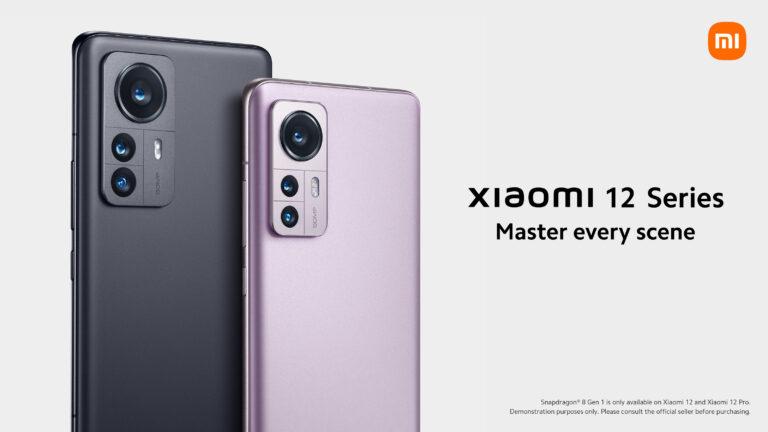
Xiaomi today announced the launch of the all-new flagship Xiaomi 12 Series for local markets, featuring two groundbreaking devices: Xiaomi 12 Pro and Xiaomi 12. Designed to empower users around the world with a cutting-edge videography studio and entertainment powerhouse, Xiaomi 12 Series delivers impressive advancements in Xiaomi’s AI algorithm, flagship processing power, and an all-round elevated experience. 

Capture cinematic shots at any time 

Xiaomi 12 Series enables users to record studio-quality shots no matter the scenario, be it challenging lighting conditions or moving objects. Both phones boast a pro-grade triple camera array for versatile shooting, starring a massive 50MP main wide angle camera, with 8K recording capabilities on both Xiaomi 12 Pro and Xiaomi 12.  Xiaomi 12 Pro stands out with its state-of-the-art triple 50MP array, which features a cutting-edge Sony IMX707 ultra-large main sensor. This sensor is capable of catching large amounts of light and empowers advanced imaging capabilities with faster focus speeds and increased color accuracy. Xiaomi 12 features a 13MP ultra-wide angle camera, along with a 5MP tele macro camera, for filming life from different perspectives.  

Beyond impressive hardware, Xiaomi 12 Pro and Xiaomi 12 also advance Xiaomi’s proprietary AI algorithms. These innovations make it easier than ever for users to record every moment the way they want to, even in low-light or moving subjects. Xiaomi ProFocus intelligently identifies and tracks objects, preventing blurring or out-of-focus shots of moving or veiled subjects. These advancements also include eye and face auto focus capabilities. Ultra Night Video uses Xiaomi’s proprietary algorithms to record video even under extreme low-light, meaning moody, atmospheric shots are clearer than ever.  

Available on both devices, One-click AI Cinema offers numerous creative options for show-stopping video editing, such as Parallel World, Freeze Frame Video, and Magic Zoom modes. 

Flagship processing, unprecedented performance and power-efficiency  

Flagship experience requires flagship performance. Xiaomi 12 Series features advanced Qualcomm® Snapdragon™ mobile platforms. Xiaomi 12 Pro and Xiaomi 12 boast a Snapdragon® 8 Gen 1 processor – Qualcomm’s most advanced mobile platform. Built on a 4nm process, this processor also boosts GPU graphic rendering capabilities by 30% and energy efficiency by 25% when compared to the previous generation. Both three devices come with UFS 3.1 exceptional loading and data transfer speeds, along with LPDDR5 RAM for memory speeds up to 6,400Mbps. For optimal product experience, Xiaomi 12 Series packs a high-performing cooling system, bolstered by a super-large vapor chamber and multiple layers of graphite to offer a leadingcooling capability. 

All-around elevated entertainment experiences 

Xiaomi 12 Series not only lets users capture every moment in exquisite detail, but also allows them to relive those moments in astonishing detail via an exceptional entertainment experience.  Both devices offer vivid viewing on an AMOLED Dot Display rated A+ by DisplayMate, and with TrueColor support. For added peace of mind, the display features scratch-resistant Corning® Gorilla® Glass Victus®, and supports Dolby Vision®, industry’s leading imaging technology that brings your content to life with vibrant color and details. Xiaomi 12 Series also supports HDR 10+. Xiaomi 12 Pro is SGS Eye Care Display Certified, showing care for users’ long-term visual health during marathon sessions.  

Meanwhile, Xiaomi 12 Pro redefines flagship display with incredibly smooth viewing, scrolling, swiping, and sliding. The device’s highly power-efficient 6.73-inch WQHD+ display leverages AdaptiveSync Pro to intelligently adjust dynamic LTPO display between 1Hz and 120Hz based on content. 

Xiaomi 12 delivers Xiaomi’s most colorful smartphone display to date, with more than 68 billion colors on 6.28-inch full-HD+ displays. Both feature 120Hz AdaptiveSync, for an impressively high-definition, vibrant, and flicker-free display that conveys every detail.  

 No cinematic experience is truly complete without pro-grade audio. Xiaomi 12 Series features SOUND BY Harman Kardon, and creates an immersive audio experience powered by Dolby Atmos®, delivering spatial sound with rich detail, clarity, and realism across all your favorite entertainment. Xiaomi 12 Pro’s quad speakers – in the form of two tweeters and two woofers – deliver clear details and cover an astounding range of sound. Xiaomi 12 delivers balanced stereo sound ideal for immersive gaming or video.  To optimize core user experience further, Xiaomi 12 Series incorporates MIUI 13, released globally earlier this year. The update includes faster storage, higher background process efficiency, smarter processing, and longer battery life. New features in the upgraded experience include Xiaomi’s proprietary Liquid Storage, Atomized Memory, Focused Algorithms, and Smart Balance. 

Next-generation charging 

Xiaomi 12 Series delivers pro-grade cinematic and entertainment experiences all day, the devices deliver next-level charging speed and safety.  

 Xiaomi 12 Pro features an incredibly fast 120W Xiaomi HyperCharge. With a 4,600mAh battery fully charged in just 18 minutes using Boost mode, Xiaomi 12 Pro delivers next-generation charging capabilities that keep up with user demands.  Xiaomi 12 fits a 4,500mAh battery into compact body designs. Xiaomi 12 Pro and Xiaomi 12 also support 50W wireless charging and 10W reverse charging.  Both leverage Xiaomi AdaptiveCharge, a smart charging algorithm that learns and adapts to charging habits, which prolongs battery life. 

Flagship capabilities packaged in an iconic design  

These portable pocket-sized studios fit comfortably in the palm of your hand thanks to Xiaomi 12 Series’ iconic and user-centered design. Slimmer high-capacity batteries and a narrower ridge gap save precious space within the device. Xiaomi 12 Pro’s 6.73-inch display is encased in a sleek middle frame with sophisticated 3D curves. Meanwhile, Xiaomi 12’s 6.28-inch display measures just 69.9mm in width and is accented by smooth curves for a perfect fit. Both devices are available in Gray, Purple, and Blue. 

Market Availability   

Xiaomi 12 Pro comes in one variant 12GB+256GB, and recommended retail price starts from PKR 208,999/-.

Xiaomi 12 comes in one variant, 12GB+256GB, and recommended retail price starts from PKR 179,999/-.

Purchase these devices and get a sweet bundle deal where you get a Mi Band 6 and a bag with the Xiaomi 12. Similarly with the Xiaomi 12 Pro, get a Mi Portable Bluetooth Speaker and a 10000mAh Mi Power Bank 3.  Available at top distributor partners such as Phonezo, Airlink, Smartlink etc. For those looking to purchase these online, we’ve news for you  too as these are also available on MiStore and Daraz. 

Quick Specs:

 Xiaomi 12Xiaomi 12 Pro
Display120Hz +  AMOLED DotDisplay120Hz 6.73” AMOLED Dot Display 
Rear Camera50MP main camera 13MP ultra-wide camera 2MP macro camera 5MP depth camera50MP wide angle, ultra-wide and tele macro camera
Front Camera32MP32MP in-display selfie camera
Dimension & Weight152.70mm x 69.90mm x 8.16mm – 180g163.60mm x 74.60mm x 8.16mm 205g
ProcessorSnapdragon ® 8 Gen 1Snapdragon ®r 8 Gen 1
Charging4500mAH – 67W charge4600mAH – 120W charge
Variant12GB + 256GB12GB + 256GB
Color AvailableGray, Purple & BlueGray, Purple & Blue

About Xiaomi Corporation  

Xiaomi Corporation was founded in April 2010 and listed on the Main Board of the Hong Kong Stock Exchange on July 9, 2018 (1810.HK). Xiaomi is a consumer electronics and smart manufacturing company with smartphones and smart hardware connected by an IoT platform at its core.  

Embracing our vision of “Make friends with users and be the coolest company in the users’ hearts”, Xiaomi continuously pursues innovations, high-quality user experience and operational efficiency. The company relentlessly builds amazing products with honest prices to let everyone in the world enjoy a better life through innovative technology.  

Xiaomi is one of the world’s leading smartphone companies. The company’s market share in terms of smartphone shipments ranked no. 3 globally in the third quarter of 2021. The company has also established the world’s leading consumer AIoT (AI+IoT) platform, more than 400 million smart devices connected to its platform as of September 30, 2021, excluding smartphones and laptops. Xiaomi products are present in more than 100 countries and regions around the world. In August 2021, the company made the Fortune Global 500 list for the third time, ranking 338th, up 84 places compared to 2020.  

Xiaomi is a constituent of the Hang Seng Index, Hang Seng China Enterprises Index, Hang Seng TECH Index and Hang Seng China 50 Index. 

To Get yours click here

TECNO to launch its new Spark phone in Pakistan soon

0

TECNO to launch its new Spark phone in Pakistan soon

After massive success in the Pakistani Mobile market, TECNO is rumored to be preparing for a new addition to its Spark series. The globally eminent smartphone brand TECNO has been working tirelessly in Pakistan for quite some time now. The brand has brought forward some great phones over the years with advanced technologies, pocket-friendly prices, and stylish designs. 

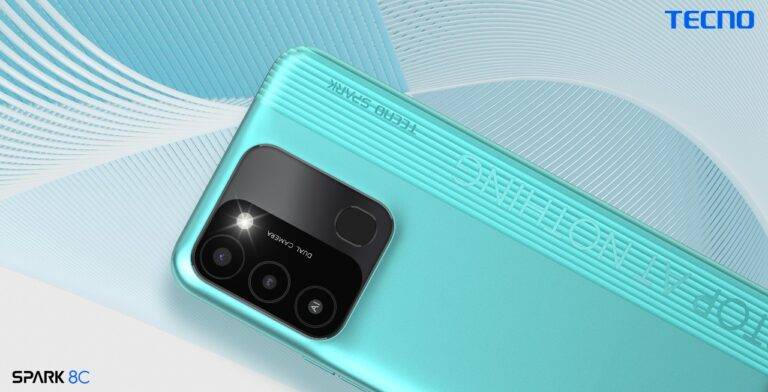
Spark is TECNO’s famous mid-range series, bringing you quality devices at lower prices. Spark 8C is an entry mobile that is expected to be around PKR 19,499 to PKR 22,999. The price is not confirmed yet but we are expecting it around this segment. The phone is going to be a stunner in this range with Stylish Design and great Battery.

According to sources, Spark 8C will be equipped with better memory and memory fusion features than any other phone in this range. Memory Fusion Technology is specially designed to channel RAM operations by using unused read-only memory (ROM). This means it can expand the memory of 4+128GB to 7+128GB and that of 3+64GB into 6+64GB maximum. The RAM can be updated or expanded from 3GB to 6GB and 4GB to 7GB depending on the variant. If this is true, then Spark 8C shall be the only smartphone to provide such an amazing feature with 128GB in such an affordable price range.

Moreover, the phone is anticipated to provide efficient performance with a powerful processor and big battery. The 90Hz refresh rate, great display, and handy body design will make it a user-friendly device. The phone is expected to launch somewhere in mid-March 2022. Furthermore, the phone is being assembled in Pakistan to make it economical and pocket-friendly for the local consumers. 

So, fingers crossed for this new Spark device to be soon launched in Pakistan. Stay tuned for more updates and much more about tech!

Jazz appoints Atyab Tahir as CEO JazzCash

0

Jazz appoints Atyab Tahir as CEO JazzCash

Jazz, Pakistan’s leading digital operator (part of VEON Group NASDAQ: VEON, Euronext Amsterdam: VEON), announces the appointment of Atyab Tahir as the CEO of JazzCash effective May 1 2022.

Atyab, currently serving as Country Manager MasterCard Pakistan & Afghanistan, has over two decades of international experience in banking and consulting. Atyab has also held senior positions at Fidelity Investments, HBL, Telenor Bank and easypaisa. He holds a BA from Dartmouth College and an MBA from Babson College.

Commenting on Atyab’s appointment Aamir Ibrahim, CEO, Jazz  said: “While mobile phones and payment solutions have accelerated financial inclusion in the country, a significant portion of Pakistan’s adult population remain unbanked. I am confident that under Atyab’s dynamic leadership JazzCash will help boost financial inclusion across the board through innovative and customer-centric products.”

JazzCash is at the forefront of Pakistan’s digital revolution processing more than 5 million transactions every day and accounting for almost 7% of Pakistan’s GDP. Our aim is to build a world-class fintech serving every single Pakistani, from youth, SMEs, freelancers, with a very strong focus on the unbanked and the underbanked. I look forward to joining the Jazz family and collaborating with our partners in the telecommunications and financial services sector to unlock the true potential of Digital Pakistan.” said Atyab.

A division of Jazz, JazzCash has grown rapidly to become a leader in the country’s marketplace for digital financial services. As shown in VEON Group’s FY21 results that were released on 28 February 2022, JazzCash has 15.2 million monthly active users (+24.9% YoY) and 130,800 monthly active merchants (up by 2.3 times YoY). 

Jazz appoints Atyab Tahir as CEO JazzCash.

vivo V23 5G — The Best in Camera, Technology, Performance and Appearance

0

Due to the constant development in the technology space for smartphones, there is always hype surrounding any new ‘firsts’ in the market. There is always excitement as to what will be introduced and how well it will be accepted by the audience. 

Keeping this in mind, Vivo’s latest smartphone vivo V23 5G finds itself in a similar situation. The day it was announced, it received a lot of attention for its color-changing design. The design itself represents a significant advancement in smartphone research and design. Making smartphones not only technologically superior but also cosmetically superior is a step forward.

The continual excitement and experience since the smartphone’s launch has not only solidified its market position but also demonstrated that it is a well-balanced phone that isn’t only focused on aesthetics.

Delving more into the device, the vivo V23 5G dons a high-resolution 50MP AF Portrait Selfie camera on the front. This device focuses heavily on the selfie experience which makes it stand out in the market. The latest ISOCELL 3.0 technology helps the camera increase light sensitivity to capture a more crystal-clear picture for the user. Furthermore, the Eye Autofocus feature enables the users to be the center of attention while clicking the picture as the camera focuses on the user, even if they are in motion. 

The dual front camera system offers a much larger field of view with the help of its 8MP Super Wide-Angle Camera. Furthermore, with modes like the AI Extreme Night Portrait mode, the front camera delivers an unparalleled experience in this price range. The phone also sports a 64 MP main rear camera with an 8MP wide-angle lens and a 2MP Macro that can handle wide natural landscapes very easily. The user experience is further increased with features like the Super Night Mode, Bokeh Flare Portrait, and Ultra Stabilization. It is only right to say that both, the front camera and the rear camera together offer a device that is picture-perfect. 

When it comes to the visual and performance aspects of this phone, there’s no doubt that it’s the best of what vivo has to offer. vivo has always been on the cutting edge of device design and aesthetics. It’s also fair to say that Vivo takes pride in its technological advancements and innovations. Every device that vivo introduces exemplifies this completion.

V23 5G brings out the result of Vivo’s extensive research which is the Color Changing Fluorite AG Design. This material changes its color upon exposure to ultraviolet light and after about 30 seconds under the sun. This switch goes back to normal once the phone is out of sun exposure. Talking more about the appearance of the device, it is the combination of the Metal Flat Frame Design and the Color Changing Fluorite AG Design that gives the device the aesthetic appeal that has been the talk in the industry for a while now. 

All these powerful features that the phone flaunts are powered by the powerful MediaTek Dimensity 920 processor. This processor offers powerful performance and a fast user experience. The Extended RAM 2.0 further enhances the user experience with its versatile features to expand RAM when required. The 90Hz refresh rate display, a Liquid Cooling System, and Ultra Game Mode make it possible for users to enjoy super smooth gameplay performance. This experience is mutually assisted by the 4200mAh battery that features a 44W FlashCharge that helps in interrupted experience and performance. 

To summarise it all, the vivo V23 5G is a proud and well-balanced device that fulfills the requirements of every smartphone enthusiast whether it is for work, casual, or professional usage.


Tech Giant XIAOMI launches anticipated Redmi Note 11 Pro – Packing major upgraded to hardwares & software!

0

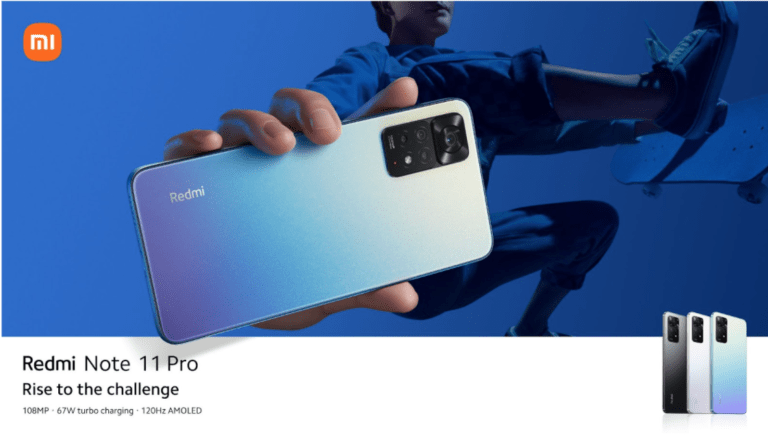
Xiaomi announced the Redmi Note 11 Pro for Pakistani markets, pushing forward the legacy of the Redmi Note series with two all-new devices: Redmi Note 11 Pro and Redmi Note 11. Rising to the challenge to bring even stronger specs and features, Redmi Note 11 series packs powerful upgrades to its camera system, charging speed, display, and SoC—making flagship-level smartphone performance more accessible than before. All this available in a bundle deal, with Redmi Buds 3 completely free.

Flagship-level 108MP quad camera to deliver outstanding photography

Boasting a rear quad camera setup, Redmi Note 11 Pro delivers an outstanding photography experience with zero compromise. Its 108MP main camera captures stunning images in high-resolution and vivid colors; an 8MP ultra-wide angle camera extends your perspective with a 118-degree viewing angle; a 2MP macro camera that captures fine details up close and a 2MP depth sensor that’s for capturing more natural looking portrait shots. Accenting the front of the phone is a 16MP front camera that can capture clearer and natural-looking selfies. The 108MP pro-grade main camera utilizes the Samsung HM2 sensor with a large sensor size at 1/1.52 inch, and supports 9-in-1 pixel binning technology as well as a dual native ISO to deliver incredible images in all lighting conditions, with spectacular results especially in dim light.

120Hz FHD+ AMOLED DotDisplay packed into trendy flat-edge body

Featuring a large 6.67′ FHD+ AMOLED DotDisplay with 120Hz display refresh rate, Redmi Note 11 Pro levels up the screen experience with smooth scrolling response and lag-free transitions. The beautiful display is packed into a body with a trendy flat-edge design. Plus, with the dual super linear speakers located at the top and bottom of the phone, Redmi Note 11 offers immersive stereo sound for gaming or watching videos.

Performance powered by 67W turbo charging and MediaTek Helio G96

Redmi Note 11 Pro comes with flagship 67W turbo charging, allowing you to charge up

to 51% of its 5,000mAh high capacity battery in just 15 minutes Powered by MediaTek Helio G96, Redmi Note 11 Pro also delivers a smooth and seamless performance.

Market availability:

Redmi Note 11 Pro comes in two variants – 6GB+128GB, and 8GB+128GB and are available at top distributor partners such as Phonezo, Airlink Communication, Smartlink and Tech Sirat. For those looking to purchase these online, we’ve news for you  too as these are also available on MiStore.

Redmi Note 11 Pro

6GB+128GB: PKR 51,999/-

8GB+128GB: PKR 59,999/-

Redmi Note 11 Quick Specs:

 Redmi Note 11
Display120Hz  6.67” FHD+ AMOLED DotDisplay
Rear Camera108MP main camera 8MP ultra-wide camera 2MP macro camera 2MP depth camera
Front Camera16MP in-display front camera
Dimension & Weight164.19mm x 76.1mm x 8.12mm 202g
ProcessorMediaTek Helio G96
Charging5,000mAh (typ) battery Supports 67W wired Pro fast charging
Variant6GB+128GB, 8GB+128GB
Available ColorGraphite Gray, Polar White, Star Blue

The Redmi Note 11 Pro is available at PKR 51,999/- for the 6+128GB variant and PKR 59,999/- for the 8+128GB variant. A bundle deal with Redmi Buds 3 absolutely free!

About Xiaomi Corporation

Xiaomi Corporation was founded in April 2010 and listed on the Main Board of the Hong Kong Stock Exchange on July 9, 2018 (1810.HK). Xiaomi is a consumer electronics and smart manufacturing company with smartphones and smart hardware connected by an IoT platform at its core.

Embracing our vision of “Make friends with users and be the Coolest Company in the users’ hearts”, Xiaomi continuously pursues innovations, high-quality user experience and operational efficiency. The company relentlessly builds amazing products with honest prices to let everyone in the world enjoy a better life through innovative technology.

Xiaomi is one of the world’s leading smartphone companies. The company’s market share in terms of smartphone shipments ranked no. 3 globally in the third quarter of 2021. The company has also established the world’s leading consumer AIoT (AI+IoT) platform, more than 400 million smart devices connected to its platform as of September 30, 2021, excluding smartphones and laptops. Xiaomi products are present in more than 100 countries and regions around the world. In August 2021, the company made the Fortune Global 500 list for the third time, ranking 338th, up 84 places compared to 2020.

Xiaomi is a constituent of the Hang Seng Index, Hang Seng China Enterprises Index, Hang Seng TECH Index and Hang Seng China 50 Index.

VEON, Nutshell Group Launch ‘THE GLOBAL CONNECT’ to Drive Cross-Border Investment

0

Islamabad, February 17, 2026 — Global digital operator VEON Ltd. has entered into a strategic partnership with Nutshell Group to launch THE GLOBAL CONNECT, a new international platform aimed at strengthening cross-border investment, accelerating digital transformation, and fostering long-term economic cooperation across emerging and frontier markets.

The collaboration was formalized through a Memorandum of Understanding signed between Nutshell Group, VEON Limited, and JazzWorld at VEON’s global headquarters in Dubai on the sidelines of the World Governments Summit.

The agreement establishes a structured framework for cooperation in digital innovation, inclusive economic growth, and investment facilitation. It also seeks to strengthen public-private partnerships

and support sustainable economic development through coordinated global engagement. The signing ceremony was attended by senior government officials and business leaders, including

Bilal Azhar Kayani, Minister of State for Finance and Railways and Head of the Prime Minister’s Delivery Unit; Pakistan’s Ambassador to the UAE H.E. Shafqat Ali Khan; VEON Founder and

Chairman Augie K. Fabela II; VEON Global CEO Kaan Terzioglu; Muhammad Azfar Ahsan, Founder and Chairman of Nutshell Group; and Aamir Hafeez Ibrahim, CEO of JazzWorld.

Speaking on the occasion, Minister Bilal Azhar Kayani highlighted Pakistan’s improving macroeconomic stability and policy consistency, stating that initiatives promoting digitalization and

cross-border investment send a strong positive signal to global investors. He assured full government support for efforts aimed at enhancing Pakistan’s global economic engagement.

Muhammad Azfar Ahsan said THE GLOBAL CONNECT is designed to convert investor intent into execution by linking global capital, technology, and markets with credible opportunities in emerging economies.

In a joint statement, VEON leadership reaffirmed the company’s long-term commitment to Pakistan under its “Invest in Pakistan Now” initiative, emphasizing the role of digital platforms in financial

inclusion and economic participation. The inaugural meeting of THE GLOBAL CONNECT will take place in Islamabad in May 2026 and is expected to bring together leaders from more than 25 countries to advance economic cooperation and cross-border investment.

Headquartered in Islamabad, the platform is establishing a presence across major global economic hubs including the Middle East, Central Asia, Africa, China, North America, Europe, and the United Kingdom.

Industry leaders from multiple sectors also attended the event, reflecting broad international support for the initiative aimed at strengthening sustainable and inclusive economic growth.

Telenor’s Promotional Offers Under Spotlight Amid Ufone Integration Process

0

Islamabad: Telenor Pakistan’s recent promotional campaigns have drawn attention across the

telecom sector following the acquisition agreement by PTCL Group, the parent company of Ufone.

While the acquisition process has been formally announced, telecom experts clarify that operational

integration is a phased procedure. Regulatory approvals, technical alignment, and network

consolidation take time, meaning Telenor continues to function as a commercially active operator

during the transition period.

In recent weeks, Telenor has introduced aggressive monthly bundles, including high-data packages

and calling offers marketed through official channels such as Easypaisa. Industry analysts note that

promotional intensity typically increases during ownership transitions as companies aim to maintain

subscriber confidence and stabilize revenue streams.

Telecom sources confirm that active packages and subscriptions remain valid until their stated

expiry dates. In standard telecom mergers, customer balances, data allocations, and subscribed

bundles are honored during and after integration, in accordance with regulatory guidelines.

“There is no immediate termination of commercial commitments during operational consolidation,” a

telecom industry official said. “Consumer rights and active subscriptions are protected.”

Pakistan’s telecom market remains highly competitive, with operators frequently revising offers to

retain market share. Market observers believe that current promotions reflect competitive

positioning rather than any irregular practice.

Until an official announcement confirms full network integration under Ufone, Telenor’s offers

remain commercially valid within the existing operational framework.

Consumer Advisory:

• Subscribe only through official apps or authorized channels.

• Review package validity and terms before activation.

• Avoid relying on unverified social media claims.

Mobilink Bank posts record PKR 3.62B PBT, reinforcing its position as Pakistan’s largest microfinance bank

0

Islamabad – February 16, 2026: Pakistan’s leading digital microfinance bank, Mobilink Bank has announced its financial results for the year ended December 31, 2025. The bank delivered strong growth across key financial and operational indicators while reinforcing its leadership position in Pakistan’s microfinance banking sector.

Mobilink Bank delivered a strong financial turnaround in 2025, with Profit Before Tax reaching PKR 3.62 billion, reflecting a 217% YoY growth, while total revenue rose 33% to PKR 89.5 billion. Deposits grew 38% to PKR 214 billion, the highest in the microfinance industry, highlighting strong customer confidence. The Gross Loan Portfolio expanded to PKR 103 billion, up 38%. The Bank also maintained a healthy Capital Adequacy Ratio (CAR) of 19.53% at the year end, underscoring its solid capital position and prudent risk management.

In line with its sustainability priorities, the Bank recorded a 55.5% YoY incremental increase in green financing, supporting individuals, households and small businesses in adopting sustainable products/resources. It also continued to advance financial inclusion, with women representing 24.6% of the loan portfolio base, supported through targeted loan offerings and greater digital access.

A major highlight of 2025 was the launch of Islamic Banking, which marked a strategic milestone in the Bank’s evolution to be able to cater to diverse social segments. By introducing Shariah-compliant financial solutions, Mobilink Bank broadened access to faith-aligned banking products while reinforcing its position as a responsible and forward-looking microfinance institution.

The Bank’s performance reflects its firm commitment to responsible lending, ensuring that all credit decisions are grounded in prudent affordability assessments, transparent pricing, fair collection practices, and full compliance with applicable SBP regulations. It continues to strengthen internal controls to prevent customer over-indebtedness and support sustainable financial inclusion. The Bank’s growth trajectory has been further strengthened by continued shareholder confidence, reinforcing its capital position and supporting its long-term expansion and digital transformation strategy.

Commenting on the financials, Haaris Mahmood Chaudhary, President & CEO Mobilink Bank said, “Behind these numbers is a deeper purpose of expanding access to finance for the underserved. As the country’s largest microfinance bank, we are grateful to our customers, regulators, shareholders, and teams whose trust and dedication continue to drive our progress. Our growth reflects the confidence of millions who rely on us to support their livelihoods. We remain focused on empowering small businesses and entrepreneurs through responsible, faith-aligned digital banking that creates lasting opportunity and inclusion across Pakistan.”

Commenting on the financials, Adil Ali Abbasi, Chief Financial Officer Mobilink Bank said, “Our 2025 performance reflects a strong focus on financial discipline, improved asset quality, and efficient balance sheet management. The growth in profitability, deposits, and portfolio scale highlights the strength of our core business and our ability to build momentum while maintaining prudent risk and capital positions. As we move forward, we will continue to strengthen our financial foundations, drive operational efficiency, and support the Bank’s long-term growth through sustained investment in digital transformation and innovation.”

Moving into 2026, Mobilink Bank remains committed to becoming the number one bank for small businesses powered by digital Islamic Banking solutions.

Investigation: Pakistan’s Smartphone Installment Boom — Financial Inclusion or High-Cost Digital Debt?

0

Pakistan’s smartphone market is growing at a rapid pace as mobile phones have become essential tools for daily life and economic activity. With more than 190 million cellular subscribers and over 125 million mobile broadband users, smartphones are now used for freelancing, ride-hailing services, e-commerce, digital banking, and online education. This digital expansion has created strong demand for affordable access to smartphones across all income groups.

In recent months, installment-based smartphone financing under Buy Now, Pay Later (BNPL) models has increased sharply. Consumers are offered easy approval, low upfront payments, and flexible repayment periods ranging from three to twelve months. These schemes are heavily promoted through advertisements that focus on small monthly installments, making smartphones appear financially accessible even to those with limited savings.

However, financial analysis reveals that the true cost of these installment plans may be much higher than consumers realize. Public disclosures from similar BNPL models show monthly markup rates between 4.5 percent and 6.5 percent. This translates into Annual Percentage Rates (APR) that can range from 57 percent to as high as 81 percent, depending on the customer’s credit profile and repayment schedule. While advertisements emphasize affordability, the total amount repaid by the customer can significantly exceed the original retail price of the smartphone.

Industry experts note that most consumers focus only on the monthly installment amount and do not calculate the total repayment obligation. This total cost often includes markup, service charges, processing fees, and late payment penalties. As a result, buyers may unknowingly enter into high-cost financial commitments without fully understanding their long-term burden.

The primary users of installment-based smartphone financing include middle-income salaried employees, university students, freelancers, gig workers, and young first-time earners. For many of them, smartphones are not luxury items but essential tools for work and income generation. Delivery riders, online sellers, content creators, and remote workers depend on reliable smartphones for their livelihoods, making installment plans attractive despite their high cost.

Regulatory oversight of digital lending in Pakistan falls under two main authorities. The Securities and Exchange Commission of Pakistan regulates non-banking finance companies, while the State Bank of Pakistan supervises banking institutions. The digital lending guidelines issued by SECP require lenders to clearly disclose markup rates, APR, total repayment amounts, Key Fact Statements, privacy policies, and data usage consent terms. Lenders are also prohibited from imposing hidden charges and must communicate penalties and recovery procedures in a transparent manner.

Despite these safeguards, concerns remain about whether consumers truly understand the digital contracts they accept. Many agreements are lengthy and written in technical language that ordinary users may not read or comprehend fully. Applicants are usually required to submit copies of their CNIC, bank statements, and personal financial information through mobile apps and online platforms. Cybersecurity specialists warn that weak data protection practices can expose users to identity theft, fraud, and unauthorized data misuse.

Financial analysts argue that regulators need to strengthen enforcement mechanisms. They recommend making the Total Payable Amount more visible through bold and clear disclosures, conducting regular compliance audits of BNPL providers, and launching nationwide awareness campaigns about effective APR and installment risks. Educating consumers about calculating total repayment costs could help them make informed financial decisions.

As Pakistan’s digital economy continues to grow, installment-based smartphone financing presents both opportunity and danger. On one hand, it promotes financial inclusion by giving more people access to digital tools. On the other hand, without strong transparency and consumer education, it risks creating a new form of high-cost digital debt.

The critical question remains whether consumers are fully aware of the long-term financial implications of purchasing smartphones on installment plans. Without proper understanding, financial inclusion may slowly transform into financial vulnerability for millions of users across the country.

A Dialogue on the Cabinet Mission Plan: Strategy, Federalism, and the Question of Jinnah

0


Few moments in South Asian history have been debated as intensely as the failure of the Cabinet Mission Plan in 1946. The discussion is not merely about constitutional design. It is about political intent, leadership, trust, and whether the tragedy of Partition could have been avoided.

Recently, a critique described Muhammad Ali Jinnah as politically opportunistic. The argument suggests that in 1946 he demanded a weak federal center to protect Muslim interests within a united India, yet after the creation of Pakistan in 1947 he insisted on a strong central government. According to this view, the shift reflects hypocrisy rather than strategy.

That charge deserves careful examination.

The Historical Setting

By early 1946, the British government had decided to transfer power. To facilitate a constitutional settlement, it sent a high-level delegation consisting of Frederick Pethick-Lawrence, Stafford Cripps, and A. V. Alexander. Their task was to propose a structure that could keep India united while addressing deep communal anxieties.

The Mission rejected the immediate creation of Pakistan. Instead, it proposed a loose Union of India that would control only three subjects: defense, foreign affairs, and communications, along with the power to raise finances necessary for these functions. All other powers would rest with the provinces.

Provinces were to be grouped into sections reflecting demographic realities, and a Constituent Assembly of 385 members would draft the constitution. On communal matters, special voting safeguards were introduced to ensure that neither major community could be overridden.

In short, the proposal was neither a centralized nation-state nor a fully sovereign confederation. It was a carefully balanced compromise.

Demographic Realities and Political Anxiety

The subcontinent’s demographic composition made constitutional design extraordinarily complex.

In the northwestern provinces—Punjab, Sindh, NWFP, and British Baluchistan—Muslims formed a majority but with substantial non-Muslim minorities. In Bengal and Assam, the numbers were nearly evenly divided. Meanwhile, over 20 million Muslims lived as minorities in Hindu-majority provinces across India.

No political arrangement could ignore these facts.

The Cabinet Mission recognized two competing fears:

Muslims feared permanent majoritarian dominance at the center.

Non-Muslims in Muslim-majority provinces feared marginalization in any Pakistan scheme.

The proposed federal structure was an attempt to reconcile these anxieties without partition.

Jinnah’s Acceptance: Opportunism or Constitutional Strategy?

Critics argue that Jinnah’s acceptance of the Plan was tactical, designed to corner Congress politically. However, it is equally plausible to interpret his decision as consistent with his legal and constitutional temperament.

Jinnah had long framed Muslim demands in constitutional terms. By accepting a united India with a weak center and strong provinces, he secured:

Autonomy for Muslim-majority regions

Safeguards against central domination

A structure that could evolve over time

From his perspective, provincial autonomy was not fragmentation. It was protection.

When Jawaharlal Nehru signaled that the Constituent Assembly would not be bound by group arrangements, the Muslim League viewed this as undermining the core compromise. Trust collapsed.

The result was escalation, Direct Action, and ultimately Partition.

The Question of Federal “Weakness”

Another objection raised at the time was that the proposed Union was too weak.

But federal systems by definition distribute power. Even modern federations typically reserve defense, foreign affairs, and communications for the center, while allowing substantial autonomy to constituent units.

The United States itself began under the Articles of Confederation with an extremely weak center before transitioning to a stronger federal constitution. Federal systems often evolve gradually in response to political and economic pressures.

The Cabinet Mission Plan allowed constitutional revision after ten years. Critics interpreted this as a pathway to disintegration. Supporters viewed it as a safety valve in a deeply divided society.

Whether the center was weak or appropriately limited depends largely on one’s constitutional philosophy.

The Alleged Reversal in Pakistan

The strongest criticism is that Jinnah reversed his principles after Pakistan was created, advocating strong central authority.

Context matters.

In 1946, Muslims were negotiating from minority status within an all-India framework. In 1947, Pakistan emerged as a fragile new state facing:

Massive refugee influx

Administrative vacuum

Economic uncertainty

Security threats

A weak center in that environment could have led to immediate fragmentation.

Political principles often operate within changing structural realities. What appears contradictory across contexts may reflect adaptation to different constitutional needs.

Could Partition Have Been Avoided?

The failure of the Cabinet Mission Plan remains one of history’s great “what if” moments. It was perhaps the last serious attempt to preserve a united India with meaningful autonomy for its diverse regions.

Would it have succeeded? No one can say with certainty.

But its collapse closed the door on a federal compromise and accelerated the momentum toward division.

Legacy and Reflection

It has become common in both India and Pakistan to reduce historical actors to caricatures. Yet figures like Jinnah, Nehru, and others were operating under extraordinary pressures in a moment of irreversible transition.

The Cabinet Mission Plan was not perfect. But it represented a genuine constitutional experiment in reconciling unity with diversity.

Whether one sees Jinnah as opportunistic or strategic depends largely on how one interprets federalism, minority safeguards, and political realism.

What is clear is this: 1946 was not merely a prelude to Partition. It was a crossroads. The choices made in that year reshaped the destiny of the subcontinent.

History still debates those choices. And perhaps it should.


Muhammad Hanif Gul
Civil Servant | Teacher | Human Rights Activist
Published in Flare Magazine

Morocco’s Government Rolls Out Program to Assist, Support Populations Affected by Floods in North & West of the Kingdom

0

Rabat (Morocco) – In application of the High Royal Instructions, the Moroccan government is rolling out a program to provide assistance and support to populations affected by flooding in the north and west of the Kingdom, caused by the exceptional rainfall in the country over the past two months.

In this regard, and in accordance with the High Royal Guidelines, the government has mobilized all concerned departments to ensure optimal implementation of this program, which has been developed on the basis of a careful assessment of the situation on the ground and the needs of affected populations, according to a press release from the office of the Head of Government.

As such, direct financial aid to victims of up to MAD 6,000 per family, financial aid of MAD 15,000 for the rehabilitation of affected homes and small businesses, as well as aid of MAD 140,000 for the reconstruction of homes that collapsed as a result of the floods will be granted, the same source notes.

Consequently, and with regard to the emergency financial aid intended for each affected family -to be distributed starting next week- the head of each affected family must send a text message to 1212 specifying their electronic national identity card (CNIE) number and date of birth, for relevant services to verify the family’s situation and process the application as swiftly as possible.

With regard to aid for the rehabilitation of affected homes and small businesses, as well as aid for the reconstruction of collapsed homes, the relevant commissions will conduct accurate surveys of premises in zones declared disaster areas. If necessary, those affected can submit their requests to specialized commissions for examination in accordance with the regulatory measures in force, in a transparent and fair manner.

In the agricultural sector, support will be provided to affected farmers through the launch of a spring crop program adapted to the specificities of disaster-stricken regions, such as oilseed, cereals, and fodder crops, with support for the purchase of seeds and fertilizers to accelerate the season’s recovery, while continuing to support affected livestock farmers.

The press release emphasizes that this program falls in line with the Royal High Care aimed at ensuring exemplary supervision and management of evacuation and displacement operations for affected populations, within a proactive approach to potential threat levels and mobilizing all logistical resources to ensure the displacement of populations from disaster areas under the best conditions and their return to their homes as soon as possible.


On High Royal Instructions, Morocco’s Government Rolls Out Major Aid & Support Program for Communities Affected by Extreme Weather Estimated at MAD 3 Bln

0

Following the exceptionally severe weather conditions that have affected the Kingdom over the past two months, particularly in the Gharb plain and Loukkos, the King Mohammed VI, faithful to His Steadfast Care for His subjects and Mindful of preserving their safety and improving their living conditions, has issued His High Instructions to the government to roll out a major aid and support program for affected families and populations, and to take the regulatory measures required in such circumstances.


In this regard, the Head of Government has issued a decree declaring this extreme weather a catastrophic event and the most affected communes of the four provinces (Larache, Kénitra, Sidi Kacem and Sidi Slimane) disaster areas, a press release from the office of the Head of Government says.


According to the same source, the government has set up an aid and support program with a projected budget of three billion dirhams, based on a careful and in-depth assessment of the situation on the ground and a precise evaluation of the economic and social repercussions of these extreme weather conditions.

It focuses on the following axes:

  • Aid for rehousing, loss of income, rehabilitation of affected homes and small businesses, and reconstruction of collapsed homes, for a total amount of MAD 775 million.
  • Aid in kind and for the reinforcement of emergency interventions on the ground, in order to meet the essential and immediate needs of the population, amounting to MAD 225 million.


  • Aid for farmers and livestock breeders amounting to MAD 300 million.
  • Investments for the rehabilitation of roads and hydro-agricultural infrastructure, as well as for the rehabilitation of basic networks, amounting to MAD 1.7 billion.

The King has also issued His High Instructions to the government to ensure that this program is conducted in an exemplary, swift, and responsible manner, enabling citizens in the affected areas to return to normal living conditions as soon as possible, the press release points out.

The exceptional weather conditions experienced by the Kingdom caused flooding of over 110,000 hectares and led to the displacement of nearly 188,000 people in the provinces of Larache, Kenitra, Sidi Kacem, and Sidi Slimane, the same source concludes.