
Government Engages Business Community Ahead of Federal Budget 2026–27
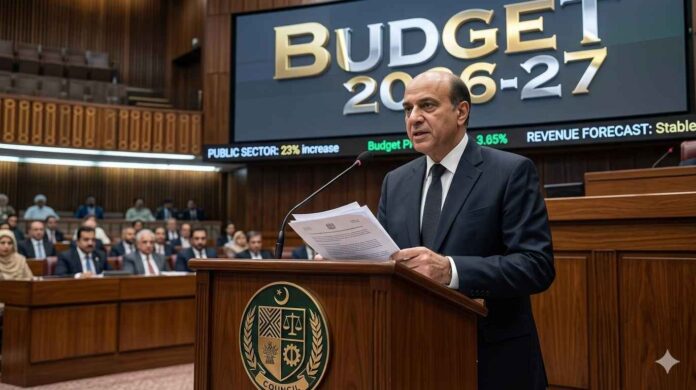
Pakistan’s economic policymakers are signaling a decisive shift toward a more inclusive, growth-driven, and export-oriented strategy as preparations for the upcoming federal budget gather momentum. In a high-level interactive session with members of the business community, exporters, and media representatives, the government reaffirmed its commitment to building an economic framework that prioritizes sustainable growth and competitiveness.
The session, held in Karachi, brought together key stakeholders from across the country’s commercial and industrial landscape. It served as a platform for open dialogue, allowing business leaders to share insights, challenges, and recommendations directly with policymakers. This engagement reflects a broader effort to ensure that the upcoming budget is shaped by real economic needs rather than isolated policy decisions.
Karachi, widely recognized as the backbone of Pakistan’s economic activity, played host to these discussions, reinforcing its central role in shaping the country’s financial future. The city’s contribution to trade, industry, and exports makes it a critical hub for policy consultation and implementation.
A Consultative Approach to Economic Policymaking
One of the key themes highlighted during the session was the government’s commitment to a consultative approach in drafting the federal budget. Policymakers emphasized that economic decisions must reflect the collective input of stakeholders across various sectors, including exporters, traders, manufacturers, and investors.
This approach is being implemented through a nationwide consultation process designed to gather feedback from different segments of the economy. By engaging with industry representatives and business associations, the government aims to develop policies that are practical, effective, and aligned with ground realities.
The consultative model represents a shift from traditional top-down policymaking toward a more inclusive framework. It acknowledges that sustainable economic growth requires collaboration between the public and private sectors, with each playing a vital role in shaping outcomes.
Focus on Export-Led Growth Strategy
A central pillar of the upcoming budget is the emphasis on export-led growth. Policymakers have identified exports as the key driver of long-term economic stability and development. By boosting export performance, the country can strengthen its external accounts, reduce reliance on imports, and create new opportunities for employment and industrial expansion.
The government recognizes that past economic cycles have often been characterized by growth driven primarily by consumption and imports. While such growth can produce short-term gains, it often leads to external imbalances and financial instability. To address this issue, the new strategy aims to shift the focus toward production, productivity, and international competitiveness.
Efforts are being made to support exporters through targeted incentives, improved infrastructure, and streamlined regulatory processes. By creating a more enabling environment, the government hopes to enhance the global competitiveness of Pakistani products and services.
Macroeconomic Stabilisation Strengthens Confidence
Recent economic developments suggest that Pakistan has made meaningful progress in stabilizing its macroeconomic environment. Policymakers highlighted improvements in key indicators such as inflation control, tax revenue collection, and external account management.
These achievements are the result of coordinated policy measures aimed at restoring economic balance. By addressing fiscal and monetary challenges, the government has laid the groundwork for a more stable and predictable economic environment.
Stabilization is particularly important for building investor confidence. Both domestic and international investors are more likely to commit resources when economic conditions are stable and policies are consistent. This confidence, in turn, supports growth, job creation, and innovation.
Breaking the Cycle of Boom and Bust
A recurring challenge for Pakistan’s economy has been its susceptibility to boom-and-bust cycles. These cycles are often driven by periods of rapid growth fueled by imports, followed by sharp corrections due to external imbalances.
Policymakers have acknowledged the need to break this cycle by adopting a more sustainable growth model. The focus is now on building a resilient economy that can withstand external shocks and maintain steady progress over time.
This involves not only promoting exports but also enhancing productivity, diversifying the industrial base, and improving the overall efficiency of economic systems. By addressing structural weaknesses, the government aims to create a foundation for long-term stability and growth.
Strengthening Industry and Competitiveness
Improving industrial competitiveness is another key priority for the upcoming budget. Policymakers are working to identify and address bottlenecks that hinder the growth of key sectors.
This includes measures to reduce the cost of doing business, improve access to finance, and enhance the availability of skilled labor. By creating a more supportive environment for industry, the government aims to encourage investment and innovation.
Competitiveness also extends to global markets. In an increasingly interconnected world, countries must compete not only on price but also on quality, reliability, and technological advancement. Strengthening these aspects is essential for expanding export markets and attracting foreign investment.
Stakeholder Engagement Through Structured Initiatives
To ensure comprehensive input into the budget process, the government has initiated structured engagement with various economic groups. Meetings are being held with major business organizations, investor groups, and trade associations to gather diverse perspectives.
In addition, specialized working groups have been established to focus on key areas of economic reform. These groups consist of experts, industry representatives, and policymakers who collaborate to develop targeted recommendations.
The creation of these working groups reflects a commitment to evidence-based policymaking. By leveraging expertise from different fields, the government aims to design policies that are both effective and sustainable.
Energy Pricing and Economic Impact
Energy costs remain a critical factor influencing economic performance. Policymakers have highlighted the importance of aligning domestic energy prices with global market trends while ensuring affordability for consumers.
Adjustments in petroleum prices are being made in response to international market movements. At the same time, the government has taken steps to mitigate the impact on vulnerable segments of society through targeted support measures.
Balancing economic efficiency with social protection is a key challenge in energy policy. By adopting a pragmatic approach, the government aims to manage costs without compromising economic stability or public welfare.
Role of Diplomatic Stability in Economic Growth
Economic progress is closely linked to regional stability and international relations. Policymakers have acknowledged the importance of maintaining a stable geopolitical environment to support economic growth.
Efforts to promote peace and cooperation in the region contribute to a more favorable climate for trade and investment. Stability reduces uncertainty, lowers risk premiums, and encourages long-term economic planning.
By actively engaging in diplomatic initiatives, the country aims to strengthen its position in the global economy while minimizing the impact of external challenges.
Inclusive Growth as a Core Objective
A defining feature of the upcoming budget is its focus on inclusive growth. Policymakers have emphasized that economic progress must benefit all segments of society, not just a select few.
This involves creating opportunities for small businesses, supporting entrepreneurship, and ensuring access to essential services. Inclusive growth also requires addressing disparities between regions and sectors, promoting balanced development across the country.
By prioritizing inclusivity, the government aims to build a more equitable economy where the benefits of growth are widely shared.
Export Promotion Initiatives Gain Momentum
Recent initiatives aimed at promoting exports are part of a broader strategy to strengthen the country’s economic foundation. Recognition programs and policy incentives are being used to encourage businesses to expand their export activities.
These efforts are complemented by measures to improve trade facilitation, reduce bureaucratic hurdles, and enhance connectivity with international markets. By addressing both supply-side and demand-side challenges, the government aims to create a robust export ecosystem.
Export growth not only contributes to foreign exchange earnings but also drives industrial development and job creation. It is a key component of the country’s long-term economic vision.
Budget Formulation and Policy Direction
As the federal budget approaches, policymakers are carefully reviewing input from stakeholders and refining their strategies. While specific measures have not yet been announced, the overall direction is clear: a focus on growth, exports, and sustainability.
The government has emphasized that pre-announcing budget measures would be inappropriate, as the process requires thorough analysis and consideration. However, the ongoing consultations provide valuable insights that will shape the final policy framework.
This careful approach reflects the complexity of economic policymaking, where decisions must balance multiple objectives and constraints.
Conclusion: A Forward-Looking Economic Vision
The upcoming federal budget represents an महत्वपूर्ण opportunity to redefine Pakistan’s economic trajectory. By focusing on pro-growth policies, export expansion, and inclusive development, the government aims to build a stronger and more resilient economy.
The emphasis on consultation, transparency, and stakeholder engagement marks a positive step toward more effective governance. As the country moves forward, maintaining this collaborative approach will be essential for achieving long-term success.
While challenges remain, the commitment to reform and innovation provides a solid foundation for future growth. With the right policies and continued engagement, Pakistan has the potential to unlock new opportunities and strengthen its position in the global economy.
Read More
Ships Forced to Retreat in Hormuz Amid Gunfire as US-Iran Talks Stall