
Escalating Crisis in the Strait of Hormuz Disrupts Global Shipping
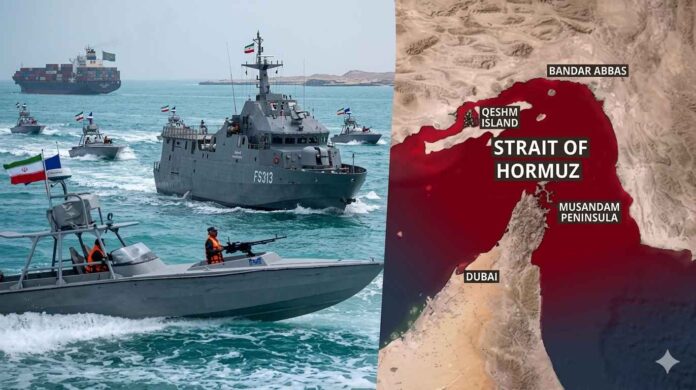
The Strait of Hormuz, one of the world’s most strategically vital maritime corridors, has once again become the center of a rapidly escalating geopolitical crisis. Reports of ships being forced to retreat under gunfire have intensified concerns about the safety of global shipping routes and the stability of international energy markets.
The latest developments highlight a dangerous intersection of military tension and diplomatic deadlock. As vessels reportedly encountered hostile conditions while attempting to pass through the narrow waterway, uncertainty has gripped the global shipping industry. Several oil tankers, including those operating under foreign flags, were compelled to reverse course after coming under fire, raising alarms about the potential for a broader maritime conflict.
This renewed instability comes at a time when the world is already grappling with fragile supply chains and economic uncertainty, making the situation in the Strait of Hormuz even more consequential.
US-Iran Talks Stall Amid Rising Political Tensions
Diplomatic efforts between the United States and Iran have hit a significant roadblock, further complicating the situation. Iranian authorities have indicated that they are not prepared to engage in another round of talks under current conditions, citing what they describe as excessive pressure tactics and unrealistic demands.
The absence of a clear timeline for future negotiations has added to the uncertainty. While earlier signals suggested the possibility of renewed dialogue, recent developments have made immediate talks increasingly unlikely. Both sides appear to be entrenched in their positions, with little indication of compromise in the near term.
This diplomatic impasse is particularly concerning given the stakes involved. Without meaningful engagement, the risk of miscalculation and escalation remains high, especially in a region already marked by volatility.
Disagreements Over Framework and Preconditions Delay Progress
A key obstacle to further negotiations lies in the lack of agreement on a basic framework for talks. Iranian officials have emphasized the need to establish clear principles and mutual understanding before proceeding with any new meetings.
They have warned that engaging in discussions without a defined structure could lead to further confrontation rather than constructive progress. This insistence on groundwork reflects a broader concern about entering negotiations that may be perceived as one-sided or lacking in balance.
On the other side, the United States has maintained a firm stance on its demands, particularly regarding Iran’s nuclear program and regional activities. These differences have created a widening gap that has yet to be bridged.
Military Tensions Spill Into Commercial Shipping Routes
The impact of geopolitical tensions is now being felt directly in commercial shipping lanes. Reports of tankers encountering heavy fire while attempting to navigate the Strait of Hormuz have underscored the risks facing maritime operators.
Such incidents not only threaten the safety of crews and vessels but also disrupt critical energy supplies. The Strait of Hormuz serves as a key transit route for a significant portion of the world’s oil shipments, making any disruption a matter of global concern.
Shipping companies are now faced with difficult decisions regarding route planning, insurance costs, and operational safety. The possibility of further incidents could lead to reduced traffic through the strait, exacerbating supply constraints and driving up costs.
Recent Talks End Without Breakthrough Despite Expectations
High-level negotiations held recently had raised hopes for a potential de-escalation of tensions. However, these talks concluded without a meaningful breakthrough, leaving key issues unresolved.
Despite initial optimism, the discussions failed to produce the momentum needed to advance toward a comprehensive agreement. The lack of progress has reinforced the perception that both sides remain far apart on critical मुद्दे.
This outcome has had a ripple effect, contributing to the current atmosphere of uncertainty and tension. Without tangible progress in negotiations, the likelihood of continued instability remains high.
Regional Diplomacy Faces New Challenges
Efforts to facilitate dialogue and reduce tensions have also encountered obstacles. Regional diplomatic initiatives aimed at bridging differences have been complicated by ongoing developments on the ground.
Attempts to coordinate further rounds of talks have been hindered by logistical and political challenges. The evolving situation in the Strait of Hormuz, combined with broader geopolitical dynamics, has made it increasingly difficult to create the conditions necessary for meaningful engagement.
These challenges highlight the complexity of the current crisis, where multiple factors are interacting to shape outcomes in unpredictable ways.
Nuclear Dispute Remains a Central Point of Contention
At the heart of the dispute lies the issue of Iran’s nuclear program. The United States has pushed for stricter conditions and expanded commitments, while Iran has resisted what it perceives as excessive and unrealistic demands.
Iranian officials have made it clear that any future agreements must remain within the framework of existing international regulations. They have rejected calls for additional restrictions that go beyond established norms, arguing that such demands undermine the prospects for a fair and balanced agreement.
This fundamental disagreement continues to be a major barrier to progress, with both sides holding firm to their positions.
Economic and Energy Implications of the Crisis
The ongoing tensions in the Strait of Hormuz carry significant economic implications. As a critical artery for global energy supplies, any disruption in the flow of oil and gas through the strait can have far-reaching consequences.
Rising shipping risks have already begun to influence market dynamics, with potential impacts on fuel prices, transportation costs, and overall economic stability. Countries that rely heavily on energy imports are particularly vulnerable to such disruptions.
In addition, increased insurance premiums and security costs for shipping companies could further strain global trade networks. These factors underscore the importance of resolving the crisis and restoring stability to the region.
Assurances and Warnings From Iranian Authorities
Iranian authorities have sought to reassure the international community that commercial shipping can continue safely under certain conditions. They have emphasized that ceasefire arrangements are in place and that vessels adhering to agreed terms should not face threats.
At the same time, they have issued warnings that violations of these arrangements could prompt a strong response. This dual message reflects an attempt to balance reassurance with deterrence, signaling both a willingness to maintain stability and a readiness to act if necessary.
Such statements add another layer of complexity to the situation, as shipping operators must navigate not only physical risks but also evolving rules and expectations.
Uncertain Path Forward for Diplomacy and Stability
Looking ahead, the path to de-escalation remains uncertain. The absence of scheduled talks, combined with ongoing tensions in the Strait of Hormuz, creates a volatile environment with no clear resolution in sight.
Diplomatic efforts will likely continue behind the scenes, but achieving a breakthrough will require significant compromise and mutual understanding. Until then, the risk of further incidents and escalation cannot be ruled out.
The situation serves as a stark reminder of the interconnected nature of global security, where regional conflicts can quickly have worldwide implications.
Conclusion: A Critical Moment for Global Stability
The events unfolding in the Strait of Hormuz represent a critical moment for both regional and global stability. With ships being forced to retreat under fire and diplomatic talks at a standstill, the stakes have rarely been higher.
Resolving the crisis will require careful navigation of complex political, military, and economic factors. Both sides face pressure to find a path forward that avoids further escalation while addressing core concerns.
Until meaningful progress is made, the world will continue to watch closely as developments in this strategically vital region shape the future of global trade, energy security, and international relations.
Read More
Is Iran Planning to Transfer Its Nuclear Material to Pakistan?