
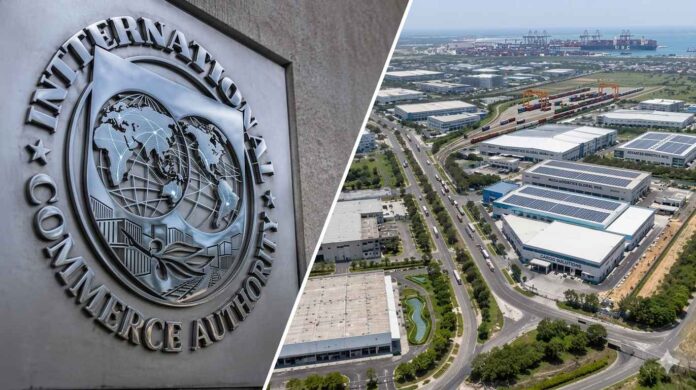

Pakistan is preparing for another significant shift in its economic and investment policy as the International Monetary Fund has urged the country to gradually phase out tax incentives available to Special Economic Zones and Special Technology Zones. The proposed reforms are expected to become part of the broader economic restructuring plan linked with the upcoming federal budget and ongoing IMF program commitments.
The move represents a major development for Pakistan’s industrial and investment landscape because Special Economic Zones have long been promoted as a key tool to attract foreign direct investment, encourage industrialization, boost exports, and create employment opportunities. For years, investors entering these zones have benefited from generous fiscal incentives, including tax holidays, customs duty exemptions, and other financial advantages designed to encourage large-scale investment.
However, the IMF believes the current incentive-based framework creates market distortions and limits fair competition across the broader economy. The Fund is now pushing Pakistan to adopt a more transparent and competitive investment structure that relies less on broad tax exemptions and more on sustainable economic reforms.
The proposed changes are expected to gradually redefine how investment incentives are structured in Pakistan over the coming decade.
Government Clarifies Existing SEZs Will Remain Protected
Federal Minister for Investment Qaiser Ahmed Sheikh has clarified that the proposed reforms would mainly apply to future Special Economic Zones, while existing zones would continue operating under their current frameworks and protections.
According to the minister, the country’s SEZ incentive structure is not being completely dismantled. Instead, the reforms are intended to reshape how future incentives are granted and regulated. Existing investors who entered Pakistan under previously approved agreements are expected to retain their benefits, ensuring policy continuity and investor confidence.
The clarification is important because many domestic and foreign investors have already committed billions of rupees to industrial projects within designated zones. Concerns had emerged in the business community regarding whether ongoing projects could lose their existing tax exemptions or operational benefits under the new IMF-backed reforms.
Government officials have attempted to reassure investors that contractual protections and previously approved arrangements would remain intact. The focus of the reforms, according to officials, is to create a new policy direction for future zones and future investments rather than reversing commitments already made.
This approach aims to prevent investor uncertainty while still allowing Pakistan to meet structural reform conditions under its IMF program.
Why the IMF Wants Pakistan to End SEZ Tax Breaks
The IMF’s position is based on the argument that excessive tax incentives can distort economic activity and reduce government revenue without necessarily delivering proportional economic benefits.
According to the Fund’s broader economic philosophy, governments should focus on creating a stable and transparent business environment instead of relying heavily on tax exemptions to attract investors. The IMF believes that sustainable economic growth depends more on policy consistency, institutional strength, infrastructure quality, and regulatory transparency than on temporary tax holidays.
In Pakistan’s case, the IMF reportedly believes that overlapping incentive regimes have complicated the tax system and created unequal treatment between businesses operating inside and outside Special Economic Zones.
Many companies operating outside SEZs have argued for years that they face unfair competition because firms inside these zones receive substantial tax advantages that reduce operating costs. Critics also argue that some investors enter Special Economic Zones primarily to benefit from tax exemptions rather than to build export-oriented or productive industries.
The IMF’s proposed reforms are intended to reduce these imbalances by gradually transitioning toward a more neutral taxation framework where businesses compete under similar conditions.
Another major concern for the IMF is revenue generation. Pakistan continues to face chronic fiscal deficits, rising debt obligations, and ongoing pressure to improve tax collection. Broad tax exemptions reduce the government’s revenue base at a time when authorities are struggling to increase domestic resource mobilization.
By limiting future tax incentives, the IMF believes Pakistan can strengthen public finances while also simplifying the overall investment environment.
Shift From Profit-Based to Cost-Based Incentives
One of the most significant reforms being discussed involves replacing profit-based incentives with cost-based incentives.
Traditionally, many Special Economic Zones offered incentives linked directly to profits, including income tax holidays that allowed companies to operate for years without paying corporate taxes. Under the proposed reforms, Pakistan may gradually move toward incentives tied to actual investment costs rather than future profits.
Cost-based incentives are generally considered more transparent because they reward companies based on measurable investment activities such as infrastructure development, machinery imports, technology upgrades, workforce training, and capital expenditures.
Economic experts often argue that cost-based systems are less vulnerable to abuse because profit-based exemptions can sometimes encourage accounting manipulation or tax planning strategies aimed at minimizing declared profits outside incentive structures.
A cost-based framework may also encourage investors to focus more on long-term industrial development rather than short-term tax advantages.
The transition would represent a major policy change for Pakistan’s investment strategy and could reshape how future industrial projects are evaluated and approved.
Powers of Investment Authorities Likely to Be Reduced
Another key aspect of the proposed reforms is the removal of independent authority currently held by the Board of Investment, Board of Approval, and SEZ authorities to grant tax concessions.
Under the existing system, multiple institutions possess the authority to approve various forms of fiscal incentives for investors operating within designated economic zones. The IMF reportedly wants these discretionary powers to be limited or centralized in order to improve transparency and reduce policy inconsistencies.
The Fund believes excessive discretionary powers can create uncertainty, inconsistent decision-making, and governance challenges within investment frameworks.
By limiting the ability of individual authorities to independently issue tax exemptions, the IMF aims to create a more rules-based system where incentives follow standardized national policies rather than case-by-case approvals.
Such reforms could also improve investor clarity because businesses would operate under clearer and more predictable regulations.
At the same time, reducing institutional discretion may generate resistance from stakeholders who believe flexible incentives are necessary to attract strategic investors in competitive global markets.
Special Technology Zones Also Face Long-Term Changes
The IMF-backed reform agenda does not only target traditional Special Economic Zones. Special Technology Zones are also expected to face gradual changes under the proposed framework.
Pakistan introduced Special Technology Zones to attract technology companies, software exporters, digital startups, and innovation-driven industries by offering extensive tax and regulatory benefits.
The sector has been viewed as one of Pakistan’s fastest-growing economic segments, particularly due to rising IT exports and increasing international demand for digital services.
However, under the proposed reforms, all fiscal incentives available to Special Technology Zones may gradually be phased out by 2035.
The long transition period suggests authorities are attempting to avoid sudden disruptions to the country’s emerging technology ecosystem. A gradual approach would allow businesses time to adapt while enabling policymakers to redesign broader industrial and technology development strategies.
Technology sector stakeholders may nonetheless remain concerned about whether future investors will continue to view Pakistan as an attractive destination without substantial fiscal incentives.
The challenge for policymakers will be balancing fiscal discipline with the need to remain competitive in attracting international technology investment.
Impact on Foreign Direct Investment in Pakistan
One of the biggest questions surrounding the proposed reforms is how they could affect foreign direct investment flows into Pakistan.
Special Economic Zones have traditionally been promoted as major investment hubs under industrial development initiatives and regional connectivity projects. Tax incentives were often presented as a key reason for investors to establish manufacturing facilities and export-oriented operations inside these zones.
If future tax exemptions are reduced or eliminated, some analysts believe Pakistan could face stronger competition from neighboring countries that continue offering aggressive investment incentives.
Countries across Asia, the Middle East, and Africa actively compete for industrial investment through various fiscal benefits, infrastructure packages, and regulatory advantages.
Pakistan will therefore need to strengthen other aspects of its business environment to remain competitive. This includes improving energy reliability, infrastructure quality, ease of doing business, customs efficiency, legal protections, and political stability.
Experts argue that investors ultimately prioritize long-term predictability over temporary tax benefits. If Pakistan succeeds in creating a stable and transparent investment climate, the country may still attract significant investment even with fewer fiscal incentives.
However, achieving that balance will require sustained policy consistency and institutional reforms.
Pakistan’s Broader IMF Reform Commitments
The proposed SEZ reforms form part of a much broader economic restructuring agenda linked to Pakistan’s IMF program.
The country has already committed to implementing several difficult reforms aimed at stabilizing the economy, improving fiscal management, expanding the tax base, and reducing financial imbalances.
These reforms include measures related to energy pricing, tax administration, state-owned enterprises, subsidy rationalization, and public sector governance.
The IMF has consistently emphasized the importance of reducing exemptions and preferential treatment across different sectors of the economy. The Fund believes broad exemptions weaken tax systems, reduce transparency, and create inefficiencies within markets.
For Pakistan, complying with IMF conditions remains critical for maintaining external financing support and stabilizing foreign exchange reserves.
At the same time, the government faces the difficult challenge of implementing reforms without slowing economic growth or discouraging investment.
Balancing fiscal discipline with economic expansion will likely remain one of the central policy debates in the coming years.
Business Community Likely to Seek Further Clarifications
The business community is expected to closely monitor how the proposed reforms are implemented in practice.
Industrial groups, exporters, foreign investors, and technology companies may seek detailed clarification regarding which incentives will remain available, how future projects will be evaluated, and whether transitional arrangements will be introduced.
Investors typically value policy certainty above all else. Sudden or unclear policy changes can create hesitation regarding future expansion plans.
Government officials will therefore likely continue engaging with industry stakeholders to ensure reforms are introduced gradually and transparently.
There may also be calls for alternative forms of support to replace broad tax exemptions. Businesses could push for improved infrastructure, reduced energy costs, faster customs procedures, simplified regulations, and access to financing as alternative methods of improving competitiveness.
The success of the reforms may ultimately depend on whether Pakistan can create a business environment that remains attractive even with fewer fiscal incentives.
Pakistan’s Investment Strategy Entering a New Phase
The IMF-backed reforms indicate that Pakistan’s investment policy may be entering a new phase focused more on transparency, competitiveness, and long-term sustainability rather than broad tax holidays.
While Special Economic Zones are expected to continue playing an important role in industrial development, the framework governing these zones could gradually evolve over the next decade.
Existing zones are expected to remain protected, providing reassurance to current investors, but future projects may operate under significantly different rules.
The gradual transition toward cost-based incentives and reduced discretionary powers reflects a broader effort to modernize Pakistan’s economic governance framework and strengthen fiscal management.
The coming years will determine whether Pakistan can successfully balance IMF reform requirements with the need to attract investment, support industrial growth, and maintain economic competitiveness in an increasingly challenging global market.
Read More
Colgate Palmolive Pakistan Plans Acquisition of P&G Manufacturing Assets


