
Islamabad / Lahore (April 30, 2026): Pakistan’s smartphone industry is on the brink of a major transformation as global tech giants Samsung and Xiaomi move to overhaul their distribution systems. The shift is driven by rising operational costs and a growing need for streamlined, efficient supply chains.
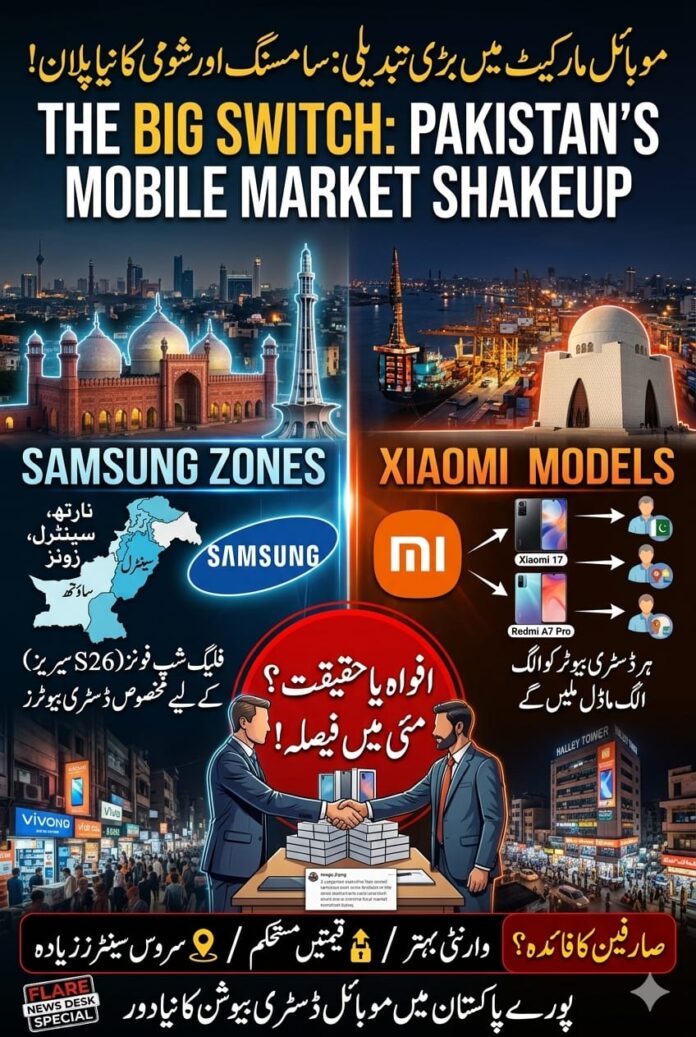
Samsung’s “Zonal” Distribution Model
Samsung is introducing a region-based distribution framework, particularly for its flagship devices like the Galaxy S26 series.
Regional Segmentation: Pakistan will be divided into three zones — North, Central, and South.
Controlled Distribution: Premium 5G models will be handled by only two to three key distributors per zone.
Objective: The goal is to eliminate internal price competition, stabilize market pricing, and ensure consistent availability of high-end devices such as the S26 Ultra.
Enhanced Service Network: Dedicated service centers will be established in major cities, including Islamabad, Lahore, and Karachi, under a unified “Zone Look” concept.
Xiaomi’s “Model-Exclusive” Policy
Starting May 2026, Xiaomi will implement a model-specific exclusivity strategy across Pakistan.
Exclusive Partnerships: Devices like the Xiaomi 17 and Redmi A7 Pro will be distributed through a single authorized national partner.
Global Context: The move comes amid a global memory chip shortage, which has increased production costs by approximately 15%.
Distributor Incentives: Exclusive rights are intended to protect distributor margins and prevent price undercutting by parallel importers.
Impact on Consumers
Category
Expected Outcome
Details
Pricing
Likely Increase
Reduced competition may lead to firmer pricing and fewer discounts.
Service Quality
Significant Improvement
Authorized distributors will be required to provide better warranty support and genuine parts.
Availability
More Structured
Products will be easier to find within designated zones, reducing reliance on grey market channels.
The Road Ahead
This shift reflects a broader trend toward market formalization and aligns with Pakistan’s target of achieving 94% local smartphone assembly. It also supports initiatives like the Technology Innovation Fund (TIF), aimed at enabling the re-export of refurbished devices.
Industry analysts predict that by 2027, smaller importers will be phased out, replaced by 4 to 5 major “mega-distributors” controlling the supply chain from assembly to retail.
Source: Flare Magazine – Special Investigative Report