
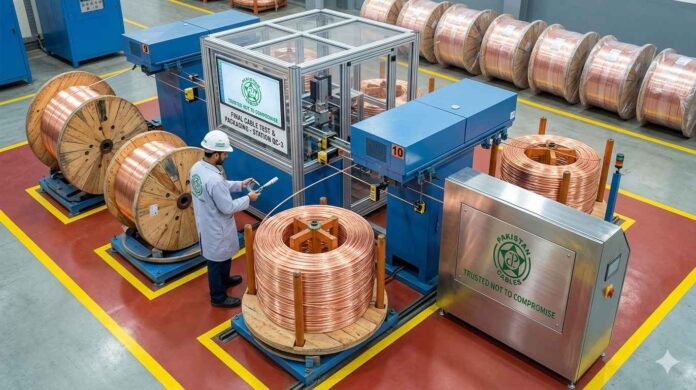

Pakistan Cables Successfully Raises Rs. 4 Billion Through Sukuk Issue
Pakistan Cables Limited has successfully raised Rs. 4 billion through a rated, unsecured, and privately placed short-term Sukuk issue aimed at supporting the company’s operational and working capital requirements. The development marks another important milestone for Islamic financing in Pakistan’s corporate sector and highlights the growing reliance of major companies on Shariah-compliant financial instruments to manage liquidity and business expansion needs.
The Sukuk issuance reflects increasing confidence in Pakistan’s Islamic finance market, which has witnessed steady growth in recent years as businesses seek alternative funding mechanisms outside conventional interest-based borrowing. The successful completion of the transaction demonstrates strong investor confidence in corporate Islamic instruments and underlines the importance of Sukuk financing in supporting industrial and commercial activity across the country.
According to details disclosed by the company, the short-term Sukuk carries a tenor of six months and has received an A-1 rating from a recognized credit rating agency. The proceeds raised through the Islamic financing instrument are expected to strengthen the company’s working capital position and support ongoing business operations.
What Is Sukuk Financing?
Sukuk is an Islamic financial instrument structured in accordance with Shariah principles. Unlike conventional bonds that involve interest payments, Sukuk represents ownership or participation in underlying assets, projects, or business activities.
Islamic finance prohibits interest-based lending, commonly referred to as riba, which has led to the development of alternative financing mechanisms such as Sukuk, Murabaha, Ijarah, and Musharakah structures.
Sukuk has become one of the fastest-growing segments of global Islamic finance because it allows governments and corporations to raise capital while complying with Islamic financial principles.
Companies use Sukuk financing for a variety of purposes including expansion projects, infrastructure development, liquidity management, refinancing, and operational funding requirements.
In Pakistan, Sukuk instruments have gained increasing popularity among corporations, financial institutions, and investors seeking Shariah-compliant investment opportunities.
Details of the Rs. 4 Billion Sukuk Issue
Pakistan Cables Limited issued a privately placed short-term Sukuk worth Rs. 4 billion to meet its working capital and operational financing needs.
The Sukuk has a tenor of six months, making it a short-duration financing instrument designed to provide temporary liquidity support and operational flexibility.
The issuance has also received an A-1 rating, which generally indicates strong credit quality and a high degree of confidence regarding timely repayment obligations.
Privately placed Sukuk transactions are typically offered to selected institutional investors rather than the general public. These investors may include banks, Islamic financial institutions, mutual funds, insurance companies, and corporate investment entities.
The company informed the Pakistan Stock Exchange regarding the successful issuance and confirmed that the funds would be utilized to support operational activities and working capital management.
Importance of Working Capital for Industrial Companies
Working capital plays a crucial role in the operations of manufacturing and industrial companies. It refers to the funds required to manage daily business activities such as purchasing raw materials, paying suppliers, managing inventory, handling operational expenses, and maintaining production cycles.
For companies operating in industrial sectors, sufficient working capital is essential for maintaining uninterrupted operations and meeting market demand efficiently.
Businesses often seek short-term financing instruments to address temporary liquidity requirements arising from seasonal demand changes, inventory buildup, delayed receivables, or expansion activities.
The successful Sukuk issuance is expected to help Pakistan Cables maintain operational stability and support its business activities without disruption.
Efficient working capital management is particularly important in today’s economic environment where inflation, currency fluctuations, and rising operational costs continue affecting industrial businesses.
Growing Popularity of Islamic Finance in Pakistan
Pakistan’s Islamic finance sector has experienced significant growth over the past decade. Both public and private sector organizations are increasingly turning toward Shariah-compliant financing solutions to meet funding requirements.
Islamic banking assets and deposits have steadily expanded, while Sukuk issuance has become an important source of financing for infrastructure projects, corporate funding, and government borrowing.
Many investors prefer Islamic financial instruments because they align with ethical and religious investment principles while offering competitive financial returns.
The expansion of Islamic finance has also encouraged greater financial inclusion by attracting individuals and institutions seeking alternatives to conventional interest-based banking systems.
Corporate Sukuk issuances such as this one demonstrate how Islamic financing is becoming an increasingly important component of Pakistan’s financial markets.
Role of Credit Ratings in Sukuk Issuance
Credit ratings play an important role in corporate financing transactions because they help investors assess the financial strength and repayment capacity of issuers.
The A-1 rating assigned to the Sukuk indicates a strong ability to meet short-term financial obligations and reflects investor confidence in the company’s creditworthiness.
Rating agencies evaluate various factors before assigning ratings, including financial performance, liquidity position, operational stability, industry outlook, debt management, and overall business risk.
A favorable credit rating can improve investor participation and enhance the attractiveness of financing instruments in the market.
For companies, maintaining strong credit ratings is essential for accessing financing at competitive terms and strengthening market credibility.
Privately Placed Sukuk and Institutional Investors
Private placement is a financing method in which securities are offered directly to selected investors rather than being publicly traded or offered through open market subscriptions.
Privately placed Sukuk transactions are commonly used by corporations seeking efficient access to institutional funding without undergoing lengthy public offering procedures.
Institutional investors often participate in these transactions because they provide opportunities for relatively stable short-term returns while diversifying investment portfolios.
Islamic banks and financial institutions remain among the largest investors in Sukuk markets because these instruments align with Shariah compliance requirements.
The successful placement of the Rs. 4 billion Sukuk reflects strong institutional demand for quality Islamic financial products in Pakistan.
Pakistan’s Industrial Sector and Financing Needs
Industrial companies in Pakistan continue facing various financial and operational challenges due to inflation, currency depreciation, rising input costs, and economic uncertainty.
Manufacturing businesses often require flexible financing solutions to manage production cycles, maintain inventory levels, and support operational continuity.
Short-term financing instruments such as Sukuk provide businesses with liquidity support while reducing dependence on conventional borrowing mechanisms.
Companies operating in sectors such as manufacturing, energy, textiles, construction materials, and engineering increasingly rely on diversified financing structures to manage business risks and sustain growth.
The successful Sukuk issuance by Pakistan Cables highlights the growing importance of alternative financial solutions in supporting industrial sector resilience.
Expanding Corporate Sukuk Market in Pakistan
Pakistan’s corporate Sukuk market has expanded steadily as more companies explore Islamic financing options for funding operational and strategic requirements.
Financial experts believe the growth of the Sukuk market is helping deepen Pakistan’s capital markets while providing investors with greater product diversity.
The increasing participation of corporate issuers also contributes to the development of long-term Islamic financial infrastructure within the country.
Regulatory support, rising investor demand, and broader awareness of Islamic finance products have further encouraged market expansion.
Large corporate Sukuk issuances also help strengthen confidence in Pakistan’s financial system by promoting transparency, structured financing practices, and diversified funding sources.
Advantages of Sukuk Financing for Companies
Sukuk offers several advantages for businesses seeking financing.
One major benefit is access to a broader investor base that includes institutions and individuals specifically seeking Shariah-compliant investment opportunities.
Sukuk structures can also enhance financial flexibility by providing alternative funding channels beyond traditional bank loans.
For some companies, Islamic financing may improve corporate image and strengthen relationships with investors who prioritize ethical financial practices.
Sukuk instruments can additionally support balance sheet management by diversifying financing sources and reducing concentration risks.
As Islamic finance continues growing globally, companies issuing Sukuk may also attract interest from international investors looking for exposure to emerging market Islamic assets.
Impact on Pakistan’s Financial Markets
Corporate Sukuk issuances contribute positively to the development of Pakistan’s financial markets by increasing market depth and encouraging product innovation.
A stronger Islamic capital market can improve overall financial stability and create additional opportunities for investors, businesses, and financial institutions.
The expansion of Islamic financing instruments may also help strengthen investor confidence by offering structured, transparent, and regulated investment products.
Financial analysts believe increased corporate participation in Sukuk markets could encourage further modernization and diversification of Pakistan’s capital market ecosystem.
Growing activity in Islamic finance may also attract regional and international investors interested in participating in Pakistan’s evolving financial sector.
Economic Environment Driving Demand for Alternative Financing
Current economic conditions have increased the importance of efficient financing strategies for businesses operating in Pakistan.
Inflationary pressures, rising financing costs, and uncertain global economic conditions continue affecting corporate profitability and liquidity management.
In such an environment, companies increasingly seek financing solutions that provide flexibility, stability, and efficient cost management.
Islamic financial products such as Sukuk are becoming more attractive because they offer diversified funding opportunities aligned with evolving investor preferences.
The successful Rs. 4 billion Sukuk issuance demonstrates how companies are adapting financing strategies to navigate economic challenges while maintaining operational strength.
Future Outlook for Islamic Corporate Financing
The future outlook for Islamic corporate financing in Pakistan remains positive as demand for Shariah-compliant investment products continues growing.
Experts expect more companies to explore Sukuk issuance for expansion projects, refinancing, operational support, and infrastructure development.
The increasing maturity of Pakistan’s Islamic finance industry may also encourage innovation in financial product structures and investment solutions.
Regulatory reforms, improved market infrastructure, and rising investor awareness could further accelerate the growth of corporate Sukuk markets in the coming years.
As businesses continue seeking diversified funding mechanisms, Islamic financing is likely to play an increasingly important role in supporting economic development and industrial growth.
Investor Confidence and Market Stability
Successful financing transactions often reflect broader investor confidence in both the issuing company and the financial system.
The completion of the Sukuk issuance demonstrates confidence in Pakistan Cables’ operational stability and financial management capabilities.
Investor participation in Islamic financing instruments also signals continued trust in the growth potential of Pakistan’s corporate and industrial sectors.
Strong institutional demand for corporate Sukuk may encourage additional issuers to enter the market and contribute to broader financial market development.
Stable financing access remains essential for businesses aiming to maintain competitiveness, support expansion, and navigate economic uncertainties.
Conclusion
Pakistan Cables Limited’s successful Rs. 4 billion Sukuk issuance marks an important development for both the company and Pakistan’s growing Islamic finance sector. The short-term Islamic financing instrument will support working capital and operational requirements while demonstrating the increasing role of Sukuk in corporate financing strategies.
The transaction highlights growing investor confidence in Shariah-compliant financial products and reflects the broader expansion of Islamic capital markets in Pakistan. As companies continue seeking diversified and flexible funding solutions, Sukuk financing is expected to become an even more important component of the country’s financial ecosystem.
With rising demand for ethical and Islamic investment products, the future of corporate Sukuk markets in Pakistan appears increasingly promising, offering new opportunities for businesses, investors, and the wider economy.
Read More


