
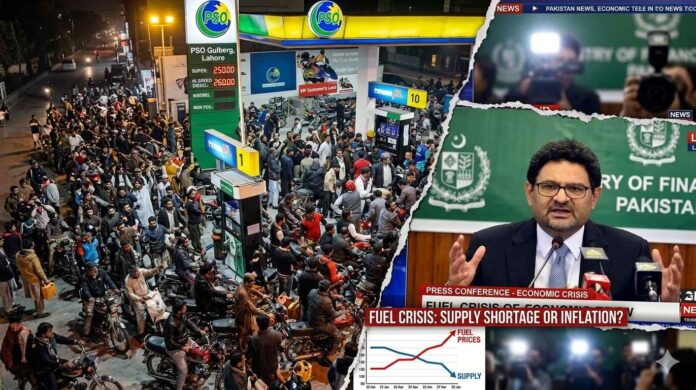

Pakistan’s ongoing fuel price adjustments have once again sparked debate, as former finance minister Miftah Ismail publicly criticized the government’s approach to managing petrol and diesel prices. His remarks have drawn attention to what he describes as a recurring pattern in economic policymaking, where the burden of rising costs is disproportionately placed on ordinary citizens while certain sectors continue to benefit.
The latest increase in fuel prices has intensified public concern, especially as it comes at a time when inflationary pressures are already affecting household budgets. The criticism highlights broader concerns about economic management, distribution of financial burdens, and the long-term impact of policy decisions on living standards.
Rising Fuel Prices and Public Reaction
Fuel prices play a critical role in shaping the economic landscape, as they directly influence transportation costs, production expenses, and overall inflation. Each increase in petrol and diesel prices has a ripple effect across the economy, impacting both consumers and businesses.
The recent price hike has been described as another blow to the public, with many households already struggling to cope with rising costs of living. For many citizens, fuel price increases translate into higher expenses for commuting, goods, and essential services.
Public reaction has been marked by frustration and concern, as repeated adjustments have created uncertainty and financial strain. The perception that these increases occur frequently and without sufficient relief measures has further fueled dissatisfaction.
Criticism of Policy Approach
Miftah Ismail’s critique focuses on what he sees as a systemic issue in economic policymaking. According to his analysis, fuel price adjustments are often implemented in a way that places the greatest burden on ordinary citizens, while benefits are distributed unevenly across different sectors.
He argues that this approach reflects a broader pattern in which policy decisions prioritize certain economic interests over the well-being of the general population. This perspective has resonated with many observers who have raised similar concerns about the fairness and effectiveness of current policies.
The criticism also points to a lack of transparency in how fuel prices are determined, with questions being raised about the underlying factors that drive these adjustments.
Impact on Different Sectors
One of the key points highlighted in the critique is the varying impact of fuel price changes on different sectors of the economy. While consumers face higher costs, certain industries are perceived to benefit from pricing mechanisms and policy decisions.
Oil marketing companies, for example, are often seen as gaining from adjustments in petrol prices, as changes in pricing structures can affect their margins. Similarly, refineries may benefit from trends in diesel pricing, depending on how costs and revenues are structured.
The agricultural sector has also been a focal point of concern, particularly in relation to fertilizer prices. Higher costs of inputs such as urea can place significant pressure on farmers, affecting productivity and profitability.
These dynamics highlight the complexity of the economic system, where policy decisions can have both positive and negative effects depending on the sector.
Historical Context and Recurring Patterns
The critique extends beyond current fuel price adjustments to include broader economic trends observed over time. Previous episodes involving price increases in key commodities such as sugar and wheat have been cited as examples of similar patterns.
In these cases, consumers often faced higher prices, while intermediaries and other stakeholders were perceived to benefit more significantly. Such patterns have contributed to a growing sense of imbalance in the distribution of economic gains and losses.
By drawing parallels with past events, the argument suggests that the current situation is part of a larger, recurring issue that requires structural reforms rather than short-term fixes.
Burden on Ordinary Citizens
At the heart of the criticism is the impact on ordinary citizens, who are seen as bearing the brunt of economic adjustments. Rising fuel prices contribute to higher transportation costs, increased prices of goods and services, and overall inflation.
For many households, this means reduced purchasing power and greater financial stress. As incomes struggle to keep pace with rising costs, the gap between earnings and expenses continues to widen.
This situation is particularly challenging for lower- and middle-income groups, who have limited capacity to absorb additional financial pressures. The lack of targeted relief measures further exacerbates the issue.
Concerns Over Government Expenditure
Another important aspect of the critique relates to government expenditure and the allocation of public resources. Concerns have been raised about the perceived disparity between the financial pressures faced by citizens and the benefits enjoyed by political and administrative elites.
According to the argument, rising costs for the public are accompanied by increasing expenditures on government operations, creating a sense of imbalance. This perception can undermine public trust and confidence in economic management.
Addressing these concerns requires greater transparency and accountability in how public funds are utilized, as well as efforts to ensure that resources are allocated in a way that benefits the broader population.
Decline in Real Incomes
One of the most significant consequences of rising prices is the decline in real incomes. When the cost of living increases faster than wages, the purchasing power of individuals decreases, leading to a reduction in living standards.
The critique highlights that real incomes have declined over time, indicating that economic growth has not translated into improved financial well-being for many citizens. This trend raises important questions about the inclusiveness of economic policies and the distribution of benefits.
Reversing this trend requires a focus on sustainable growth, job creation, and policies that support income growth for all segments of society.
Broader Economic Implications
The issues raised in the critique have broader implications for the economy as a whole. Persistent inflation, rising costs, and declining purchasing power can affect consumer confidence, investment, and overall economic activity.
Businesses may also face challenges as higher costs impact profitability and demand. This can lead to slower economic growth and reduced opportunities for expansion.
Addressing these challenges requires a comprehensive approach that considers both short-term measures and long-term structural reforms.
Need for Policy Reforms
The recurring nature of these issues underscores the need for meaningful policy reforms. This includes improving transparency in pricing mechanisms, ensuring fair distribution of costs and benefits, and implementing measures to protect vulnerable groups.
Reforms in energy pricing, taxation, and subsidy structures can help create a more balanced system that supports both economic growth and social equity. Strengthening regulatory frameworks and promoting competition can also contribute to better outcomes.
Ultimately, the goal should be to create a system that is efficient, transparent, and responsive to the needs of the population.
Public Expectations and Accountability
As economic challenges continue, public expectations for effective governance and accountability are increasing. Citizens are seeking policies that not only address immediate concerns but also provide long-term stability and growth.
Building trust requires clear communication, consistent policies, and a commitment to addressing the needs of all segments of society. Ensuring that economic decisions are made in a transparent and inclusive manner can help strengthen public confidence.
Conclusion
The critique of fuel price policies highlights important issues related to economic management, fairness, and the distribution of financial burdens. Rising petrol and diesel prices have become a focal point for broader concerns about inflation, income inequality, and policy effectiveness.
Addressing these challenges requires a balanced approach that considers the needs of both the economy and the population. By implementing reforms, improving transparency, and focusing on inclusive growth, it is possible to create a more sustainable and equitable economic system.
As the debate continues, the focus will remain on finding solutions that provide relief to citizens while supporting long-term economic stability and development.
Read More


