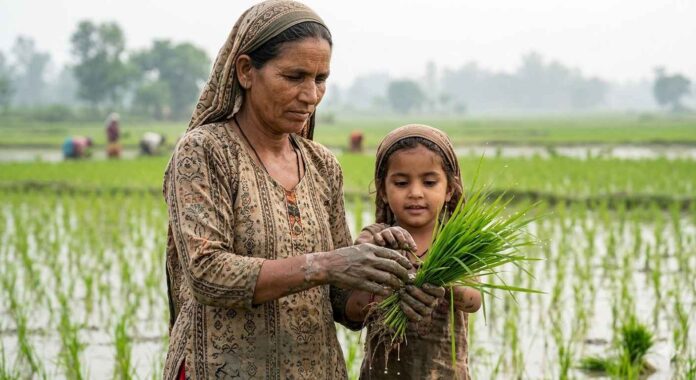

Pakistan’s agriculture sector stands at a critical turning point as farmers, agricultural experts, and rural communities look toward the federal budget for 2026-27 with a mix of concern, uncertainty, and diminishing optimism. Once regarded as the backbone of the national economy, agriculture continues to face a growing list of challenges ranging from rising production costs and water shortages to policy inconsistencies and declining profitability.
For millions of farmers across the country, the upcoming budget is not merely an annual financial exercise. It represents a potential opportunity to address longstanding structural weaknesses that have gradually reduced agricultural productivity, weakened farm incomes, and threatened the sustainability of rural livelihoods.
Agriculture remains one of the largest contributors to economic activity, employment, and food security. Yet despite its importance, many stakeholders believe the sector has not received the level of policy attention and investment required to ensure long-term growth.
As budget preparations intensify, farmers are demanding clear policy direction, practical reforms, and meaningful support measures capable of restoring confidence in a sector that continues to face increasing pressure from economic and environmental challenges.
Agriculture Remains Vital to Pakistan’s Economy
Agriculture continues to play a central role in the country’s economic structure. The sector provides employment to a substantial portion of the population and supports numerous industries linked to food processing, textiles, exports, transportation, and retail trade.
The performance of agriculture has a direct impact on rural incomes, inflation, food availability, and overall economic growth. Strong agricultural output contributes positively to national development, while poor harvests can trigger inflationary pressures, increase imports, and weaken economic stability.
Despite its significance, agricultural growth has remained inconsistent in recent years. Many farmers have struggled to maintain profitability due to rising input costs and unpredictable market conditions.
The upcoming budget therefore carries significant importance for both farmers and policymakers seeking to improve economic performance and strengthen food security.
Rising Input Costs Continue to Hurt Farmers
One of the biggest concerns facing farmers today is the rapid increase in agricultural production costs.
Over the past several years, the prices of key agricultural inputs have increased substantially. Fertilizers, pesticides, seeds, fuel, machinery, irrigation equipment, and transportation expenses have all become significantly more expensive.
As input costs continue to rise, profit margins have narrowed considerably.
Many farmers argue that while production expenses have increased sharply, the prices they receive for their crops often fail to reflect these higher costs. This imbalance has made farming increasingly difficult, particularly for small and medium-sized landowners.
For many agricultural producers, the challenge is no longer simply improving yields. Instead, it is ensuring that cultivation remains financially viable.
Stakeholders believe the budget should include targeted measures aimed at reducing input costs and supporting agricultural productivity.
Policy Inconsistency Has Damaged Farmer Confidence
Another major concern repeatedly highlighted by farmers is the lack of consistent agricultural policies.
Agricultural planning often requires long-term decision-making. Farmers make planting, investment, and production decisions months before harvest. Sudden policy shifts can significantly disrupt these plans.
The wheat sector provides a clear example of how policy reversals can create uncertainty.
Over recent years, changes in procurement mechanisms, market interventions, pricing policies, and purchasing arrangements have created confusion among growers. Many farmers argue that inconsistent decisions have made it difficult to predict market conditions and manage risks effectively.
Agricultural stakeholders believe the government must establish a clear and stable policy framework that remains consistent over multiple years.
Long-term certainty would encourage investment, improve planning, and strengthen confidence throughout the agricultural value chain.
Farm Profitability Continues to Decline
Profitability has emerged as one of the most pressing issues confronting the agricultural sector.
Many farmers report that production costs are increasing faster than revenues. This trend has significantly reduced returns from farming activities.
Declining profitability discourages investment in modern farming techniques, improved seeds, and advanced equipment.
In some regions, farmers have reported difficulties recovering basic cultivation costs after harvest. Such conditions threaten the sustainability of agricultural operations and increase financial stress among rural households.
Agricultural representatives have repeatedly called for mechanisms that ensure fair compensation for producers.
Many stakeholders argue that crop prices should reflect actual production costs while providing farmers with reasonable profit margins that allow continued investment and growth.
Calls for a Comprehensive Agricultural Pricing Framework
Experts and farmer organizations have proposed the establishment of a transparent agricultural pricing framework.
Such a system would involve calculating the actual cost of producing major crops each year and determining support prices accordingly.
Supporters argue that a predictable pricing mechanism could help stabilize farm incomes and reduce uncertainty.
A transparent framework would also improve market confidence and encourage greater investment throughout the agricultural sector.
Many farming communities view pricing reform as one of the most important issues that should be addressed through Budget 2026-27.
Small Farmers Face Increasing Financial Pressure
Small-scale farmers represent a significant portion of the agricultural population.
Many of these farmers operate on limited landholdings and possess fewer financial resources than larger agricultural enterprises.
As costs continue rising, smaller farmers often struggle to access quality inputs, modern equipment, and affordable financing.
The financial burden becomes even greater during periods of poor weather, low crop prices, or water shortages.
Agricultural experts emphasize that targeted support for small farmers is essential to maintaining rural economic stability and food production.
The upcoming budget could play a critical role in addressing these challenges through subsidies, financing programs, and infrastructure investments.
Fragmented Land Holdings Reduce Efficiency
Land fragmentation remains another significant challenge.
As agricultural land is divided among family members over generations, average farm sizes continue to shrink.
Smaller landholdings often limit productivity and reduce economies of scale. Farmers operating on fragmented plots may face difficulties using modern machinery efficiently or implementing advanced farming techniques.
Agricultural specialists have suggested encouraging cluster farming models that allow neighboring farmers to coordinate production activities.
Such approaches could improve productivity, reduce costs, and enhance access to modern agricultural services.
Mechanization Remains Out of Reach for Many Farmers
Agricultural mechanization has become increasingly important for improving efficiency and productivity.
However, many farmers cannot afford expensive tractors, harvesters, irrigation systems, and other equipment required for modern farming.
The challenge is particularly severe for small landowners whose farms may not justify the cost of purchasing machinery outright.
Experts have recommended creating agricultural machinery rental centers where farmers can access equipment at affordable rates.
Such initiatives could significantly improve productivity while reducing financial barriers.
Water Scarcity Threatens Agricultural Sustainability
Water shortages continue to pose one of the greatest threats to agricultural development.
Many farming regions face recurring water deficits that affect crop yields and limit agricultural expansion.
Growing demand, population increases, climate pressures, and infrastructure limitations have intensified concerns regarding water availability.
Farmers across multiple regions report increasing difficulties securing sufficient irrigation supplies during critical growing periods.
Water scarcity not only affects productivity but also raises production costs as farmers rely more heavily on groundwater extraction and alternative irrigation methods.
Climate Change Is Creating New Challenges
Climate-related risks are becoming increasingly significant for agriculture.
Unpredictable rainfall patterns, extreme temperatures, floods, droughts, and changing weather conditions are affecting agricultural production across the country.
Many farmers now face greater uncertainty regarding planting schedules, crop selection, and harvest outcomes.
Climate resilience has therefore become an essential component of modern agricultural planning.
Experts argue that future budgets should allocate greater resources toward climate adaptation, water management, and sustainable farming practices.
Investment in Agricultural Infrastructure Remains Essential
Infrastructure development remains a key requirement for agricultural growth.
Improved irrigation systems, storage facilities, transportation networks, research institutions, and market infrastructure can significantly enhance productivity and reduce losses.
Many rural areas continue to suffer from inadequate infrastructure, limiting farmers’ ability to access markets and maximize returns.
Strategic public investment could help modernize agricultural operations and improve competitiveness.
Agricultural Exports Need Stronger Support
Agriculture has significant export potential that remains underutilized.
Expanding agricultural exports could generate foreign exchange earnings, create employment opportunities, and strengthen rural economies.
However, achieving these goals requires investments in quality standards, logistics, processing facilities, and market access initiatives.
Farmers and exporters believe Budget 2026-27 should include measures designed to improve export competitiveness and encourage value-added agricultural production.
Research and Innovation Must Become Priorities
Agricultural innovation plays a critical role in improving productivity and sustainability.
Investments in research can help develop better seed varieties, improve disease resistance, enhance water efficiency, and increase yields.
Many experts argue that greater support for agricultural research institutions is necessary to address future challenges.
Modern technologies, precision farming techniques, and digital solutions could also contribute significantly to agricultural transformation.
What Farmers Want From Budget 2026-27
As budget discussions continue, farmers are seeking several key measures:
- Reduced costs for fertilizers and agricultural inputs
- Clear and consistent agricultural policies
- Improved crop pricing mechanisms
- Expanded irrigation investments
- Support for mechanization initiatives
- Affordable agricultural financing
- Climate adaptation programs
- Better market access
- Enhanced export support
- Long-term rural development strategies
Many stakeholders believe these reforms are necessary to restore confidence and ensure the sector’s future sustainability.
The Future of Pakistan’s Agriculture Depends on Policy Choices
The decisions made in Budget 2026-27 could significantly influence the direction of the agricultural sector for years to come.
Farmers are looking for more than short-term relief. They are seeking a coherent strategy capable of addressing structural weaknesses while supporting long-term growth and competitiveness.
Agriculture remains fundamental to economic development, food security, employment, and rural prosperity. However, without meaningful reforms, many of the sector’s existing challenges may continue to intensify.
As policymakers finalize budget proposals, expectations remain high across farming communities. Whether those expectations translate into practical support measures will become clear when the federal budget is unveiled.
For now, farmers remain hopeful but cautious, waiting to see whether Budget 2026-27 delivers the policy certainty, investment, and support needed to secure the future of agriculture and strengthen one of the most important sectors of the national economy.
Read More