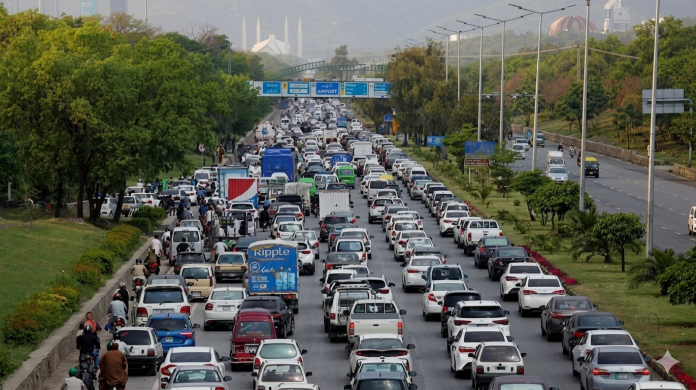

Fluctuations in global oil prices and growing uncertainty in international energy markets have raised concerns about fuel availability in many countries. In Pakistan, policymakers have recently discussed temporary measures such as expanding work-from-home arrangements to reduce daily commuting and conserve fuel.
While these short-term steps may provide limited relief, they also highlight a deeper challenge. Pakistan’s transportation system depends heavily on imported petroleum products, making it vulnerable to global supply disruptions. When fuel prices rise or supplies become constrained, the effects are felt quickly across the economy.
The situation has triggered an important question: what transportation alternatives can help Pakistan maintain mobility during fuel shortages?
Pakistan’s Heavy Dependence on Imported Fuel
Pakistan relies heavily on international energy supplies to meet its transportation needs. A significant portion of the country’s crude oil and liquefied natural gas imports pass through key global shipping routes. Any disruption in these routes can quickly affect domestic fuel availability.
Transportation alone accounts for the majority of petroleum consumption in the country. Cars, buses, trucks, motorcycles, and delivery vehicles all rely largely on petrol and diesel. As a result, even small increases in global oil prices can create serious economic pressure.
Higher fuel prices raise transportation costs, increase logistics expenses for businesses, and contribute to inflation throughout supply chains.
Limits of Work-From-Home Policies
Encouraging employees to work from home during fuel shortages may reduce daily commuting for some segments of the workforce. Office-based jobs in sectors such as technology, finance, and administration can adapt to remote work arrangements relatively easily.
However, this solution has clear limitations. A large portion of Pakistan’s workforce depends on physical mobility to perform their jobs. Factory workers, healthcare staff, transport operators, delivery riders, retail employees, and many service workers must travel daily to workplaces.
For these workers, remote work is not a practical option. When fuel prices rise sharply or supplies become limited, they face higher commuting costs and increased financial pressure.
Economic Impact of Fuel Supply Disruptions
Fuel shortages or price spikes have wide-ranging effects on Pakistan’s economy. Transportation costs increase for businesses that rely on trucks and delivery vehicles to move goods across the country.
These higher costs often lead to increased prices for food, consumer goods, and essential services. In addition, the country spends billions of dollars each year importing petroleum products, placing pressure on foreign exchange reserves.
As a result, global oil price volatility directly affects Pakistan’s economic stability.
The Case for Electric Mobility
One potential solution to reduce dependence on imported fuels is the transition toward electric mobility. Electric vehicles run on electricity rather than petrol or diesel, which means their energy source can be generated domestically.
This distinction becomes especially important as Pakistan gradually expands its renewable energy capacity. Hydropower, wind, and solar energy are becoming larger components of the national energy mix.
When vehicles operate on electricity generated locally, the transportation system becomes less vulnerable to disruptions in international oil markets.
Growth of Renewable Energy
Pakistan has been steadily increasing its renewable energy capacity in recent years. Hydropower projects, wind farms, and solar energy installations are contributing more electricity to the national grid.
At the same time, many households and businesses have begun installing rooftop solar systems to reduce electricity costs and improve energy independence.
This rapid expansion of renewable energy creates an opportunity to support electric transportation. Vehicles powered by electricity can use energy generated from domestic renewable sources rather than imported oil.
Benefits for Consumers
Electric mobility offers several advantages for individual consumers. Electricity is generally cheaper than petrol when measured on a per-kilometre basis, which can significantly reduce long-term driving costs.
Electric vehicles also have fewer mechanical components compared to conventional engines, which often results in lower maintenance expenses. Over time, these savings can make electric transportation more affordable for many households.
As awareness grows, consumers may increasingly evaluate vehicles based on their total cost of ownership rather than just the purchase price.
Building a More Resilient Transport System
While electric vehicles alone cannot solve every energy challenge, they can play an important role in strengthening Pakistan’s transportation system. Reducing dependence on imported petroleum products can improve economic resilience and reduce exposure to global fuel price shocks.
At the same time, expanding public transport, encouraging energy-efficient mobility, and supporting clean transportation technologies can help create a more sustainable system.
Temporary measures such as work-from-home policies may help during short-term crises. However, long-term stability will depend on building a transportation network that relies less on imported fuel and more on locally produced energy.
By investing in cleaner technologies and renewable power, Pakistan can move toward a mobility system that is both economically stable and environmentally sustainable.