
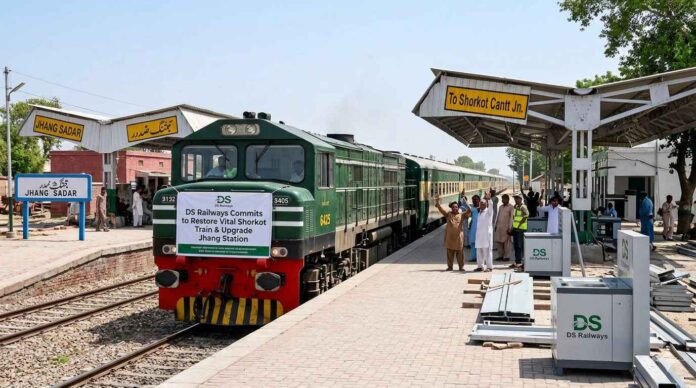

A Major Push to Restore Essential Rail Connectivity
Rail transport has long played a vital role in connecting communities across Pakistan, particularly in semi-urban and rural regions where alternative transport options are limited or costly. In this context, the recent commitment by railway authorities to restore a key train service operating through Shorkot and improve facilities at Jhang railway stations has generated significant public interest and optimism.
The announcement comes at a time when many passengers have been facing serious difficulties due to the suspension of train services in the region. The absence of this connectivity has disrupted daily life, affecting commuters, students, workers, and traders who rely heavily on affordable and reliable transport.
The planned revival and infrastructure improvements are being viewed as an important step toward restoring mobility and easing the economic burden on local communities.
Concerns Raised During Official Visit to Jhang
During a recent visit to Jhang, senior railway officials reviewed passenger facilities at both Jhang City and Jhang Cantt stations. The visit attracted a large number of local residents, reflecting the importance of railway services in the area and the level of public concern regarding their suspension.
Community members used the opportunity to highlight the challenges they have been facing since the discontinuation of train operations. Many expressed frustration over increased travel costs and limited transportation options, which have significantly impacted their daily routines.
Local citizens emphasized that the suspended train service had once served as a lifeline, connecting remote areas with urban centers and facilitating both personal and economic activities.
Importance of the Shorkot Train Service for Local Communities
The train service operating through Shorkot and Jhang was considered a crucial transport link for thousands of passengers. Its importance extended beyond simple commuting, playing a key role in supporting education, employment, and trade.
Students relied on the service to reach educational institutions in nearby cities, ensuring access to academic opportunities that would otherwise be difficult to attain. Similarly, workers used the train for daily travel to job locations, where alternative transport options would often be too expensive or unreliable.
Traders also depended on the rail network for the movement of goods, helping sustain local markets and small businesses. The suspension of this service has therefore had a widespread impact across multiple sectors of the local economy.
Economic Burden of Alternative Transport
With the train service no longer operational, many passengers have been forced to rely on alternative forms of transportation. These alternatives are often significantly more expensive and less efficient, placing a heavy financial burden on low-income households.
Increased travel costs have made it difficult for many individuals to maintain regular commuting patterns. For some, this has resulted in reduced access to education and employment opportunities, further deepening economic challenges in already vulnerable communities.
The absence of affordable rail transport has also affected the movement of goods, increasing operational costs for traders and small business owners. This has had a ripple effect on local markets and overall economic activity in the region.
Railways Administration Acknowledges Public Concerns
During the visit, railway officials acknowledged the legitimacy of public concerns regarding the suspension of services and the condition of station facilities. The administration expressed awareness of the difficulties faced by daily commuters and emphasized its commitment to addressing these issues.
It was stated that steps are being taken to improve passenger facilities and enhance the overall travel experience. The matter of restoring the suspended train service is expected to be formally presented to higher authorities within the railway hierarchy for further consideration.
This includes consultation with senior leadership to evaluate the feasibility of restarting operations and improving service efficiency.
Plans for Service Restoration and Infrastructure Upgrade
The potential revival of the Shorkot train service is currently under review. Authorities are actively exploring options to restore operations in a way that ensures sustainability and reliability.
Alongside service restoration, significant attention is being given to upgrading railway infrastructure in Jhang. Proposed improvements include modernization of station platforms, waiting areas, and passenger amenities to enhance comfort and safety.
These upgrades aim to bring station facilities in line with modern standards, ensuring a more efficient and user-friendly experience for travelers.
Focus on Passenger Comfort and Accessibility
A key priority of the proposed improvements is enhancing passenger comfort and accessibility. This includes better seating arrangements, improved cleanliness, upgraded ticketing systems, and more organized passenger flow management.
Efforts are also being made to ensure that stations are more accessible for elderly passengers and individuals with disabilities. These changes are part of a broader effort to make rail transport more inclusive and user-focused.
Improving passenger experience is expected to encourage greater use of rail services once operations are restored, contributing to increased efficiency and reduced pressure on road transport systems.
Community Engagement and Local Response
The railway visit also highlighted strong community engagement, with local residents actively participating in discussions and sharing their concerns. The level of public involvement reflects the importance of rail infrastructure in everyday life.
Many residents expressed hope that the commitments made during the visit would lead to tangible improvements. There is a strong expectation that train services will be restored soon and that station upgrades will be completed in a timely manner.
Community members view these developments as essential for restoring normalcy and improving quality of life in the region.
Role of Railways in Regional Development
Railways play a critical role in regional development by providing affordable transportation, supporting trade, and enhancing connectivity between urban and rural areas. In regions like Jhang and surrounding districts, rail services are often the most accessible mode of long-distance travel.
The restoration of suspended services is therefore not only a transportation issue but also an economic and social development priority. Improved rail connectivity can stimulate local economies, create employment opportunities, and facilitate better access to essential services.
Integration with Broader Development Efforts
The railway improvements are also aligned with broader development initiatives aimed at improving infrastructure and public services in the region. Alongside transport upgrades, attention is being given to healthcare and community development projects.
During the visit, officials also inspected a welfare hospital project in the area, which is expected to enhance healthcare services for local residents. Such integrated development efforts highlight the importance of coordinated planning across sectors.
By improving both transport and social infrastructure, authorities aim to create a more balanced and sustainable development framework for the region.
Challenges in Restoring Train Services
Despite strong public demand, restoring train services involves several logistical and financial challenges. These include maintenance of rail tracks, availability of rolling stock, operational costs, and scheduling efficiency.
Ensuring long-term sustainability requires careful planning and investment. Authorities must balance the need for affordable public transport with the financial realities of operating railway services.
Addressing these challenges will be essential for ensuring that restored services remain consistent and reliable in the long run.
Public Expectations and Future Outlook
Public expectations remain high regarding the restoration of the Shorkot train service and the upgrade of Jhang railway stations. Residents are hopeful that the commitments made by railway authorities will translate into concrete action.
There is a strong belief that improved rail connectivity will significantly ease transportation difficulties and contribute to local economic growth. For many, the return of train services represents not just convenience but also a sense of stability and progress.
Conclusion: A Step Toward Improved Connectivity and Growth
The commitment to restore the Shorkot train service and upgrade Jhang railway station marks an important step toward improving regional connectivity and addressing long-standing public concerns.
By focusing on both service restoration and infrastructure development, railway authorities aim to enhance passenger experience and support local communities more effectively. If implemented successfully, these measures could play a significant role in strengthening transportation networks and promoting economic development in the region.
Ultimately, the success of this initiative will depend on timely execution, sustained investment, and continued engagement with the communities it is designed to serve.
Read More
Currency Devaluation Drives Inflation and Raises Import Costs for the Public