
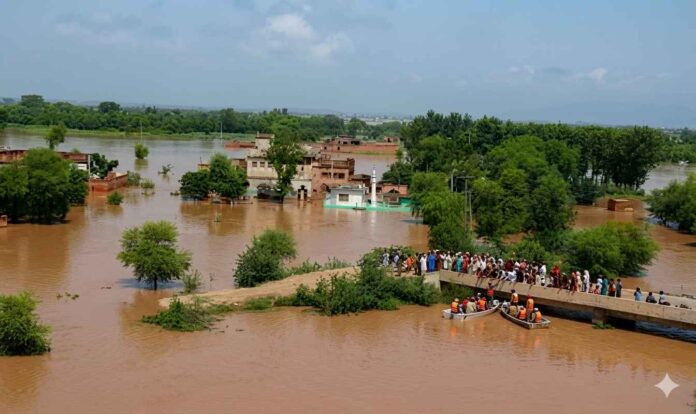

Pakistan is facing increasing climate-related risks as extreme weather events continue to intensify across the country, raising concerns over economic stability, food security, infrastructure resilience, and long-term development prospects. The International Monetary Fund has warned that Pakistan remains one of the countries most vulnerable to climate shocks, including severe floods, rising temperatures, glacier melt, droughts, and recurring heatwaves.
The warning comes as Pakistan continues recovering from repeated natural disasters that have caused widespread destruction, displaced millions of people, damaged infrastructure, disrupted agriculture, and placed additional pressure on the national economy.
According to the IMF’s latest assessment under the Extended Fund Facility review, climate risks are becoming a major structural challenge for Pakistan’s economy. The report highlights that repeated environmental disasters are not isolated incidents but part of a broader pattern of increasing climate vulnerability that could continue affecting economic growth and poverty reduction efforts in the coming years.
The IMF emphasized that Pakistan’s exposure to climate shocks is significantly higher due to its geographical conditions, large agricultural dependency, water management challenges, rapidly growing population, and limited financial resources available for climate adaptation and disaster recovery.
As global temperatures continue rising, Pakistan may face more frequent and more destructive climate events capable of severely affecting public finances, industrial activity, agricultural production, energy infrastructure, and social stability.
Flood Risks Continue to Threaten Pakistan’s Economy
Flooding remains one of the biggest climate-related threats facing Pakistan. The IMF noted that repeated floods in recent years caused massive economic losses and exposed the country’s deep structural vulnerabilities to extreme weather events.
The devastating floods experienced in recent years damaged roads, bridges, crops, irrigation systems, schools, hospitals, and residential areas across multiple provinces. Millions of people were displaced, while agricultural losses significantly impacted food production and rural livelihoods.
According to the IMF, the scale of destruction demonstrated how vulnerable Pakistan’s infrastructure and disaster management systems remain in the face of increasingly severe weather conditions.
The National Disaster Management Authority has already warned that the 2026 monsoon season could bring heavier rainfall, stronger weather systems, and a wider geographic spread of flood risks across the country.
Experts believe changing climate patterns are increasing the intensity and unpredictability of monsoon rainfall. Areas previously considered relatively safe from major flooding are now becoming increasingly vulnerable due to shifting rainfall patterns and extreme precipitation events.
Floods not only create immediate humanitarian crises but also generate long-term economic consequences. Reconstruction costs place enormous pressure on public finances, while damaged agricultural output contributes to inflation, food insecurity, and slower economic growth.
The IMF warned that without major investments in climate resilience and flood mitigation infrastructure, Pakistan could continue facing repeated cycles of destruction and economic disruption.
Heatwaves Becoming More Frequent and Dangerous
Alongside floods, intensifying heatwaves are emerging as another major climate threat for Pakistan.
Rising temperatures across South Asia have increased the frequency, duration, and severity of extreme heat events, with Pakistan experiencing record-breaking temperatures in multiple regions over recent years.
The IMF noted that heatwaves are creating growing risks for public health, labor productivity, water availability, agriculture, and energy demand.
Extreme heat conditions can severely affect economic activity by reducing outdoor labor productivity, damaging crops, increasing electricity consumption, and placing additional strain on healthcare systems.
Urban areas are particularly vulnerable because densely populated cities often experience higher temperatures due to limited green spaces, poor urban planning, and expanding concrete infrastructure.
The economic effects of prolonged heatwaves can spread across multiple sectors, including agriculture, construction, transportation, manufacturing, and energy generation.
In rural regions, rising temperatures can reduce crop yields and worsen water scarcity, directly affecting millions of people dependent on agriculture for their livelihoods.
Experts warn that without stronger climate adaptation strategies, Pakistan may face increasingly severe heat-related economic and social disruptions in the future.
Accelerated Glacier Melt Raises Serious Concerns
One of the most critical climate risks highlighted in the IMF report is the accelerating melt of glaciers located in Pakistan’s northern mountain regions.
Pakistan is home to the world’s largest concentration of non-polar glaciers, making the country uniquely exposed to glacier-related climate hazards.
Rising temperatures are increasing glacier melt rates, creating risks of glacial lake outburst floods, changes in river flows, water shortages, and long-term disruptions to water availability.
Glaciers play a crucial role in sustaining Pakistan’s river systems, agricultural irrigation, hydropower generation, and freshwater supplies. Changes in glacier behavior therefore have direct implications for food security, energy production, and economic stability.
Initially, accelerated glacier melting can increase flood risks by causing unstable glacial lakes to overflow or collapse. Over time, however, shrinking glaciers may reduce long-term water availability for agriculture and human consumption.
The IMF warned that glacier-related risks require urgent attention because water security is closely linked to Pakistan’s economic future and population growth.
Climate experts have repeatedly stressed that glacier monitoring, scientific data collection, and long-term water management planning will become increasingly important for Pakistan over the coming decades.
Government Expanding Flood Preparedness and Climate Planning
In response to growing climate threats, the government has initiated several climate resilience and disaster preparedness measures aimed at improving coordination, infrastructure protection, and emergency response capabilities.
According to the IMF report, Prime Minister Shehbaz Sharif has endorsed a national flood preparedness plan focused on strengthening cooperation between federal and provincial institutions.
The plan includes efforts to improve early warning systems, upgrade flood protection infrastructure, restore climate-damaged assets, and improve disaster response mechanisms.
Early warning systems are considered particularly important because timely evacuation and preparedness measures can significantly reduce casualties and economic losses during extreme weather events.
Authorities are also focusing on restoring and reinforcing infrastructure damaged during previous floods to improve resilience against future disasters.
Climate-resilient infrastructure is increasingly viewed as essential for protecting transportation networks, energy systems, irrigation facilities, and urban centers from recurring environmental shocks.
The government’s climate planning efforts reflect growing recognition that climate change is no longer a future concern but an immediate economic and national security challenge.
National Adaptation Plan and Digital Monitoring Systems
The IMF also highlighted Pakistan’s efforts to strengthen long-term climate planning through the National Adaptation Plan launched in 2023.
The adaptation strategy aims to improve national resilience against climate risks by integrating climate considerations into infrastructure planning, disaster management, water policy, agriculture, and environmental protection.
As part of these efforts, the Ministry of Climate Change and Environmental Coordination is developing a digital monitoring and evaluation system expected to be completed by mid-2026.
The digital system is intended to improve climate data collection, project monitoring, policy evaluation, and coordination between institutions responsible for environmental and disaster-related programs.
Modern climate management increasingly relies on accurate data, predictive modeling, and digital monitoring systems capable of tracking environmental changes and identifying high-risk areas.
Improved digital infrastructure may also strengthen policymaking by providing authorities with more reliable information regarding flood risks, heat patterns, glacier conditions, and climate vulnerabilities.
The integration of technology into climate planning reflects broader international trends toward data-driven environmental governance and resilience planning.
National Glacier Preservation Strategy Under Development
The government is also preparing a National Glacier Preservation Strategy aimed at strengthening glacier monitoring and integrating glacier-related information into national water planning systems.
The strategy is expected to focus on scientific research, environmental monitoring, risk assessment, and sustainable water resource management.
Because glaciers directly influence river systems and agricultural irrigation, preserving and monitoring these natural water reserves is becoming increasingly important for Pakistan’s long-term economic stability.
Climate scientists have warned that glacier retreat could eventually affect water availability across major agricultural regions, creating additional pressure on food production and rural livelihoods.
The proposed strategy may also support improved disaster preparedness for glacier-related flood risks in northern mountainous areas.
As climate conditions continue changing, water management is likely to become one of the most important policy challenges facing Pakistan in the coming decades.
Climate Risk Assessments Now Required for Major Projects
Under reforms introduced through the Resilience and Sustainability Facility program, Pakistan has started integrating climate risk assessments into public investment planning.
According to the IMF, all public investment projects exceeding Rs. 7.5 billion are now required to evaluate exposure to floods, heatwaves, and other climate-related hazards before receiving approval.
The move represents an important shift toward climate-conscious infrastructure planning and financial decision-making.
Historically, many infrastructure projects were designed without fully accounting for long-term climate risks, increasing vulnerability to environmental disasters.
The new framework aims to ensure that future infrastructure investments are more resilient, sustainable, and capable of withstanding changing climate conditions.
Authorities have also committed to allocating at least 30 percent of infrastructure spending toward climate-resilient and climate-related projects.
This commitment reflects growing recognition that climate adaptation investments are necessary to protect economic growth and reduce future disaster recovery costs.
Financial Sector Integrating Climate Considerations
The IMF report also highlighted efforts to integrate climate considerations into Pakistan’s financial and corporate sectors.
The State Bank of Pakistan has directed banks and development finance institutions to adopt the Pakistan Green Taxonomy from 2026.
Green taxonomies help financial institutions identify environmentally sustainable investments and support financing for climate-friendly projects.
The banking sector is increasingly being encouraged to consider environmental risks when evaluating lending decisions, investment strategies, and financial exposures.
At the same time, the Securities and Exchange Commission of Pakistan has introduced phased climate disclosure requirements for listed companies through revised ESG guidelines.
Environmental, social, and governance standards are becoming increasingly important globally as investors demand greater transparency regarding corporate sustainability practices and climate-related risks.
The integration of climate reporting standards may improve transparency, strengthen corporate accountability, and encourage environmentally responsible business practices within Pakistan’s private sector.
Pakistan Launches Sovereign Green Sukuk
The IMF also highlighted Pakistan’s first sovereign domestic green sukuk issuance worth $100 million.
The green sukuk was launched through the Pakistan Stock Exchange to finance renewable energy projects and climate-resilient infrastructure initiatives.
Green financing instruments are becoming increasingly popular worldwide as governments and corporations seek funding for environmentally sustainable development projects.
The issuance signals Pakistan’s growing interest in utilizing green finance to support climate adaptation, renewable energy expansion, and sustainable infrastructure development.
Climate financing is expected to play a critical role in helping developing countries address rising environmental risks while supporting economic growth and energy transition goals.
Solar Energy Expansion Accelerating Across Pakistan
The IMF noted that Pakistan’s renewable energy transition is also gaining momentum, with solar energy emerging as the fastest-growing component of the country’s electricity mix.
Rapid expansion in distributed solar generation is contributing to increased renewable energy capacity and reducing dependence on conventional energy sources.
The growth of solar energy reflects changing energy economics, rising electricity costs, improving solar technology affordability, and increasing awareness regarding environmental sustainability.
Renewable energy development is increasingly viewed as essential for reducing emissions, improving energy security, and supporting climate adaptation objectives.
The expansion of distributed solar generation may also help reduce pressure on the national electricity grid while improving energy access in underserved areas.
Pakistan’s transition toward renewable energy is likely to remain a major component of its broader climate resilience and sustainability strategy in the years ahead.
Climate Change Emerging as a Central Economic Challenge
The IMF’s warning highlights that climate change is no longer only an environmental issue for Pakistan but a major economic challenge with direct implications for growth, poverty reduction, infrastructure stability, and financial sustainability.
Repeated floods, extreme heat, glacier melt, and water-related risks are increasingly affecting agriculture, energy systems, industrial production, and public finances.
As climate shocks become more frequent and severe, the economic cost of inaction may continue rising significantly.
Pakistan’s future climate resilience will likely depend on sustained investments in disaster preparedness, climate-smart infrastructure, renewable energy, environmental governance, and long-term adaptation planning.
The coming years may prove critical in determining how effectively the country can strengthen resilience against escalating climate risks while protecting economic development and social stability.
Read More
IMF Urges Pakistan to Phase Out Tax Breaks for Special Economic Zones


