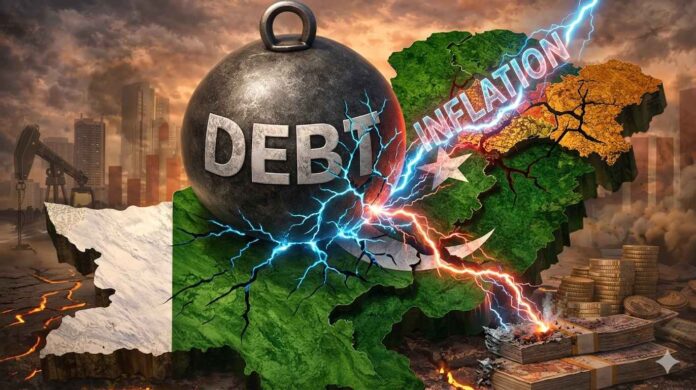

Pakistan’s energy sector is facing one of its most serious financial crises as circular debt in the electricity and gas sectors has surged to Rs. 5.206 trillion, reflecting mounting structural problems, rising operational costs, weak recoveries, and long-standing inefficiencies across the country’s energy system.
The latest figures reveal that the gas sector alone accounts for Rs. 3.442 trillion of the total circular debt burden, while the power sector contributes Rs. 1.764 trillion. The growing liabilities highlight the persistent financial instability affecting Pakistan’s energy infrastructure despite years of reform efforts, repeated tariff increases, and ongoing negotiations with international financial institutions.
The rapid increase in circular debt has become a major concern for policymakers, economists, energy companies, and international lenders because it directly affects public finances, electricity pricing, industrial competitiveness, and economic stability.
Pakistan’s energy sector has struggled for years with issues including transmission losses, power theft, subsidy burdens, delayed payments, under-recoveries, expensive generation costs, and inefficiencies in distribution systems. These problems have created a cycle where unpaid obligations continue accumulating across the entire energy supply chain.
The latest rise in circular debt indicates that despite multiple reform attempts, Pakistan continues facing severe financial stress in both the electricity and gas sectors.
What Circular Debt Means for Pakistan’s Economy
Circular debt refers to the chain of unpaid financial obligations that builds up within the energy sector when companies are unable to fully recover costs from consumers, subsidies, or government payments.
In Pakistan’s case, the problem begins when electricity distribution companies fail to recover the full cost of power supplied due to transmission losses, electricity theft, delayed bill payments, or politically constrained tariffs. As a result, distribution companies cannot fully pay power producers, who then struggle to pay fuel suppliers and other service providers.
This creates a continuous cycle of debt accumulation that spreads across the entire energy system.
In the gas sector, similar problems arise when gas utilities face pricing gaps, supply inefficiencies, infrastructure losses, and delayed recoveries from consumers or public institutions.
The growing debt burden weakens the financial health of energy companies, limits investment capacity, increases government liabilities, and creates pressure for repeated tariff increases.
Circular debt also discourages private investment in energy infrastructure because investors become concerned about payment risks and financial sustainability.
For Pakistan’s broader economy, the issue contributes to fiscal pressures, inflationary risks, reduced industrial competitiveness, and long-term uncertainty in the energy market.
Gas Sector Emerging as the Largest Contributor
The latest figures show that the gas sector has become the largest contributor to Pakistan’s energy sector circular debt crisis.
Out of the total Rs. 5.206 trillion circular debt burden, the gas sector accounts for Rs. 3.442 trillion, significantly exceeding the liabilities accumulated in the power sector.
The rising debt within the gas system reflects growing operational and pricing challenges facing the country’s gas utilities.
Pakistan’s gas sector has faced increasing stress due to declining domestic gas production, rising import dependence, expensive liquefied natural gas imports, infrastructure constraints, and pricing mismatches between actual supply costs and consumer tariffs.
The country’s growing energy demand has further complicated the situation as authorities struggle to balance affordability with financial sustainability.
In many cases, gas tariffs have historically remained below actual cost levels for certain consumer categories due to subsidy policies and political considerations.
As global energy prices fluctuated and imported fuel costs increased, the financial burden on gas utilities expanded significantly.
The accumulation of unpaid obligations within the gas sector now represents one of the biggest structural financial risks facing Pakistan’s energy system.
Power Sector Still Facing Serious Financial Pressure
Although the gas sector now accounts for a larger share of the total circular debt, the electricity sector continues facing major financial difficulties as well.
The power sector’s circular debt has reached Rs. 1.764 trillion, highlighting the persistence of structural weaknesses despite years of reform programs and tariff adjustments.
Pakistan’s electricity system continues to struggle with high transmission and distribution losses, electricity theft, delayed bill recoveries, expensive generation contracts, and operational inefficiencies.
Power generation costs have also increased due to currency depreciation, imported fuel expenses, and rising capacity payments linked to independent power producers.
Capacity payments remain a major challenge because Pakistan must pay power producers even when electricity demand remains below contracted generation capacity.
These fixed payment obligations place significant financial pressure on the system and contribute to rising consumer tariffs.
The inability of distribution companies to fully recover electricity bills further worsens the debt cycle.
As circular debt grows, the government often faces pressure to inject financial support into the system to prevent operational disruptions and maintain energy supply stability.
Tariff Increases Remain Central to IMF Reforms
Under commitments linked to the IMF program, Pakistan has assured international lenders that regular tariff adjustments will continue across both the electricity and gas sectors.
The government has informed the IMF that reforms are being implemented to improve cost recovery mechanisms, rationalize pricing structures, and reduce untargeted subsidies.
Tariff increases have become one of the central components of Pakistan’s energy sector reform strategy because authorities aim to reduce the gap between actual energy costs and consumer pricing.
The IMF has consistently argued that artificially low energy tariffs contribute directly to circular debt accumulation because utilities are unable to recover operational and financing costs.
By increasing tariffs regularly, the government hopes to gradually improve the financial sustainability of energy companies and reduce future debt accumulation.
However, repeated tariff hikes also create serious political and economic challenges.
Higher electricity and gas prices directly affect household budgets, industrial production costs, inflation levels, and business competitiveness.
For ordinary consumers, rising utility bills have become a major concern amid broader economic pressures and inflationary conditions.
Industrial sectors have also repeatedly warned that higher energy costs reduce export competitiveness and discourage manufacturing growth.
Balancing financial sustainability with affordability therefore remains one of the government’s most difficult policy challenges.
Untargeted Subsidies Being Gradually Reduced
Another major reform commitment involves the gradual phase-out of untargeted energy subsidies.
For years, Pakistan relied heavily on broad energy subsidies to keep electricity and gas prices relatively affordable for various consumer categories. However, these subsidies created large fiscal burdens and contributed significantly to circular debt accumulation.
The IMF believes untargeted subsidies often benefit wealthier consumers disproportionately while placing enormous pressure on government finances.
As part of the reform agenda, authorities are attempting to shift toward more targeted support mechanisms focused on protecting vulnerable and low-income households while reducing broad-based subsidy programs.
Reducing untargeted subsidies may improve fiscal discipline and reduce future debt accumulation, but it also increases the risk of public dissatisfaction due to rising utility costs.
The government faces the difficult task of implementing subsidy reforms without triggering excessive inflationary pressure or worsening financial hardship for lower-income populations.
Social protection measures and targeted assistance programs may therefore become increasingly important as broader subsidy reductions continue.
Power Sector Liabilities to Be Shifted to CPPA
The government has also committed to converting accumulated power sector liabilities into obligations of the Central Power Purchasing Agency as part of broader restructuring efforts.
The Central Power Purchasing Agency plays a key role in managing electricity procurement and financial settlements within Pakistan’s power market.
Transferring liabilities to the agency is intended to centralize debt management and improve financial organization within the power sector.
Authorities hope the restructuring process will create a more transparent and manageable framework for addressing accumulated obligations.
However, transferring liabilities alone may not fully resolve the underlying structural issues responsible for continuous debt accumulation.
Without major improvements in bill recoveries, transmission efficiency, operational management, and pricing mechanisms, the risk of future debt growth may continue.
The success of the restructuring plan will therefore depend heavily on whether deeper reforms are effectively implemented across the energy sector.
Additional Electricity Surcharges Planned
As part of the reform strategy, Pakistan has also agreed to impose additional surcharges on electricity consumers to support repayment of accumulated principal debt within the power sector.
These surcharges are intended to generate dedicated revenue streams for servicing existing liabilities and improving the financial position of the electricity system.
However, additional charges are likely to place further pressure on consumers already struggling with rising energy costs and inflation.
Electricity bills in Pakistan already include multiple taxes, duties, fuel adjustment charges, and financing surcharges, making utility costs a significant burden for households and businesses.
Industrial consumers have repeatedly argued that excessive surcharges increase production costs and weaken Pakistan’s export competitiveness in international markets.
The government therefore faces increasing pressure to balance IMF-mandated reforms with broader economic growth and public affordability concerns.
Why Energy Sector Reforms Remain Difficult
Pakistan’s energy sector reforms have historically faced multiple political, economic, and operational challenges.
Energy pricing is politically sensitive because electricity and gas tariffs directly affect millions of households, industries, and businesses. Governments often face public backlash when implementing large tariff increases or reducing subsidies.
At the same time, delaying reforms usually worsens financial imbalances and increases long-term debt accumulation.
Operational inefficiencies also remain deeply embedded within the system. Transmission losses, electricity theft, governance issues, outdated infrastructure, and weak recoveries continue affecting financial performance.
Infrastructure modernization requires substantial investment, but growing debt burdens limit the sector’s ability to attract financing and private investment.
Economic instability, currency depreciation, and global fuel price volatility have further complicated reform efforts in recent years.
As a result, Pakistan’s energy sector remains trapped in a cycle where financial pressures repeatedly force tariff adjustments and government interventions.
Impact on Businesses and Industrial Growth
The growing circular debt crisis has important implications for Pakistan’s industrial and business sectors.
Reliable and affordable energy is essential for manufacturing, exports, agriculture, and economic growth. However, rising tariffs, surcharges, and supply uncertainties increase operational costs for businesses across multiple industries.
Export-oriented sectors in particular often face difficulties competing internationally when domestic energy costs remain high.
Small and medium-sized enterprises are also vulnerable because rising utility expenses directly affect profitability and expansion capacity.
The energy crisis may additionally discourage foreign investment if investors perceive long-term financial instability within the country’s power and gas systems.
Improving energy sector sustainability is therefore not only a fiscal priority but also a broader economic necessity for supporting industrial competitiveness and long-term development.
Long-Term Structural Solutions Still Needed
While tariff increases and subsidy reforms may help slow debt accumulation, experts argue that long-term structural solutions are still necessary to fully address Pakistan’s circular debt crisis.
Reducing transmission and distribution losses, modernizing infrastructure, improving governance, enhancing billing recoveries, and expanding renewable energy generation are considered essential components of sustainable reform.
Improved energy efficiency, better regulatory oversight, and stronger institutional management may also help strengthen financial stability over time.
Renewable energy expansion could potentially reduce dependence on expensive imported fuels and lower long-term generation costs.
Digitalization, smart metering systems, and stricter enforcement against electricity theft may further improve recoveries and operational performance.
However, implementing such reforms requires political commitment, regulatory consistency, and substantial investment.
Pakistan’s Energy Crisis Remains a Major Economic Challenge
The latest rise in circular debt to Rs. 5.206 trillion highlights the scale of Pakistan’s ongoing energy sector crisis and the difficult reforms still required to restore financial stability.
Despite repeated tariff increases and IMF-backed reform measures, structural weaknesses continue driving debt accumulation across both the gas and electricity sectors.
The government’s commitment to subsidy rationalization, tariff adjustments, debt restructuring, and stronger cost recovery mechanisms reflects growing pressure to stabilize the system and reduce future liabilities.
However, balancing reform implementation with economic growth, industrial competitiveness, and consumer affordability will remain an enormous challenge.
The coming years will likely determine whether Pakistan can successfully modernize its energy sector, improve operational efficiency, and break the cycle of circular debt that has burdened the economy for decades.
Read More
IMF Raises Alarm Over Pakistan’s Exposure to Extreme Weather Events