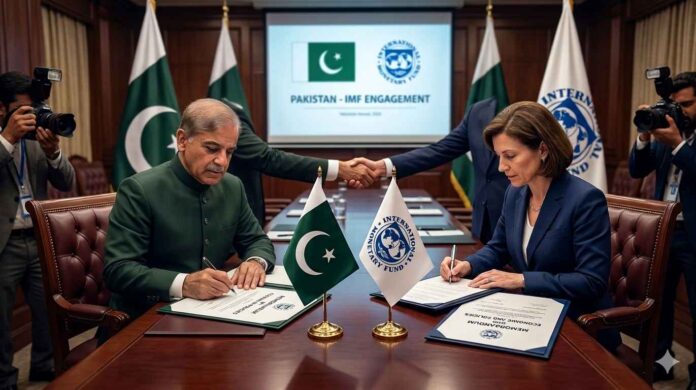

Pakistan Faces Historic Revenue Challenge Under IMF Reform Program
Pakistan is preparing for one of the most ambitious fiscal adjustments in its history after committing to a federal revenue target of more than Rs. 17 trillion under its ongoing agreement with the International Monetary Fund. The massive revenue collection goal forms part of a broader economic reform package aimed at stabilizing public finances, reducing fiscal deficits, strengthening foreign exchange reserves, and restoring investor confidence in the country’s economy.
The new fiscal framework outlines a combination of aggressive tax collection measures, higher petroleum levies, subsidy reforms, provincial revenue commitments, stricter enforcement mechanisms, and structural economic changes designed to expand the tax base and improve revenue generation.
The IMF-backed program reflects growing pressure on Pakistan to strengthen domestic resource mobilization as the country continues facing fiscal stress, rising debt obligations, inflationary challenges, and external financing pressures.
Authorities have committed to implementing multiple difficult reforms over the next fiscal year in order to achieve the ambitious revenue target while maintaining compliance with IMF conditions linked to financial support and economic stabilization efforts.
The reforms are expected to affect consumers, businesses, industries, provincial governments, and energy markets across the country.
Federal Revenue Target Set at Rs. 17.145 Trillion
Under the IMF program, Pakistan has committed to achieving total federal revenues of approximately Rs. 17.145 trillion during fiscal year 2026-27.
The projected figure represents a major increase compared to the current fiscal year and reflects a planned revenue growth of more than 13.5 percent.
The sharp increase highlights the scale of fiscal adjustment Pakistan is attempting under the IMF-supported reform framework.
Authorities are expected to rely on a combination of inflation-driven revenue growth, economic expansion, tax reforms, improved enforcement, digital monitoring systems, audits, and new fiscal measures to achieve the target.
The IMF estimates that a significant portion of the projected revenue growth will come from organic economic factors, including average inflation and moderate economic growth projections. However, the remaining increase will require substantial policy interventions and stronger administrative enforcement.
The ambitious revenue target also reflects the IMF’s emphasis on reducing Pakistan’s reliance on borrowing and improving long-term fiscal sustainability through stronger domestic tax collection.
New Budgetary Measures Worth Rs. 430 Billion
As part of the revenue strategy, Pakistan has committed to implementing approximately Rs. 430 billion in new budgetary measures.
These measures are expected to include adjustments in taxation policies, enforcement actions, administrative reforms, and broader fiscal tightening aimed at increasing government revenues.
While the complete details of the upcoming federal budget are still evolving, analysts expect additional taxation measures across various sectors of the economy.
The government is likely to focus heavily on expanding the tax net, reducing exemptions, improving documentation of economic activity, and increasing compliance among under-taxed sectors.
The IMF has consistently emphasized that Pakistan’s tax-to-GDP ratio remains below the level required for sustainable fiscal management. As a result, broadening the revenue base has become a central priority under the reform agenda.
Businesses and consumers are therefore expected to face increased scrutiny and tighter enforcement mechanisms during the upcoming fiscal year.
FBR Revenue Collection Target Raised Significantly
The Federal Board of Revenue has been assigned a massive revenue collection target exceeding Rs. 15 trillion under the IMF framework.
The target represents a substantial increase over current collection levels and will require aggressive implementation of tax reforms and compliance measures.
According to IMF projections, part of the increase is expected to come naturally from economic growth and inflation, which typically increase nominal tax collections. However, a large portion of the additional revenue will depend on enforcement improvements and structural reforms.
Authorities have committed to enhancing tax administration systems, expanding digital monitoring, strengthening audits, and improving compliance mechanisms to reduce leakages and underreporting.
The government also plans to use data integration and technology-driven enforcement tools to identify tax evasion and improve collection efficiency.
Digitalization is increasingly becoming a major component of Pakistan’s tax reform strategy as authorities attempt to improve transparency and reduce informal economic activity.
Tax Audits and Enforcement Measures to Play Major Role
Pakistan has additionally committed to generating billions of rupees through stronger tax audits and enforcement measures.
Authorities expect significant additional revenues from enhanced auditing procedures, improved sales tax liability calculations, and tighter monitoring of major industrial sectors.
The government plans to increase scrutiny of sectors including sugar, cement, tobacco, and fertilizer, which have historically faced concerns regarding tax compliance, underreporting, and undocumented transactions.
Enhanced monitoring mechanisms may include digital invoicing systems, supply chain tracking, production monitoring, and expanded use of data analytics.
Tax authorities are increasingly relying on technology to identify discrepancies between reported transactions and actual business activity.
The IMF believes stronger enforcement measures are essential for improving Pakistan’s revenue collection performance without relying solely on repeated tax rate increases.
However, businesses may face increased compliance burdens and regulatory oversight as enforcement measures intensify.
Petroleum Levy Collection Target Raised Sharply
One of the most significant components of Pakistan’s revenue strategy involves higher petroleum levy collections.
The IMF expects petroleum levy revenues during the current fiscal year to exceed official targets, while the target for the next fiscal year has been raised substantially.
The projected increase suggests authorities may gradually move toward significantly higher average petroleum levy rates in the coming year.
Petroleum levies have become an increasingly important source of non-tax revenue for the government because they generate substantial collections without directly affecting broader tax administration systems.
However, higher petroleum levies typically result in increased fuel prices for consumers and businesses.
Fuel price increases can affect transportation costs, industrial production expenses, inflation levels, and household budgets across the economy.
The IMF appears to believe that fuel consumption growth alone will not be sufficient to achieve the higher collection targets, suggesting that levy rates themselves may increase further.
Higher fuel-related charges may therefore become a major fiscal tool for revenue generation under the IMF program.
Fuel Pricing Policy to Continue Full Pass-Through Mechanism
Pakistan has also committed to maintaining the full pass-through of international fuel prices to domestic consumers.
This means the government will continue adjusting domestic fuel prices according to global market conditions rather than using subsidies to shield consumers from price fluctuations.
The IMF has consistently opposed broad fuel subsidies because they place pressure on public finances and reduce fiscal flexibility.
Under the reform framework, authorities are expected to avoid delaying fuel price adjustments even during periods of geopolitical uncertainty or rising international oil prices.
The commitment reflects the IMF’s emphasis on market-based pricing mechanisms and fiscal discipline.
However, higher fuel prices can create political challenges and contribute to inflationary pressure within the broader economy.
Transportation, manufacturing, agriculture, and logistics sectors are particularly sensitive to fuel price increases because energy costs directly affect operational expenses.
Provincial Governments Also Commit to Higher Revenue Collection
The IMF program does not focus solely on federal revenue generation. Provincial governments have also committed to mobilizing significant additional revenues through stronger tax collection efforts and agricultural income tax reforms.
The provinces are expected to generate nearly Rs. 430 billion in additional revenues under the broader fiscal framework.
Agricultural income taxation has historically remained one of the most politically sensitive and underdeveloped areas of Pakistan’s tax system.
The IMF has repeatedly encouraged Pakistan to improve taxation of undertaxed sectors, including agriculture, to create a fairer and more balanced revenue system.
Provincial governments are also expected to improve sales tax collection and strengthen enforcement mechanisms within their jurisdictions.
The reforms aim to improve coordination between federal and provincial fiscal systems while expanding overall public sector revenues.
Provincial Cash Surpluses Expected to Increase
Under the IMF-backed fiscal plan, provincial governments are expected to generate larger cash surpluses during the upcoming fiscal year.
These surpluses play an important role in supporting overall fiscal consolidation efforts because they help reduce pressure on federal finances and borrowing requirements.
The IMF has consistently emphasized the importance of fiscal coordination between the federal government and provinces in achieving macroeconomic stability.
Higher provincial surpluses may require tighter spending controls and stronger revenue mobilization efforts at the provincial level.
However, balancing fiscal discipline with development spending and public service delivery will remain a challenge for provincial administrations.
Social Protection Spending to Increase Through BISP
Despite the broader fiscal tightening measures, Pakistan has also committed to increasing social protection support for economically vulnerable households.
Benazir Income Support Programme payments are expected to increase significantly under the reform framework.
Authorities have informed the IMF that a large portion of Pakistan’s population remains economically vulnerable due to inflationary pressures, low incomes, and broader economic challenges.
Expanding social safety net payments is intended to help cushion the impact of rising utility costs, fuel prices, and subsidy reductions on lower-income families.
The IMF has generally supported targeted social protection programs as an alternative to broad untargeted subsidies.
The approach aims to direct financial assistance toward vulnerable households while allowing broader fiscal reforms to proceed.
Energy Sector Reforms Remain Central to IMF Conditions
Pakistan has also committed to maintaining regular electricity and gas tariff adjustments to ensure full cost recovery within the energy sector.
The IMF continues to view energy sector reform as essential for reducing circular debt accumulation and improving fiscal sustainability.
Authorities plan to gradually shift targeted power subsidies for low-income consumers into the BISP system instead of maintaining subsidies directly through electricity billing structures.
This reflects a broader policy transition away from universal or untargeted subsidies toward more targeted assistance mechanisms.
The reforms are expected to increase pressure on consumers through higher utility costs but may help reduce long-term fiscal imbalances within the energy sector.
Government to Reduce Intervention in Commodity Markets
The IMF report also highlighted Pakistan’s commitment to reducing direct government intervention in wheat and sugar markets.
Historically, authorities frequently intervened in commodity pricing, procurement, and distribution to stabilize domestic markets and support consumers or farmers.
However, the IMF believes excessive intervention can distort markets, create inefficiencies, and generate fiscal burdens.
The government is now expected to move gradually toward more market-driven pricing and reduced direct involvement in commodity management.
At the same time, authorities are preparing to introduce a national sugar policy aimed at improving transparency and governance within the sugar sector.
Tax Incentives for Economic Zones to Be Phased Out
Pakistan has additionally committed to gradually phasing out incentives for special economic and technology zones by 2035.
The IMF believes extensive tax incentives can create market distortions and reduce overall tax efficiency.
The reform agenda includes shifting away from broad fiscal concessions toward more transparent and sustainable investment frameworks.
Existing investors may continue receiving protections under previous agreements, but future investment policies are expected to evolve gradually over the coming decade.
Anti-Corruption Reforms and Governance Improvements
The IMF framework also places significant emphasis on governance reforms and anti-corruption measures.
Pakistan has committed to strengthening anti-corruption institutions, improving transparency, and enhancing oversight mechanisms within public sector operations.
Governance reforms are viewed as essential for improving investor confidence, strengthening fiscal management, and increasing administrative efficiency.
The IMF has consistently argued that institutional reforms are necessary for achieving sustainable economic stability and long-term growth.
Pakistan’s Economic Reform Path Faces Major Challenges
Pakistan’s commitment to a Rs. 17 trillion revenue target represents one of the most aggressive fiscal reform efforts undertaken in recent years.
The ambitious targets reflect the country’s urgent need to stabilize public finances, reduce debt pressures, and maintain external financing support under the IMF program.
However, implementing these reforms will require balancing fiscal discipline with economic growth, consumer affordability, industrial competitiveness, and political stability.
Higher taxes, rising fuel costs, stricter enforcement measures, subsidy reductions, and utility tariff adjustments may place additional pressure on households and businesses already facing inflationary challenges.
At the same time, authorities believe the reforms are necessary to restore macroeconomic stability and reduce long-term financial vulnerabilities.
The coming fiscal year will likely become a critical test of Pakistan’s ability to implement difficult structural reforms while maintaining economic momentum and social stability.
Read More
Pakistan’s Energy Sector Circular Debt Surges to Rs. 5.2 Trillion