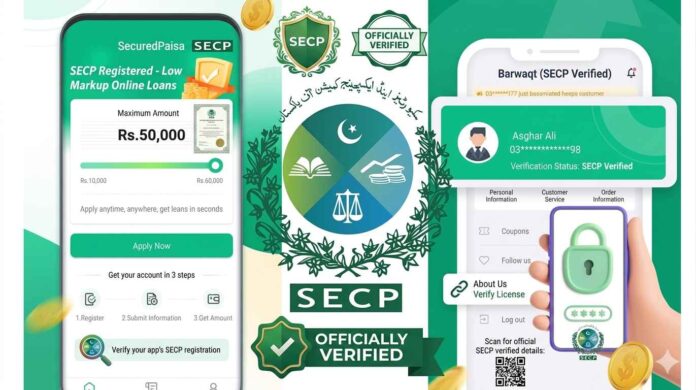

SECP Issues Public Notice for Borrowers of Digital Loan Apps
The Securities and Exchange Commission of Pakistan has issued a major public notice for borrowers using the Barwaqt and UdharPaisa digital lending platforms, warning users to follow only officially approved repayment procedures under a court-supervised liquidation framework.
The notice outlines a formal process through which borrowers can settle outstanding loans, clear repayment obligations, and restore their credit histories under the supervision of the Islamabad High Court.
The development follows ongoing legal and regulatory proceedings involving the companies operating the two digital lending applications. Authorities have now placed both companies under liquidation oversight, with all loan recoveries and repayment matters being handled through officially designated legal channels.
The regulator has strongly warned borrowers against making payments to unauthorized individuals, agents, third parties, or unofficial accounts. According to the notice, only payments made through designated bank accounts supervised by the court-appointed Official Liquidator will be recognized for credit clearance and settlement purposes.
The announcement is particularly important for thousands of borrowers across Pakistan who previously used digital lending applications for short-term financing and now seek to settle liabilities while protecting their financial records and credit histories.
Digital Lending Apps Face Increased Regulatory Scrutiny
The case involving Barwaqt and UdharPaisa highlights the growing regulatory attention surrounding Pakistan’s rapidly expanding digital lending sector.
Over recent years, mobile loan applications and digital finance platforms have gained popularity among consumers seeking quick access to short-term financing through smartphones and online applications.
These platforms often attracted users by offering simplified borrowing procedures, fast approvals, and digital disbursement systems without traditional banking requirements.
However, concerns regarding consumer protection, lending practices, data privacy, recovery methods, compliance standards, and regulatory oversight have increasingly emerged within the digital lending industry.
Regulators globally have started introducing stricter rules governing digital financial services to ensure transparency, responsible lending practices, and stronger protection for borrowers.
Pakistan’s digital finance sector has also experienced rapid growth as smartphone adoption, internet access, and financial technology usage continue expanding nationwide.
The latest SECP notice reflects broader efforts to strengthen legal oversight and protect consumers involved in digital lending activities.
Court-Supervised Liquidation Process Introduced
According to the notice, both companies operating the Barwaqt and UdharPaisa loan applications are now functioning under a court-supervised liquidation framework.
The Islamabad High Court appointed an Official Liquidator to manage the affairs, recoveries, and settlement procedures related to the companies.
The liquidation process means that all financial recoveries, repayments, and related operational matters are now being handled under formal legal supervision instead of ordinary business operations.
Borrowers seeking to settle loans or update their credit records must therefore follow the officially prescribed procedures issued under the liquidation process.
The appointment of an Official Liquidator is intended to ensure transparency, legal accountability, and proper handling of borrower repayments and company obligations.
The regulator emphasized that only the court-appointed Official Liquidator is legally authorized to collect payments or manage the companies’ recovery-related activities.
Borrowers Can Still Settle Outstanding Loans
Despite the liquidation proceedings, borrowers of both loan applications still have the opportunity to settle their outstanding obligations and restore their credit profiles through the official process.
The SECP notice specifically provides a structured mechanism for loan settlement and credit history updates.
This is an important development for borrowers concerned about the impact of unresolved loan records on their financial standing and future borrowing capability.
Under the process, borrowers must first obtain credit reports from designated credit reporting agencies in order to verify outstanding amounts associated with their loans.
The higher outstanding amount reflected in the reports must then be deposited into the officially designated liquidation account for the relevant company.
Once repayment is completed and verified, updated information will be forwarded to credit bureaus to reflect settlement status within the borrower’s credit history.
This process is intended to help borrowers regularize financial records and avoid long-term credit complications.
Strictly Designated Bank Accounts Must Be Used
One of the most important aspects of the notice is the clear instruction that repayments must only be made through officially designated bank accounts.
Borrowers have been warned not to use mobile wallets, online payment systems, digital transfers, or unofficial channels for loan settlement.
All payments must instead be deposited physically through approved bank branches using the specified liquidation accounts.
Authorities stressed that payments made outside the officially designated accounts will not be recognized for settlement or credit clearance purposes.
This warning appears aimed at preventing fraud, unauthorized collections, and potential misuse of borrower funds during the liquidation process.
Digital lending users are therefore being advised to remain extremely cautious when dealing with repayment instructions or third-party communications claiming to represent the companies.
Credit History Updates Important for Borrowers
The notice places significant emphasis on the importance of updating borrower credit histories following repayment.
Credit records play a major role within the financial system because banks, lenders, and financial institutions often use credit reports to evaluate future borrowing eligibility.
Outstanding loan defaults or unresolved repayment records can negatively affect an individual’s credit standing and ability to obtain financing in the future.
Under the court-supervised process, repayment information will reportedly be shared with credit bureaus within approximately four weeks after successful settlement verification.
This mechanism is intended to help borrowers restore financial credibility and ensure that settled obligations are properly reflected within official credit records.
The process highlights the increasing importance of digital credit reporting systems within Pakistan’s expanding financial sector.
Borrowers Required to Submit Supporting Documentation
The repayment process also requires borrowers to provide detailed supporting documentation in order to verify settlements properly.
Borrowers must submit copies of identification documents, deposit receipts, repayment details, and credit reports through official communication channels.
The documentation process is designed to create a formal audit trail and reduce the possibility of disputes regarding repayment status or credit record updates.
Maintaining proper records is especially important during liquidation proceedings because financial obligations are being managed through court-supervised legal mechanisms.
Borrowers have therefore been advised to carefully retain stamped receipts and proof of payment after completing deposits at authorized bank branches.
Failure to maintain documentation could potentially create complications during the verification process.
Warning Against Unauthorized Recovery Agents
A major component of the SECP notice is the strict warning regarding unauthorized recovery agents or third parties claiming to collect payments on behalf of the companies.
The regulator stated clearly that no individual, collection agent, representative, or intermediary has legal authority to recover payments except the court-appointed Official Liquidator.
This warning is particularly significant because borrowers of digital lending applications have sometimes reported aggressive recovery tactics, unofficial demands, or unauthorized payment requests in broader digital finance markets.
The notice aims to protect consumers from fraud, harassment, and financial misuse during the liquidation process.
Borrowers are being urged to avoid making payments to anyone outside the officially designated legal channels.
Any repayment made through unauthorized methods may not be recognized legally and could fail to clear outstanding credit obligations.
Digital Lending Industry Continues Evolving
Pakistan’s digital lending industry has expanded rapidly over recent years due to rising smartphone usage, internet access, and demand for quick financing solutions.
Digital loan applications became popular particularly among younger consumers, freelancers, small business operators, and individuals lacking access to conventional banking products.
The convenience of online applications and fast disbursement processes helped accelerate adoption across urban and semi-urban areas.
However, the industry’s rapid growth also created regulatory concerns regarding responsible lending practices, consumer rights, data privacy protections, interest disclosures, and debt recovery standards.
Financial regulators globally are now working to create stronger compliance frameworks governing fintech lenders and digital finance platforms.
The SECP’s latest action reflects broader efforts to strengthen oversight and improve consumer protection within Pakistan’s evolving digital financial ecosystem.
Importance of Financial Consumer Protection
The Barwaqt and UdharPaisa case also highlights the growing importance of financial consumer protection within digital finance markets.
As more consumers rely on online financial services, regulators face increasing pressure to ensure fair treatment, transparency, and accountability within the fintech industry.
Borrowers often lack detailed understanding of loan agreements, repayment structures, credit reporting systems, and legal rights associated with digital lending platforms.
This can create vulnerabilities, especially when financial disputes or regulatory actions arise.
Strong consumer protection mechanisms are therefore becoming increasingly essential as digital banking and fintech services continue expanding.
The court-supervised repayment process aims to provide borrowers with a formal and legally recognized path for resolving outstanding financial obligations.
Credit Reporting Systems Becoming More Important
The notice also demonstrates the increasing role of credit reporting agencies within Pakistan’s financial system.
Credit bureaus are becoming increasingly important for banks, lenders, and fintech platforms seeking to assess borrower risk and financial behavior.
Individuals with unresolved defaults or negative repayment histories may face difficulties obtaining future financing, credit cards, or banking products.
At the same time, properly updated credit records can help consumers rebuild financial credibility and improve access to financial services.
The requirement for borrowers to obtain official credit reports before settlement reflects the growing integration of digital credit reporting systems into Pakistan’s financial infrastructure.
Borrowers Advised to Follow Official Procedures Carefully
Authorities are encouraging all affected borrowers to follow the official repayment process carefully and avoid shortcuts or unauthorized settlement offers.
Given the legal and financial implications associated with credit history updates, borrowers must ensure that repayments are completed exactly according to the instructions provided under the court-supervised framework.
Mistakes or unofficial payments could potentially delay settlement verification and create complications regarding credit record corrections.
Borrowers should therefore carefully verify account details, retain documentation, and follow all procedural requirements during the repayment process.
The emphasis on formal procedures highlights the seriousness of the liquidation process and the importance of legal compliance for all parties involved.
Digital Finance Sector Faces Transition Period
The broader digital lending industry in Pakistan appears to be entering a transitional phase characterized by stronger regulation, increased oversight, and higher compliance expectations.
While fintech innovation continues creating new opportunities for financial inclusion and digital banking expansion, regulators are also seeking to address risks associated with consumer protection and financial stability.
Companies operating within the digital finance space may increasingly face stricter licensing requirements, operational standards, reporting obligations, and compliance expectations.
The long-term development of Pakistan’s fintech sector will likely depend on balancing innovation with effective regulatory safeguards.
Borrowers Encouraged to Protect Financial Records
The SECP notice ultimately serves as both a regulatory warning and a consumer protection measure for borrowers associated with the Barwaqt and UdharPaisa loan applications.
By providing a structured legal mechanism for repayment and credit history correction, authorities aim to help borrowers resolve outstanding liabilities while protecting their long-term financial standing.
Consumers are being urged to remain cautious, use only official channels, and avoid unauthorized payment requests or recovery schemes.
As Pakistan’s digital finance ecosystem continues expanding, the importance of financial literacy, consumer awareness, and regulatory compliance is likely to grow even further.
The case may also serve as an important lesson for future borrowers regarding the need to carefully evaluate digital lending platforms, repayment terms, and regulatory status before using online financial services.
Read More
S.G. Power Announces Rs. 535 Million Fundraising for Healthcare Expansion