
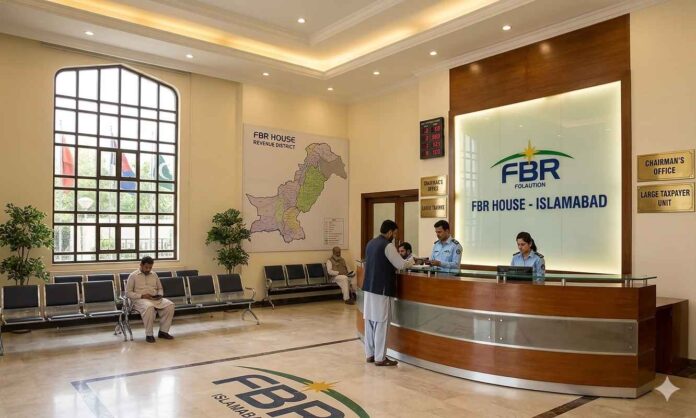

Pakistan’s tax collection efforts faced another challenge in May as the Federal Board of Revenue fell short of its monthly revenue target by Rs. 28 billion. The shortfall comes at a critical time for the government as it prepares the federal budget and continues efforts to maintain fiscal stability amid economic headwinds, changing global conditions, and evolving revenue expectations.
Although tax collections continued to register positive growth compared to the previous year, the gap between projected and actual revenue highlights the ongoing difficulties facing tax authorities. Slower economic activity, weaker consumption trends, reduced import-related tax generation, and holiday-related disruptions all contributed to the weaker-than-expected performance.
The latest figures also reflect broader structural challenges within Pakistan’s revenue collection framework, where economic growth remains closely tied to tax performance. As economic activity slows, revenue growth often falls below projections, making it difficult for authorities to achieve ambitious fiscal targets.
The May shortfall is therefore more than a monthly statistical miss. It provides insight into the wider challenges confronting Pakistan’s economy and fiscal management strategy.
Revenue Collection Falls Below Expectations
Tax authorities had established a revised revenue target for May in anticipation of seasonal and economic developments. However, actual collections remained below expectations.
The revenue authority collected approximately Rs. 967 billion during the month, compared with the revised target of nearly Rs. 995 billion.
While the gap represents a relatively small percentage of total collections, it is significant in the context of broader fiscal planning.
Government budgets rely heavily on revenue forecasts to finance expenditures, development projects, debt servicing obligations, and social programs.
When revenue falls short of projections, authorities often face difficult choices regarding spending priorities, borrowing requirements, and fiscal adjustments.
The May shortfall therefore adds additional pressure as policymakers finalize budgetary plans for the coming fiscal year.
Economic Slowdown Continues to Affect Revenue Performance
One of the primary reasons behind weaker tax collection has been the slowdown in economic activity.
Tax revenues are directly linked to economic performance. When businesses produce less, consumers spend less, and imports decline, tax collection naturally comes under pressure.
The current economic environment has presented multiple challenges for revenue generation.
Industrial activity has remained below optimal levels in several sectors. Consumer demand has weakened due to inflationary pressures and declining purchasing power. Businesses continue to face high operating costs, while investment activity remains cautious.
These factors collectively reduce taxable transactions throughout the economy.
As a result, growth in tax revenues has been slower than originally anticipated.
The revenue authority continues to face the difficult task of increasing collections while operating within an environment characterized by subdued economic expansion.
Impact of International Developments on Tax Collection
Global economic and geopolitical developments have also influenced revenue performance.
International trade disruptions and regional tensions have affected commercial activity, shipping routes, import volumes, and business confidence.
Pakistan’s economy remains closely connected to international markets through imports, exports, remittances, and investment flows.
When external conditions become uncertain, trade volumes often decline, affecting tax collection at ports and customs points.
Import-related taxes constitute an important component of overall revenue collection.
Therefore, any reduction in import activity can have a significant impact on monthly revenue outcomes.
Businesses often delay purchases, postpone investments, or reduce inventories during periods of uncertainty, further contributing to weaker tax generation.
Holiday Effects on Revenue Collection
The timing of major holidays also played a role in May’s revenue performance.
Extended holiday periods often result in reduced business activity, fewer banking transactions, lower commercial operations, and temporary slowdowns in economic activity.
When businesses close for several days, taxable transactions naturally decline.
Although economic activity typically recovers after holidays, monthly revenue figures can be affected by temporary disruptions.
The impact is particularly noticeable when holiday periods coincide with important tax collection windows.
For revenue authorities attempting to meet ambitious monthly targets, even short periods of reduced activity can create measurable collection gaps.
The extended holiday period during May contributed to slower revenue accumulation and added to the overall shortfall.
Revised Revenue Targets Reflect Economic Reality
Revenue projections have undergone multiple revisions during the fiscal year.
Initial targets were established based on assumptions regarding economic growth, inflation, imports, consumption, and overall fiscal performance.
However, changing economic conditions have required authorities to adjust expectations.
Revenue targets have gradually been revised downward to reflect actual economic realities and collection trends.
These adjustments acknowledge the challenges facing tax authorities while helping maintain realistic fiscal planning.
Despite these revisions, achieving revenue objectives remains difficult due to ongoing economic constraints.
The latest shortfall highlights the gap that can still emerge even after targets have been adjusted downward.
Importance of Tax Revenue for Fiscal Stability
Tax collection remains one of the most important pillars of fiscal management.
Government operations, development spending, public services, infrastructure projects, and debt obligations all depend heavily on revenue generation.
Strong tax collection reduces reliance on borrowing and helps support long-term economic stability.
When revenue performance weakens, governments may need to increase borrowing, reduce expenditures, or identify alternative revenue sources.
This is why monthly collection figures receive significant attention from policymakers, investors, financial institutions, and international stakeholders.
Revenue performance serves as a key indicator of both economic activity and fiscal health.
The ability to consistently meet collection targets plays an important role in maintaining confidence in public finances.
Petroleum Levy Continues to Support Government Revenue
While traditional tax collection has faced challenges, other revenue sources have provided support.
The petroleum levy has emerged as a significant contributor to government revenues during the fiscal year.
Collections from petroleum-related charges have increased substantially and helped offset weaknesses in certain tax categories.
The levy has become an important fiscal tool because it generates revenue without directly affecting conventional tax collection statistics.
As tax authorities face difficulties meeting revenue targets, stronger petroleum levy receipts have helped reduce overall fiscal pressure.
This additional revenue stream has played a crucial role in supporting government finances during a period of economic adjustment.
Analysis of Major Tax Categories
Revenue performance varies significantly across different tax categories.
Some segments have demonstrated resilience despite economic challenges, while others have experienced noticeable weakness.
Understanding these differences provides insight into broader economic trends and consumer behavior.
Income Tax Performance
Income tax remains one of the strongest contributors to overall revenue collection.
Collections in this category continued to show positive growth despite broader economic pressures.
Higher withholding taxes, improved compliance measures, and ongoing enforcement efforts supported income tax receipts throughout the fiscal year.
The relatively stronger performance of income tax reflects continued efforts to improve documentation and expand the tax base.
However, authorities recognize that further reforms are necessary to sustain long-term growth in this category.
Sales Tax Collection Trends
Sales tax collection remains closely linked to economic activity and consumer spending.
Although collections increased compared to the previous year, performance remained below revised expectations.
Weaker consumption patterns and slower growth in taxable transactions affected overall sales tax generation.
Consumer demand remains under pressure due to inflation and affordability concerns.
As a result, sales tax growth has been more moderate than originally projected.
The category remains particularly sensitive to changes in economic conditions and household spending behavior.
Customs Duty Challenges
Customs duty collections faced difficulties due to slower import growth and changing trade patterns.
Imports play a critical role in generating customs-related revenues.
When businesses reduce imports due to economic uncertainty or weaker demand, customs receipts naturally decline.
The moderation in import activity reflects broader efforts by businesses to manage costs and preserve liquidity during challenging economic conditions.
This trend has contributed to lower-than-expected customs revenue collection.
Federal Excise Duty Performance
Among major tax categories, federal excise duty demonstrated relatively stronger performance.
Collections exceeded projections and recorded healthy year-on-year growth.
This category benefited from taxation on selected goods and services that remained resilient despite broader economic challenges.
The stronger performance helped partially offset weaknesses in other areas of the revenue system.
Growth in Tax Refunds and Rebates
Tax refunds and rebates increased significantly during the fiscal year.
Higher refund payments reflect efforts to improve liquidity for businesses and exporters by processing outstanding claims more efficiently.
Timely refunds play an important role in supporting business activity and encouraging compliance.
However, larger refund payments can also affect net revenue collection figures.
Authorities must balance the need to support businesses with the objective of maintaining strong revenue performance.
Improved refund processing remains an important component of broader tax administration reforms.
Consumption Trends Remain a Concern
One of the key insights emerging from revenue data is the continued weakness in consumption-related taxation.
Consumer spending serves as a major driver of sales tax and excise duty collections.
When households reduce spending due to inflation, economic uncertainty, or declining purchasing power, revenue growth often slows.
Current trends suggest that consumption remains under pressure across multiple sectors.
Businesses report softer demand for various goods and services, which directly affects tax generation.
Strengthening consumer confidence and supporting economic growth will therefore remain essential for improving future revenue performance.
Broader Fiscal Implications
The May shortfall carries broader implications for fiscal planning and budget preparation.
Revenue performance influences decisions regarding public spending, development priorities, borrowing requirements, and fiscal targets.
As authorities prepare the next budget, realistic revenue forecasting will be critical.
Overly ambitious targets can create fiscal stress if collections fail to materialize.
Conversely, conservative projections may limit spending flexibility.
Balancing these considerations requires careful assessment of economic conditions, revenue trends, and future growth prospects.
Need for Tax Base Expansion
The recurring challenge of meeting revenue targets highlights the importance of expanding Pakistan’s tax base.
The country continues to rely heavily on a relatively narrow pool of taxpayers and indirect taxes.
Broadening tax coverage can improve revenue stability while reducing pressure on compliant taxpayers.
Efforts to document the economy, improve enforcement, enhance digital systems, and reduce tax evasion remain essential components of long-term reform.
A broader and more diversified tax base would help reduce vulnerability to economic fluctuations and improve fiscal sustainability.
Digitalization and Revenue Administration Reforms
Technology is expected to play an increasingly important role in future revenue collection efforts.
Digital tax administration systems can improve compliance, reduce leakages, enhance transparency, and strengthen enforcement capabilities.
Authorities have already initiated various modernization projects aimed at improving taxpayer services and expanding digital monitoring.
Continued investment in technology may help increase efficiency and support long-term revenue growth.
Digital transformation remains a key element of broader tax reform initiatives.
Looking Ahead
As the fiscal year approaches its conclusion, attention is shifting toward future revenue prospects and budget planning.
Economic recovery, stronger business activity, improved consumption, and expanded tax compliance will all be necessary to strengthen revenue performance.
Policymakers face the challenge of balancing revenue generation with economic growth objectives.
Excessive taxation can discourage investment and consumption, while insufficient revenue can create fiscal pressures.
Achieving the right balance will be essential for sustainable economic development.
Conclusion
The Federal Board of Revenue’s Rs. 28 billion shortfall in May highlights the ongoing challenges facing Pakistan’s tax collection system amid slower economic activity, weaker consumption, trade-related disruptions, and holiday-related slowdowns.
Although revenue collection continued to grow compared to the previous year, performance remained below revised expectations, underscoring the difficulties of achieving ambitious fiscal targets in a challenging economic environment.
The latest figures reveal both strengths and weaknesses within the revenue system. Income tax and federal excise duty showed resilience, while sales tax and customs duty collections faced pressure from subdued economic activity and softer demand.
As Pakistan prepares its next budget and outlines future fiscal priorities, strengthening economic growth, broadening the tax base, improving compliance, and modernizing tax administration will remain critical objectives.
The May shortfall serves as a reminder that sustainable revenue growth ultimately depends on a stronger, more productive, and more inclusive economy capable of generating consistent taxable activity across all sectors.
Read More
Sindh Collected Rs. 1.5 Trillion in Cess While Roads Continued to Deteriorate