
Major Diplomatic Engagement Signals Growing Pakistan-EU Cooperation
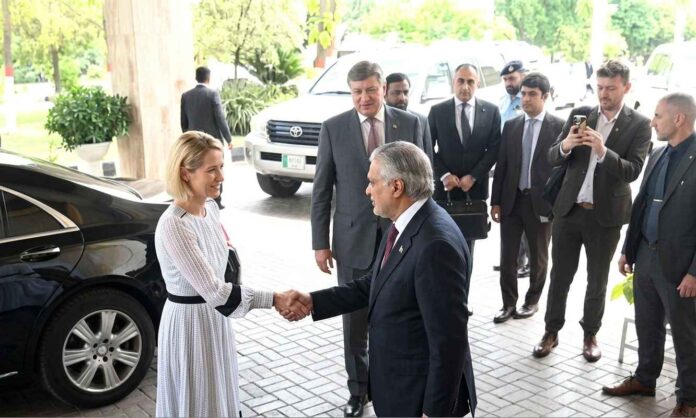
Pakistan and the European Union have entered a new phase of diplomatic engagement as the bloc’s highest-ranking foreign policy official arrived in Islamabad for a series of strategic discussions aimed at strengthening political, economic, trade, security, and development cooperation.
The visit marks one of the most significant diplomatic engagements between Pakistan and the European Union in recent years and highlights the increasing importance both sides place on maintaining a strong and mutually beneficial partnership.
As global economic uncertainty, geopolitical tensions, security concerns, climate challenges, and trade competitiveness continue to reshape international relations, Pakistan and the European Union appear determined to deepen cooperation across multiple sectors.
The high-level visit comes at a time when Pakistan seeks to strengthen economic ties with international partners, attract foreign investment, boost exports, and enhance diplomatic engagement with major global institutions.
For the European Union, Pakistan remains an important partner in South Asia due to its strategic location, growing population, expanding market potential, and role in regional stability.
The strategic dialogue in Islamabad is expected to address a wide range of issues that are central to the future relationship between both sides.
Strategic Dialogue Represents Highest-Level Bilateral Platform
The strategic dialogue between Pakistan and the European Union is considered the most important formal platform for engagement between the two partners.
The mechanism provides an opportunity for policymakers, diplomats, and senior officials to discuss shared interests and identify areas for deeper cooperation.
Unlike routine diplomatic meetings, strategic dialogues focus on long-term priorities and broader policy objectives.
These discussions often shape the direction of future cooperation in areas such as trade, investment, governance, climate action, regional security, migration, digital transformation, education, and sustainable development.
The latest round of talks is expected to build upon previous engagements while addressing emerging global and regional challenges.
Officials from both sides are anticipated to review existing partnerships and explore new opportunities for collaboration.
The continuation of this dialogue demonstrates the maturity and resilience of the Pakistan-European Union relationship.
Pakistan and the European Union Share Expanding Economic Ties
Economic cooperation remains one of the strongest pillars of the relationship between Pakistan and the European Union.
Over the years, trade links have expanded significantly, creating opportunities for businesses, exporters, investors, and consumers on both sides.
The European market represents a crucial destination for Pakistani exports, particularly in sectors such as textiles, apparel, leather goods, sporting equipment, agricultural products, and manufactured goods.
Access to European markets has helped Pakistani exporters diversify revenue streams and strengthen international competitiveness.
At the same time, European businesses benefit from access to Pakistan’s growing consumer market and investment opportunities.
The economic relationship continues to evolve as both sides explore avenues for expanding trade volumes and encouraging greater investment flows.
The strategic dialogue is expected to focus heavily on these economic priorities.
Why the European Union Matters for Pakistan’s Economy
The European Union remains one of Pakistan’s most important economic partners.
Its significance extends beyond trade alone.
The bloc plays a major role in supporting development programs, governance initiatives, climate projects, education partnerships, and technical assistance efforts.
European countries collectively represent one of the largest economic regions in the world, making access to European markets particularly valuable for export-oriented economies.
For Pakistan, maintaining strong economic ties with Europe supports job creation, industrial growth, export expansion, and foreign exchange earnings.
Many Pakistani industries have benefited from access to European consumers through preferential trade arrangements.
As Pakistan seeks to improve economic stability and boost exports, preserving and strengthening these relationships remains a key policy objective.
The latest strategic discussions are therefore expected to include detailed conversations regarding trade facilitation and economic cooperation.
The Importance of Preferential Trade Access
One of the most important aspects of Pakistan’s economic relationship with Europe is preferential market access under special trade arrangements designed to support developing economies.
These arrangements provide significant advantages to exporters by reducing or eliminating tariffs on a large number of products.
Such benefits help improve competitiveness and make exports more attractive in international markets.
For Pakistan’s export sector, preferential access has contributed to increased trade volumes and stronger integration into global supply chains.
Industries that rely heavily on exports to Europe closely monitor developments related to trade preferences because of their direct impact on business performance and employment.
The continuation and enhancement of these arrangements remain a critical issue for policymakers and industry stakeholders alike.
Trade-related discussions are therefore expected to occupy a central place in the strategic dialogue.
Beyond Trade: A Broad-Based Partnership
Although trade is often the most visible aspect of the Pakistan-European Union relationship, cooperation extends far beyond economics.
Over the years, both sides have developed partnerships across numerous sectors.
These include education, scientific research, environmental protection, renewable energy development, public sector governance, digital transformation, human development, and social welfare initiatives.
The European Union has supported various development projects designed to strengthen institutions, improve public services, and promote sustainable growth.
Collaboration in these areas reflects a broader commitment to long-term partnership rather than purely commercial engagement.
The strategic dialogue provides an opportunity to assess progress across these sectors and identify future priorities.
Strengthening cooperation in emerging fields such as digital technology and green energy is likely to feature prominently in discussions.
Regional Security Expected to Be a Key Discussion Topic
Security cooperation remains an important element of relations between Pakistan and the European Union.
Both sides share an interest in promoting regional stability, combating terrorism, addressing transnational crime, and supporting peaceful conflict resolution.
Pakistan’s geographic position places it at the center of several critical regional developments, making it an important stakeholder in discussions concerning security and stability.
European policymakers recognize that developments in South Asia can have broader implications for international security, migration patterns, economic stability, and global trade routes.
As a result, strategic consultations often include exchanges on regional developments and emerging security challenges.
The latest round of talks is expected to address these issues in considerable detail.
Enhanced dialogue helps build mutual understanding and supports coordinated responses to shared concerns.
Climate Change and Sustainable Development on the Agenda
Climate change has emerged as one of the defining global challenges of the twenty-first century.
Pakistan has experienced severe climate-related events in recent years, including floods, heatwaves, droughts, and extreme weather conditions.
At the same time, the European Union has positioned itself as a global leader in climate action and sustainability initiatives.
This convergence of interests creates opportunities for cooperation in environmental protection, renewable energy, climate resilience, and sustainable development.
Discussions are expected to include strategies for supporting climate adaptation efforts and promoting environmentally sustainable economic growth.
Investment in green technologies and renewable energy infrastructure may also be explored as part of broader development cooperation.
Climate-related collaboration represents an increasingly important pillar of the bilateral relationship.
Investment Opportunities and Economic Modernization
Pakistan’s efforts to modernize its economy and attract foreign investment are likely to feature prominently in discussions with European officials.
Foreign investment plays a crucial role in supporting industrial development, infrastructure expansion, technological advancement, and employment generation.
European investors possess expertise across numerous sectors, including manufacturing, renewable energy, information technology, pharmaceuticals, logistics, and financial services.
Strengthening investor confidence requires ongoing reforms aimed at improving the business environment, enhancing regulatory transparency, and ensuring policy stability.
Strategic dialogue provides a platform for discussing these issues and identifying ways to encourage greater investment activity.
Expanded investment cooperation could contribute significantly to Pakistan’s long-term economic growth objectives.
Human Rights and Governance Remain Important Topics
Governance and human rights continue to form an important component of engagement between Pakistan and the European Union.
International trade arrangements and broader diplomatic partnerships often include discussions concerning governance standards, legal reforms, labor rights, institutional strengthening, and social development.
These issues are typically addressed through ongoing dialogue and cooperation rather than confrontation.
The strategic engagement framework allows both sides to exchange perspectives and review progress on various policy objectives.
Continued engagement in these areas reflects the multidimensional nature of the relationship and the importance of maintaining open channels of communication.
Future cooperation is expected to focus on practical measures that support institutional development and sustainable progress.
Growing Momentum in High-Level Diplomatic Engagement
The visit highlights a broader trend of increasing diplomatic engagement between Pakistan and major international partners.
High-level visits play a critical role in strengthening relationships because they provide opportunities for direct dialogue and strategic decision-making.
Such engagements help build trust, resolve challenges, and create momentum for future cooperation.
The frequency and significance of recent interactions suggest that both Pakistan and the European Union recognize the value of maintaining strong diplomatic ties.
As global dynamics continue to evolve, regular engagement becomes increasingly important for managing shared interests and addressing common challenges.
The latest visit therefore represents more than a routine diplomatic event; it reflects a sustained commitment to partnership and cooperation.
What the Strategic Dialogue Could Mean for Pakistan
The outcomes of the strategic dialogue could have important implications for Pakistan’s economy, trade prospects, investment environment, and international standing.
Progress in trade discussions could support export growth and strengthen economic resilience.
Enhanced cooperation on climate initiatives could help address environmental challenges and attract sustainable investment.
Security collaboration could contribute to regional stability, while development partnerships could support institutional modernization and social progress.
The strategic nature of the discussions means that decisions and understandings reached during the visit may influence bilateral relations for years to come.
For Pakistan, maintaining strong ties with major international economic and political partners remains a key component of broader foreign policy objectives.
Strengthening a Partnership for the Future
As both sides navigate an increasingly complex global landscape, cooperation between Pakistan and the European Union is becoming more important than ever.
Economic uncertainty, technological transformation, climate challenges, and geopolitical shifts require collaborative approaches and strong international partnerships.
The strategic dialogue offers a platform for addressing these issues while strengthening mutual understanding and expanding areas of cooperation.
The visit reflects a shared recognition that long-term partnerships must continuously evolve to remain relevant and effective.
By engaging in comprehensive discussions covering trade, investment, development, security, governance, and sustainability, Pakistan and the European Union are laying the foundation for deeper collaboration in the years ahead.
Conclusion
The arrival of the European Union’s top diplomat in Islamabad marks a significant milestone in Pakistan-European Union relations and underscores the growing importance of their strategic partnership.
The high-level talks are expected to cover a wide range of critical issues, including trade, investment, economic cooperation, climate action, regional security, governance, and sustainable development.
As one of Pakistan’s most important international partners, the European Union plays a vital role in supporting economic growth, export development, institutional strengthening, and long-term prosperity.
The strategic dialogue provides an opportunity to build on existing achievements while charting a path toward even closer cooperation.
With both sides demonstrating a strong commitment to engagement and collaboration, the visit has the potential to further strengthen a relationship that continues to grow in importance for Pakistan’s economic and diplomatic future.
Read More