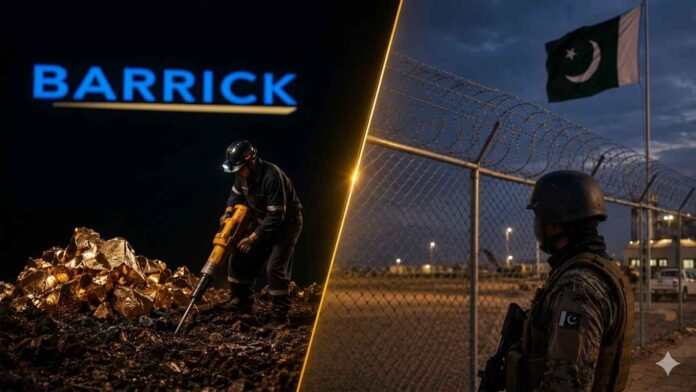

Pakistan is reviewing its security framework for the Reko Diq copper and gold project, a development that could result in higher security spending as authorities work to safeguard one of the country’s most important mining investments. The project, which is expected to attract billions of dollars in investment and transform Pakistan’s mining sector, has become a key focus for policymakers seeking to ensure long-term operational stability and investor confidence.
The ongoing review reflects the growing significance of the project as it moves closer to large-scale development. Government officials and project stakeholders are evaluating whether additional security measures, personnel, infrastructure, and resources will be required to protect operations, employees, contractors, and critical assets.
As global demand for copper and other strategic minerals continues to rise, the success of the project is increasingly viewed as vital not only for Pakistan’s mining industry but also for broader economic growth, export earnings, employment generation, and foreign investment inflows.
Reko Diq Emerges as a Strategic National Asset
The Reko Diq project is widely regarded as one of the most significant mining ventures in Pakistan’s history. Located in Balochistan, the project contains substantial copper and gold reserves that have attracted international attention for decades.
The development of the mine has the potential to transform Pakistan into a major player in the global mining sector. Experts believe the project could generate billions of dollars in revenue over its lifespan while creating thousands of direct and indirect employment opportunities.
Beyond its economic impact, the project is also strategically important because copper has become an increasingly valuable commodity in the global transition toward clean energy technologies, electric vehicles, renewable energy infrastructure, and advanced industrial manufacturing.
As a result, securing the long-term success of the project has become a national priority. Ensuring robust security arrangements is viewed as a crucial component of that strategy.
Security Review Reflects Evolving Project Requirements
The current review of security arrangements is part of a broader effort to align project infrastructure with changing operational requirements and international standards.
As major mining projects advance from planning stages to active construction and production phases, their security needs often become more complex. Increased movement of personnel, equipment, contractors, and materials can create additional challenges that require enhanced protection measures.
Officials are examining whether existing security systems remain sufficient for the project’s next stage of development. The assessment includes reviewing physical security infrastructure, surveillance capabilities, emergency response systems, transportation routes, and site protection measures.
The objective is not only to address potential risks but also to reassure investors, lenders, contractors, and employees that the project will operate within a secure and stable environment.
The review is being conducted under provisions already incorporated into project agreements, ensuring that any future adjustments can be implemented within an established framework.
International Investors Closely Monitoring Security Arrangements
Large-scale mining projects rely heavily on international investment and financing. For that reason, security arrangements play a critical role in determining investor confidence and access to funding.
Global financial institutions and project lenders typically conduct extensive assessments before committing capital to major infrastructure and mining ventures. These evaluations often include reviews of security protocols, risk management strategies, governance standards, environmental safeguards, and operational planning.
Pakistan’s efforts to continuously assess and strengthen project security are therefore seen as important signals to international investors.
A strong security framework helps reduce uncertainty and demonstrates a commitment to protecting investments over the long term. This can improve the attractiveness of the project for existing stakeholders while encouraging additional investors to participate in future financing rounds.
The positive response from international financiers suggests confidence in current arrangements, but authorities remain focused on maintaining and enhancing those standards as project requirements evolve.
Why Security Spending Could Increase
The possibility of higher security spending does not necessarily indicate immediate threats or concerns. Instead, it reflects the scale and strategic importance of the project.
Large mining operations require extensive security infrastructure to protect personnel, equipment, transportation networks, storage facilities, processing plants, and support systems. As operations expand, these requirements naturally increase.
Potential areas of additional spending could include:
Enhanced surveillance systems
Advanced monitoring technologies
Expanded security personnel deployments
Improved transportation security
Emergency response infrastructure
Communication and coordination systems
Perimeter protection measures
Cybersecurity enhancements
Training and capacity-building programs
Authorities are evaluating these and other requirements to determine the most effective approach for supporting long-term project development.
While increased security spending would add to project costs, stakeholders generally view such investments as necessary to protect far larger economic benefits expected from the mine.
Economic Importance of the Reko Diq Project
The importance of Reko Diq extends far beyond the mining sector. Policymakers view the project as a catalyst for economic development and industrial growth.
The project is expected to contribute significantly to government revenues through taxes, royalties, and other economic benefits. It also has the potential to improve Pakistan’s export earnings by increasing shipments of valuable mineral resources to international markets.
In addition, large mining projects often create substantial economic activity in surrounding regions. Local businesses benefit from increased demand for transportation, construction, logistics, hospitality, maintenance, and support services.
Infrastructure improvements associated with mining operations can also generate long-term benefits for local communities by improving connectivity and access to economic opportunities.
Because of these wide-ranging impacts, ensuring uninterrupted project development remains a major priority for both federal and provincial authorities.
Global Demand for Copper Strengthens Project Prospects
One of the key factors driving interest in Reko Diq is the growing global demand for copper.
Copper plays an essential role in modern economies and is widely used in electrical systems, renewable energy projects, electric vehicles, telecommunications infrastructure, and industrial manufacturing.
The global shift toward cleaner energy sources has significantly increased demand for copper, leading many analysts to predict supply shortages in the coming years.
As countries invest heavily in electrification and renewable energy technologies, major copper-producing projects are becoming increasingly valuable.
This trend enhances the strategic significance of Reko Diq and strengthens its potential to attract long-term investment.
For Pakistan, the project represents an opportunity to participate more actively in global mineral supply chains while diversifying export revenues beyond traditional sectors.
Financing and Investment Opportunities Continue to Expand
The project has attracted considerable interest from financial institutions and investors seeking exposure to long-term mining opportunities.
Ongoing discussions regarding financing arrangements indicate confidence in the project’s economic potential. Additional lenders and investment partners are reportedly exploring opportunities to participate in future funding rounds.
Strong investor interest is particularly important given the scale of capital required for modern mining projects. Developing large copper and gold operations often involves billions of dollars in expenditures related to exploration, infrastructure, equipment, processing facilities, environmental management, and workforce development.
Maintaining a secure operating environment is essential for sustaining investor confidence and ensuring access to financing on favorable terms.
The security review therefore complements broader efforts to strengthen the project’s financial foundation and support long-term development objectives.
Procurement and Infrastructure Development Plans
In addition to security discussions, project stakeholders are continuing to advance procurement and infrastructure planning.
Large-scale mining operations require significant investments in heavy-duty machinery, transportation equipment, processing systems, and support infrastructure. Competitive procurement processes help ensure that equipment and services are acquired efficiently and cost-effectively.
Infrastructure development will play a central role in determining the project’s success. Roads, power systems, water management facilities, communication networks, and logistics hubs must all be developed to support future operations.
These investments will not only facilitate mining activities but may also contribute to broader regional development by improving infrastructure access for nearby communities and businesses.
The combination of procurement planning, financing arrangements, and security enhancements reflects the comprehensive approach being taken to prepare the project for future growth.
Broader Energy and Economic Policy Developments
The discussions surrounding Reko Diq come at a time when Pakistan is also pursuing broader reforms in the energy and industrial sectors.
Efforts are underway to improve energy affordability, increase domestic production, and address structural challenges affecting industrial competitiveness.
Policymakers have emphasized the importance of reducing energy costs for key sectors while ensuring sustainable supply arrangements. These initiatives are intended to support economic growth and strengthen the country’s industrial base.
At the same time, authorities continue working on measures aimed at resolving long-standing financial challenges within the energy sector. Addressing these issues is viewed as essential for improving efficiency, attracting investment, and creating a more stable business environment.
The success of large projects such as Reko Diq is closely linked to broader economic reforms that enhance investor confidence and support sustainable development.
Potential Benefits for Balochistan
The development of Reko Diq has the potential to deliver substantial benefits to Balochistan, one of Pakistan’s most resource-rich provinces.
Economic activity generated by the project could create employment opportunities, support local businesses, and improve infrastructure throughout the region.
Education, vocational training, healthcare, and community development initiatives often accompany major mining investments, providing additional social and economic benefits.
Local participation will be an important factor in maximizing the project’s long-term impact. Workforce development programs can help ensure that residents gain access to employment opportunities created by the mining operation.
The project’s success could also encourage further exploration and investment in Pakistan’s mineral sector, unlocking additional opportunities across the country.
Outlook for the Reko Diq Project
The outlook for Reko Diq remains highly positive despite evolving operational requirements and changing regional dynamics. Continued investor interest, strong global demand for copper, and government support have reinforced confidence in the project’s long-term prospects.
The ongoing security review should be viewed as part of a broader effort to strengthen project foundations rather than as a response to immediate concerns. Ensuring adequate protection for personnel, infrastructure, and investments is a standard requirement for projects of this scale and importance.
If additional security spending is approved, it will likely be considered a strategic investment designed to safeguard future economic benefits worth billions of dollars.
As Pakistan seeks to attract foreign investment, expand exports, and accelerate economic growth, the successful development of Reko Diq will remain a national priority. Enhanced security arrangements, expanded financing opportunities, and continued infrastructure development are expected to play crucial roles in transforming the project into one of the most significant mining ventures in the region.
With careful planning and sustained commitment, Reko Diq has the potential to become a cornerstone of Pakistan’s economic future, generating long-term prosperity while strengthening the country’s position in the global mining industry.
Read More
Pakistan Exporters Expected to Withstand Proposed US 10% Tariff Extension