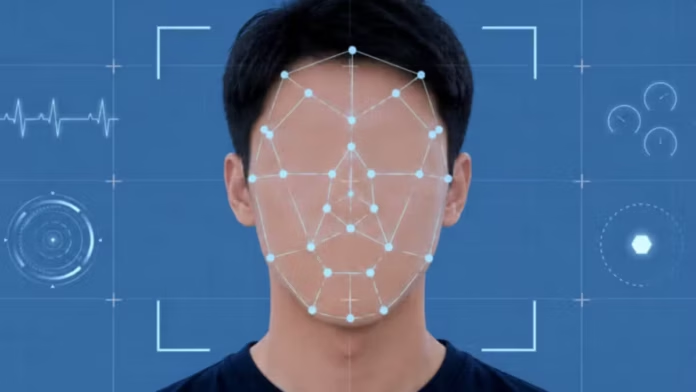

China’s fast-growing AI industry is creating a new way for people to earn money by allowing companies to use their faces in AI-generated videos.
According to a report by Rest of World, actors, models, and even ordinary people can earn anywhere from $15 to $700 by licensing their faces for AI projects.
Several online platforms now let video producers browse thousands of faces based on age, gender, and appearance. They can choose different styles, such as a “girl-next-door,” “supermodel,” or older person, depending on the type of video they want to create.
The growing demand is mainly coming from China’s rapidly expanding microdrama industry. These are very short TV-style episodes made for smartphones and social media. During the first three months of 2026, China released around 128,000 microdramas, and more than 95 percent of them used AI at some stage of production.
One of the companies offering this service is ActID, based in Shenzhen. The platform started in March 2026 and already has around 800 registered users. About 300 people have agreed to license their faces for AI content.
So far, two AI drama productions have licensed around 10 different faces through the platform. People were paid between $15 and $74 per episode, while ActID keeps a 10 percent commission from each deal.
The company says AI creators need many different types of faces. They are not only looking for attractive models but also older people and individuals with unique facial features to create more realistic characters.
In these projects, the person does not actually act in the video. Instead, AI uses their face as the base for creating a digital character.
Another company called New Claw, based in Chengdu, also entered the face licensing business after AI reduced demand for its traditional video production services. The company says many brands, including luxury companies, are now choosing AI-generated content instead of hiring actors.
New Claw has set a minimum price of $74 per image to prevent users from offering their faces for extremely low prices.
However, the report also highlights growing concerns about privacy and misuse.
Many people have discovered that their faces were already being used in AI videos without their permission.
In one case, two social media influencers accused ByteDance’s Hongguo platform of using their faces in an AI drama without consent. The video received more than 40 million views before it was removed.
ByteDance says it has deleted over 85,000 videos since the beginning of 2026 that contained unauthorized AI copies of people’s faces or voices.
Legal cases involving AI face misuse are also increasing.
The Guangzhou Internet Court has handled around 700 cases related to AI face theft over the past three years.
In another important ruling, the Beijing Internet Court decided that using someone’s face in an AI face swap without permission can be illegal, even if the image has been changed by AI.
Legal experts say face licensing platforms may create a safer and more transparent way for people to earn money from their appearance. However, they also warn that once someone uploads their facial images, they may lose some control over how those images are used in the future.
Experts say there is no guarantee that licensed photos will not be copied, stolen, or used for unauthorized AI face swaps or future AI training.
Some contracts may also be unclear, making it difficult for users to know exactly who will use their face and for what purpose.
Because of these risks, not everyone is interested in joining.
A 21-year-old model from Shanghai, Xu Fang, is currently suing a fashion company after it allegedly used his face on products without his permission. He said he would not license his face for AI because he cannot predict how AI might change or misuse his appearance.
The report also notes that face licensing may not become a huge business. Many AI drama producers still prefer using completely AI-generated characters because they are often cheaper and do not require paying real people for image rights.
As AI technology continues to grow, the market for licensed digital faces is expanding, but concerns about privacy, ownership, and misuse remain major challenges for both users and the industry.