
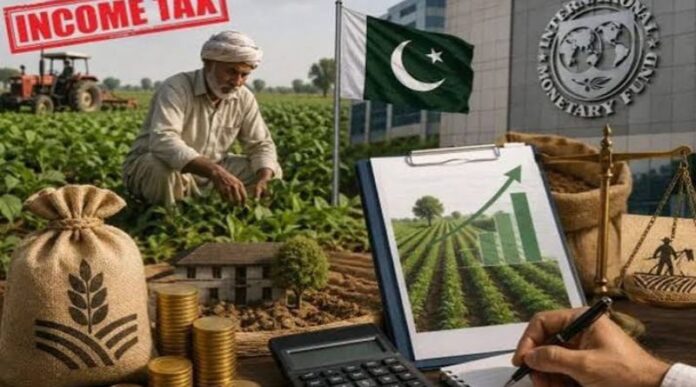

The federal government is reportedly planning to introduce a fixed income tax system for farmers as part of its wider efforts to meet the requirements of the International Monetary Fund (IMF). The move is linked to Pakistan’s ongoing economic reform programme, under which the government has agreed to increase tax collection and bring sectors that have remained outside the proper tax net into the system.
Agriculture is one of the largest sectors of Pakistan’s economy and plays a major role in employment, food production and exports. However, the amount of tax collected from agricultural income has remained very low for many years. The government now faces pressure to improve this situation and make sure that the agriculture sector also makes a greater contribution to national revenues.
The proposed fixed tax system could make tax collection easier and help the authorities deal with the difficulties involved in calculating the actual income of farmers. It may also help the government show the IMF that Pakistan is serious about implementing tax reforms and broadening its tax base.
Agriculture Under Pressure to Contribute More Taxes
Pakistan has long struggled to collect enough tax revenue to meet its growing spending needs. A large part of the country’s tax collection comes from a limited number of sectors and taxpayers. Many areas of the economy have either remained lightly taxed or faced weak enforcement.
Agriculture is among the sectors that have remained difficult to tax properly. The sector makes a major contribution to Pakistan’s economy, but agricultural income tax collection has been much lower than expected. The IMF has repeatedly pointed to the need for Pakistan to bring agricultural income taxation closer to the tax system applied to other forms of income.
According to recent IMF assessments, agriculture remains one of the most lightly taxed major sectors in Pakistan. The IMF has said that the country needs to improve tax collection from agriculture and other under-taxed sectors to strengthen its finances and reduce pressure on already taxed businesses and salaried people.
The latest push for a fixed income tax on farmers is therefore being seen as part of a broader attempt to improve the country’s tax collection system.
Why the Government May Choose a Fixed Tax System
Calculating the exact income of farmers is not always easy. Agricultural income can change because of weather conditions, crop prices, production costs, water shortages, pests and other factors. Many farmers also operate in areas where keeping detailed financial records is not common.
Because of these issues, the government may find it difficult to accurately determine the income of every farmer and collect tax according to the normal income tax system.
A fixed tax could offer a simpler option. Instead of relying only on complicated calculations of yearly income, the government could set a clear tax amount or formula based on certain factors. These could include the size of agricultural land, the type of farming, production level or another official measure.
Supporters of such a system believe it could reduce confusion and make it easier for both farmers and tax authorities. A simple and clear system may also improve compliance because taxpayers would have a better understanding of how much tax they are expected to pay.
However, the final details of the proposed system will be important. Farmers with different incomes and land sizes cannot always be treated in exactly the same way. Small farmers often face greater financial pressure and have fewer resources than large commercial farming businesses.
For this reason, the government will need to design the tax system carefully to avoid putting an unfair burden on smaller farmers.
IMF Wants Broader and Fairer Tax Collection
Pakistan’s agreement with the IMF includes a number of economic and tax reforms. The government is expected to increase revenues, improve tax enforcement and reduce the country’s dependence on borrowing.
The IMF has supported reforms aimed at taxing areas of the economy that have historically contributed less to the national tax system. These include agriculture, property and other sectors where tax collection has remained weak.
The four provinces amended their agricultural income tax systems to bring them closer to the federal income tax framework. The reforms were introduced as part of Pakistan’s commitments under the IMF-supported programme, with the new tax regime applying to agricultural income from January 2025.
However, changing the law is only one part of the process. Proper implementation, registration of taxpayers, accurate records and effective enforcement are also necessary.
Recent data and analysis have shown that agricultural income tax collection has remained below expectations despite the new framework. This has increased pressure on the authorities to find ways to improve the system and make tax collection more effective.
A fixed income tax system could therefore be considered as a practical way to improve collection and address some of the problems faced under the existing system.
Provinces Have an Important Role
Agricultural income tax is mainly a provincial matter under Pakistan’s constitutional system. This means the federal government cannot simply collect the tax on its own in the same way as it collects many other federal taxes.
Punjab, Sindh, Khyber Pakhtunkhwa and Balochistan all have an important role in implementing agricultural tax reforms. For the new system to work successfully, there will need to be close coordination between the federal and provincial governments.
The provinces will need to improve taxpayer registration, identify people who should be paying tax and develop effective systems for collecting agricultural income tax. Better use of digital records and information sharing could also play an important role.
The Federal Board of Revenue (FBR) has also been working with the provinces by sharing relevant income tax information. The IMF has highlighted the importance of data sharing, automation and stronger enforcement in order to improve the collection of agricultural income tax.
Without better coordination, even a new fixed tax system may face the same problems that have affected earlier efforts.
Small Farmers May Need Protection
One of the biggest concerns about the proposed tax plan will be its impact on small farmers. Pakistan has a large number of farmers who own or work on small areas of land and already face rising costs.
The prices of seeds, fertiliser, pesticides, electricity, diesel and other agricultural inputs can place a heavy burden on farmers. Crop losses caused by floods, drought, changing weather and pests can also reduce their income.
If the government introduces a fixed income tax without considering these problems, small farmers may find it difficult to pay. This could lead to opposition and reduce public support for the reform.
The government may therefore need to create different categories for small, medium-sized and large farmers. Small farmers with limited income may require exemptions or lower tax rates, while larger and more profitable agricultural businesses could be asked to pay more.
This approach would be closer to the idea of fairness. Farmers with a greater ability to pay should contribute more, while vulnerable farmers should not face unnecessary financial pressure.
Large Landowners and Commercial Farms Could Face Higher Burden
The proposed tax reform could especially affect large landowners and commercial agricultural businesses. These groups generally have greater financial capacity and may be expected to make a bigger contribution to tax revenues.
For years, there has been public debate in Pakistan over whether wealthy agricultural landowners are paying their fair share of taxes. Salaried people and registered businesses often face regular tax deductions and reporting requirements, while tax collection from agriculture has remained comparatively weak.
A stronger agricultural tax system could help reduce this difference. If implemented properly, it may also improve confidence in the tax system by showing that income from different sectors is being treated more fairly.
However, accurate records will remain necessary. The government will have to make sure that wealthy taxpayers do not use loopholes or incorrect declarations to avoid paying the required amount.
Government Needs More Revenue
The main reason behind the latest tax push is Pakistan’s need for higher and more stable revenue. The government spends large amounts on debt payments, salaries, pensions, development projects, defence, energy-related costs and social welfare programmes.
At the same time, the country needs money for education, healthcare, infrastructure and support for vulnerable families.
When tax collection remains low, the government often has to depend more heavily on borrowing. This increases public debt and can create more financial problems in the future.
The IMF has stressed that Pakistan needs to improve domestic revenue collection to create a more sustainable financial position. The latest programme reviews have also highlighted the need for continued efforts at both federal and provincial levels to increase tax revenues.
Bringing more agricultural income into the tax system could therefore help the government reduce its dependence on a narrow group of taxpayers.
Farmers May Oppose the New Plan
Although the government may see the fixed income tax as necessary, the plan could face resistance from farming groups and political leaders.
Farmers may argue that agriculture is already under pressure because of rising costs and uncertain crop prices. Many could say that the government should first provide better support, improve water availability and reduce the cost of farming before imposing additional taxes.
There may also be concerns about how the fixed tax will be calculated. If a farmer has a poor crop year because of floods, drought or low prices, a fixed tax could become difficult to pay.
For this reason, the government may need to include special rules for farmers affected by natural disasters or major crop losses. A system that allows adjustments during difficult years could make the policy more acceptable.
The authorities will also need to clearly explain the purpose of the tax and how it will work. Lack of information could create rumours and unnecessary fear among farmers.
Better Records Will Be Necessary
A successful agricultural tax system will depend heavily on reliable information. The government will need accurate data about agricultural land, land ownership, crop production and taxpayers.
Pakistan has made progress in digital systems, but more work is still needed. Land records are not equally strong in every area, and some agricultural activities remain outside formal documentation.
The use of digital records and cooperation between federal and provincial authorities could improve the situation. Better information sharing would help identify taxpayers and reduce tax evasion.
Technology could also make the tax process easier for farmers. Online registration, simple digital forms and mobile payment systems may reduce the need for farmers to visit government offices.
At the same time, the government must make sure that farmers in rural areas who have limited access to the internet are not left behind.
IMF Confidence Is Important for Pakistan
The proposed tax move is also important because Pakistan wants to maintain the confidence of the IMF and other international lenders.
Pakistan’s economy has faced serious financial challenges, and continued support from international partners remains important. To receive further support and maintain economic stability, the government must show that it is implementing agreed reforms.
Tax collection is one of the major areas of focus. If Pakistan fails to increase revenues, it may face difficulties in meeting its fiscal targets.
The government therefore wants to demonstrate that it is taking practical steps to improve tax collection from sectors that have traditionally remained under-taxed.
The IMF has made clear that the provinces also have an important role in this process, particularly through stronger agricultural income tax collection and broader provincial tax reforms.
A Difficult But Important Reform
Introducing a fixed income tax on farmers may help the government simplify agricultural taxation and increase revenue collection. However, the policy will need to be designed carefully.
A poorly planned system could place too much pressure on small farmers and create strong opposition. On the other hand, a fair system that focuses more on large and profitable agricultural businesses could help broaden Pakistan’s tax base without hurting vulnerable farmers.
The government will need to balance the demands of the IMF with the realities faced by Pakistan’s agriculture sector. Farmers deal with changing weather, water shortages, rising costs and uncertain market prices, so any tax system must take these risks into account.
The coming months will show how the government and provinces move forward with the proposed plan. If implemented properly, the reform could improve tax collection and make Pakistan’s tax system broader and more balanced.
However, success will depend on more than simply announcing a new tax. Strong implementation, fair treatment of small farmers, better records, modern technology and effective coordination between the federal and provincial governments will all be necessary.
For Pakistan, the challenge is to collect more tax while protecting those who are already struggling. If the government manages this balance, the agricultural tax reform could become an important part of the country’s wider effort to strengthen its economy and meet its commitments to the IMF.
Read Also: check


