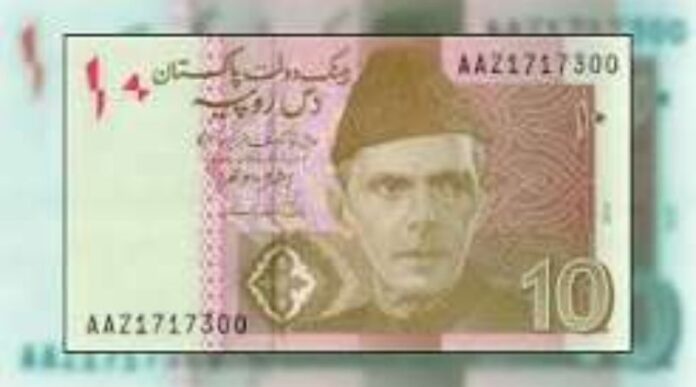

The Rs. 10 note has been a familiar part of daily life in Pakistan for many years. People use it for small purchases, local transport fares, tea, snacks, and many other everyday needs. However, the future of this small currency note may now be under review.
The State Bank of Pakistan (SBP) is considering whether the Rs. 10 banknote should continue to be used or whether it should eventually be replaced by a Rs. 10 coin. The matter has been discussed at the government level, where concerns were raised about the cost of producing the note and how long it remains usable compared to a coin.
No final decision has been announced yet. The government is still reviewing the matter, and a committee has been tasked with studying different aspects before making recommendations. For now, the Rs. 10 note remains legal tender and can still be used across Pakistan.
Government Reviews the Future of the Rs. 10 Note
The possible discontinuation of the Rs. 10 note has become part of a wider discussion about Pakistan’s currency system and proposed changes to banknotes. During a high-level government meeting, the question of whether the Rs. 10 note should be replaced with a coin was discussed in detail.
According to reports, the federal cabinet decided that more study was needed before taking any final step. The main question is whether continuing to print the Rs. 10 note makes financial sense or whether a coin would be a better option in the long run.
The Finance Minister-led committee has been asked to review the matter and submit its recommendations. The committee is expected to examine the production cost of the banknote and compare it with the cost and useful life of a Rs. 10 coin.
The final decision will depend on the findings of this review. After receiving the recommendations, the federal cabinet will consider the matter and decide whether the Rs. 10 note should remain in circulation or be removed.
Why Is the Rs. 10 Note Being Considered for Removal?
One of the biggest reasons behind this discussion is the cost of producing low-value currency notes. Banknotes may have a lower face value, but printing and managing them still involves expenses.
A Rs. 10 note is used frequently because of its small value. It passes through many hands every day and is often used in shops, markets, public transport, and other small transactions. Due to regular use, such notes can become dirty, damaged, torn, or worn out more quickly.
When a note becomes too damaged, it needs to be replaced. This means the authorities may have to keep printing new Rs. 10 notes regularly to maintain enough currency in circulation.
A coin, on the other hand, can generally remain usable for a longer period. Although producing a coin may involve higher initial costs, it may last much longer than a paper or polymer note. This could possibly make it a more practical choice over time.
However, the government wants to study the actual costs carefully before making a decision. The difference between the production cost and useful life of both options is an important part of the review.
A Rs. 10 Coin Could Replace the Banknote
If the government eventually decides to discontinue the Rs. 10 note, the most likely replacement would be a Rs. 10 coin.
Pakistan already uses coins in different denominations, and a Rs. 10 coin is already familiar to many people. This means replacing the note with a coin may not be a completely new idea for the public.
Supporters of using coins argue that they are stronger and more durable. A coin can remain in use for many years, while a low-value banknote may become damaged after a shorter period.
Another possible benefit is that coins do not tear easily. Notes can be damaged by water, folded too many times, or become weak due to continuous use. Coins are less affected by these problems.
However, coins also have some disadvantages. They are heavier than notes and can be inconvenient to carry in large quantities. For example, carrying several coins in a pocket can feel uncomfortable, especially when people receive them as change after shopping.
Some people also prefer notes because they are lighter and easier to keep inside wallets. For this reason, the government will need to consider not only the financial cost but also the convenience of the public.
No Final Decision Has Been Made Yet
It is important for the public to understand that the Rs. 10 note has not been discontinued at this stage.
The issue is still under consideration, and the government has asked for a detailed review. Until an official decision is made and formally announced, people should continue to use the Rs. 10 note normally.
The State Bank of Pakistan currently lists the Rs. 10 banknote among the country’s legal tender currency denominations.
In the past, Pakistan has also seen rumours about certain banknotes being discontinued. The SBP has previously clarified that decisions about removing currency from circulation follow a proper legal and official process.
According to the central bank, any move to demonetize or cancel a banknote requires the necessary recommendations and government action. The public is also given advance notice when such major currency changes are officially made.
Therefore, people should not believe social media posts or messages claiming that the Rs. 10 note has already been removed unless there is an official announcement.
The Matter Is Linked to New Currency Plans
The discussion about the Rs. 10 note is also connected with broader talks about Pakistan’s future banknote designs and materials.
Reports have suggested that the SBP has been working on proposals related to new banknote designs and the possible use of polymer material. Polymer notes are different from traditional paper-based currency and are generally known for their strength and longer life.
However, the proposal raised several questions during government discussions. Cabinet members reportedly wanted a closer examination of the new material and other features before moving forward.
One concern discussed was whether polymer notes were suitable for all types of users. Reports also mentioned concerns related to young children who may put or chew objects, including currency notes, in their mouths.
Because of these concerns, the government decided that the matter needed more careful study. The cabinet formed a committee to examine the proposed new currency designs, materials, and the possible future of the Rs. 10 note.
This means that the decision about the Rs. 10 note is part of a bigger review of how Pakistan may manage its currency in the future.
What Will Happen If the Rs. 10 Note Is Discontinued?
If the government decides to remove the Rs. 10 note in the future, the process is likely to take place through an official and organised system.
People would not suddenly lose the value of their existing Rs. 10 notes. In previous cases involving the removal of old banknotes, the public was given time to exchange them.
For example, the SBP previously phased out old-design notes in different denominations, including old Rs. 10 notes. These older notes were replaced through an official process while newer notes remained in circulation.
If a complete discontinuation of the current Rs. 10 note is approved, the authorities would be expected to issue proper instructions explaining how the change would take place.
This could include a period during which people can continue using the notes or exchange them through banks and other authorised institutions.
However, the exact process will only become clear if the government makes a final decision.
How Could the Change Affect Daily Life?
The removal of the Rs. 10 note may have a small but noticeable effect on daily life. Since the denomination is commonly used, many people could take some time to adjust.
Shopkeepers may need to give more coins as change. Customers may also start carrying more coins in their pockets or wallets.
Small businesses, street vendors and public transport workers could be among the people most directly affected by such a change. These groups handle small amounts of cash throughout the day and may need to manage a greater number of coins.
For ordinary people, the change may not be very difficult because Rs. 10 coins are already part of Pakistan’s currency system. However, the complete replacement of notes with coins could increase the use of coins in daily transactions.
Banks and businesses would also need to make changes in the way they store, transport and manage currency. Coins take up more physical space and can be heavier than notes of the same value.
Therefore, the government will need to consider the full impact before making a final decision.
Public Response Could Be Mixed
If the Rs. 10 note is eventually removed, public reaction may be mixed.
Some people may support the decision because coins are stronger and can last longer. They may also believe that the government could save money in the long term by reducing the need to replace damaged notes.
Others may not like the change because they find coins less convenient. Carrying several coins can make pockets heavy, and some people may prefer the flexibility of paper notes.
The government will therefore have to balance cost savings with public convenience.
It is also important to consider how frequently the Rs. 10 denomination is used. Even though the value of Rs. 10 is small, the denomination still plays a role in many daily transactions.
For this reason, any decision regarding its future will need to be planned carefully.
Pakistan Has Changed Its Currency System Before
Pakistan’s currency system has changed several times over the years. The country has introduced new designs, added security features and withdrawn older versions of notes.
The SBP previously stopped the circulation of older-design Rs. 10 notes while newer versions continued to be used. This shows that changes in the currency system are not unusual and can be made when the authorities believe there is a need for better security, durability or currency management.
The SBP has also worked to improve the security and quality of banknotes. Modern notes are designed with different security features to help reduce counterfeiting and make it easier to identify genuine currency.
If the Rs. 10 note is removed, it would be another important change in the way Pakistan manages its currency.
What Should the Public Do Now?
At present, there is no need for people to worry about the Rs. 10 note.
The note remains legal tender, and it can still be used for buying goods, paying fares and other everyday transactions.
People should continue using it normally until the government and the SBP make an official announcement about any future change.
It is also a good idea to avoid trusting unverified social media posts. Currency-related rumours can spread quickly and create unnecessary confusion.
The best way to stay informed is to check official announcements from the State Bank of Pakistan and reliable news sources.
If the government approves the discontinuation of the note, the public will likely be informed through official channels.
Final Thoughts
The possible end of the Rs. 10 note is still only under review, and no final decision has been made. The government is examining whether it would be more practical and cost-effective to continue using the banknote or rely more on the Rs. 10 coin.
The key issues include the cost of producing the note, how quickly it becomes damaged, and whether a coin can provide a longer-lasting and more affordable option.
At the same time, the government must also consider the convenience of the public. Millions of people use small-value currency in their daily lives, and any major change can affect shops, transport, businesses and ordinary consumers.
For now, the Rs. 10 note remains part of Pakistan’s legal currency system. The final outcome will depend on the recommendations of the committee and the decision of the federal cabinet.
Until an official announcement is made, there is no reason to stop accepting or using the Rs. 10 note. The matter is still being studied, and Pakistanis will have to wait for the government’s final decision on whether this familiar banknote will continue to remain in their wallets or eventually be replaced by a coin.
Read Also: check