
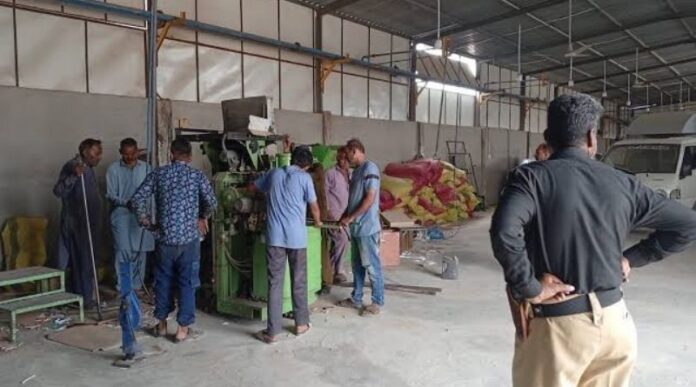

The Federal Board of Revenue (FBR) has taken major action against the illegal cigarette business in Karachi by sealing an unlawful cigarette manufacturing factory in the Malir area. During the operation, officials confiscated cigarette-making machinery, raw materials, tobacco and finished cigarette stock worth around Rs. 200 million.
According to the authorities, the illegal factory was causing huge losses to the national exchequer. The estimated annual loss to the government due to the factory’s activities was around Rs. 1.2 billion.
The operation is part of the FBR’s wider campaign against illegal cigarette production, tax evasion and the sale of non-duty-paid tobacco products across Pakistan. The action shows that the tax authority is continuing its efforts to stop businesses that operate outside the law and avoid paying government taxes.
The raid was carried out by the Inland Revenue Enforcement Squad of Regional Tax Office-II (RTO-II) Karachi. The operation was conducted under the wider enforcement policy aimed at reducing illegal cigarette manufacturing and stopping the spread of illicit tobacco products in the country.
Illegal Factory Found in Malir
The illegal cigarette factory was located in the Malir area of Karachi. FBR enforcement officials raided the premises after receiving information about illegal manufacturing activities.
During the operation, officials found equipment and materials being used for cigarette production. The factory was immediately sealed to stop further manufacturing.
The authorities also took control of the machinery installed at the facility. In addition, raw materials, tobacco and finished cigarette products found at the site were confiscated.
The value of the seized items was estimated at around Rs. 200 million. This included the production equipment as well as the stock that was either being prepared for manufacturing or was already ready for sale.
The seizure was important because illegal cigarette factories can operate without following tax laws and other government requirements. Such businesses can produce and sell cigarettes while avoiding the taxes that legal manufacturers are required to pay.
As a result, the government loses a large amount of money that could otherwise be collected as revenue.
Major Financial Loss to the Government
According to information released after the operation, the illegal factory was believed to be causing an estimated annual revenue loss of Rs. 1.2 billion to the national exchequer.
This figure shows the serious financial impact of illegal cigarette manufacturing on Pakistan’s economy.
Taxes collected by the government are used to support many important sectors, including public services, infrastructure and other national needs. When businesses avoid paying taxes, the government receives less money.
Illegal cigarette manufacturing also creates an unfair situation for companies that are operating legally.
Registered cigarette manufacturers have to follow tax rules and other official requirements. They have to pay the required duties and taxes and operate according to the law.
However, illegal factories may try to avoid these costs. This allows them to produce cigarettes at a lower cost and sell them at lower prices.
Such practices can make it difficult for legal businesses to compete with illegal sellers.
For this reason, action against the illegal tobacco trade is not only about collecting taxes. It is also about creating a fair business environment for companies that follow the law.
FBR Continues Crackdown on Illegal Tobacco Trade
The Karachi operation is part of the FBR’s continued campaign against illegal cigarette production and tax evasion.
The tax authority has been increasing its enforcement activities against businesses involved in the manufacturing and sale of illegal cigarettes. The government wants to stop the production of cigarettes that do not meet official tax and regulatory requirements.
The operation was carried out by the Inland Revenue Enforcement Squad of RTO-II Karachi as part of efforts to take stronger action against illegal businesses.
The FBR has also been working through its enforcement network to identify suspicious manufacturing units and stop the movement of illegal tobacco products.
Illegal cigarette manufacturing remains a serious challenge because such products can enter the market without proper tax payments.
When these cigarettes are sold, the government does not receive the revenue that it is legally entitled to collect.
The FBR believes that strong enforcement is necessary to reduce these losses and discourage others from operating illegal manufacturing facilities.
The government has also been directing tax authorities to strengthen action against tax evasion, smuggling and other illegal business activities as part of broader efforts to improve revenue collection.
Machinery and Stock Taken Into Custody
During the raid, FBR officials confiscated the factory’s plant and machinery.
This was an important part of the operation because machinery is used for the large-scale production of cigarettes. By taking control of the equipment, authorities can stop the facility from restarting production immediately.
Officials also seized raw materials and finished cigarette products from the factory.
Raw materials may include tobacco and other items used during the production and packaging process. Finished products are cigarettes that are already prepared and may be ready for transportation or sale.
The confiscation of both machinery and stock was aimed at completely stopping the illegal operation.
Simply closing a factory may not always be enough if the owners still have the equipment and materials needed to restart the business.
By sealing the premises and confiscating important production assets, the FBR has taken stronger steps to prevent the illegal manufacturing activity from continuing.
Why Illegal Cigarette Manufacturing Is a Serious Issue
Illegal cigarette manufacturing affects the government, legal businesses and the overall economy.
One of the biggest problems is tax evasion.
Cigarettes are subject to government taxes and duties. Legal manufacturers are expected to pay these amounts according to the law.
However, illegal factories may produce cigarettes without paying the required taxes.
This means that products can enter the market without contributing the required revenue to the national exchequer.
If illegal cigarettes are produced and sold on a large scale, the financial losses can become very significant.
The FBR’s estimate of around Rs. 1.2 billion in annual revenue losses from the Karachi factory shows how serious such illegal operations can be.
Another major issue is unfair competition.
Legal companies spend money to meet government rules, pay taxes and maintain proper records. Illegal manufacturers may avoid these costs.
As a result, they may be able to offer products at lower prices.
This can attract customers and create pressure on legitimate companies that are following all legal requirements.
Stronger Enforcement Is the Need of the Hour
The FBR’s latest operation highlights the importance of strong enforcement against tax evasion and illegal manufacturing.
Authorities need to identify illegal factories before their products are distributed widely across the market.
This requires intelligence gathering, inspections and cooperation between different government departments.
Enforcement teams also need to ensure that illegal factories cannot simply move to another location and restart their operations.
The seizure of machinery and raw materials can help make such operations more difficult.
However, long-term success will depend on continued monitoring and strict action against people involved in illegal manufacturing and trade.
The FBR has previously stated that it is committed to taking stronger action against illicit tobacco manufacturing and other forms of tax evasion. The authority has said that further legal and criminal action may be taken after investigations are completed, in accordance with the law.
Legal Action May Follow
The sealing of the factory and confiscation of its equipment are only part of the enforcement process.
Authorities are expected to investigate the people and businesses connected to the illegal operation.
If violations of tax laws or other regulations are confirmed, further legal action may be taken.
The FBR has made it clear in other enforcement cases that people involved in illegal manufacturing and tax evasion can face action under the relevant laws.
Investigations are important because authorities need to determine how long the factory had been operating and how much illegal production had taken place.
Officials may also investigate where the finished cigarettes were being sold and whether other individuals or businesses were involved in the supply network.
Illegal cigarette operations often depend on a larger system involving production, transportation, distribution and sales.
Therefore, stopping only one factory may not be enough if the wider network remains active.
The FBR’s continued enforcement efforts are aimed at finding and stopping these illegal activities at different stages.
Impact on Pakistan’s Revenue Collection
Pakistan needs strong tax collection to meet its financial requirements and support government spending.
When businesses avoid paying taxes, the burden can increase on those individuals and companies that already follow the law.
Illegal manufacturing also reduces the government’s ability to collect the revenue it expects from different industries.
The tobacco sector is one of the areas where tax compliance is especially important because cigarettes are subject to duties and taxes.
If large quantities of cigarettes are produced outside the legal system, the government can lose a major amount of money.
The FBR’s action in Karachi sends a clear message that illegal cigarette manufacturing will remain under scrutiny.
The authority is trying to improve enforcement against businesses that operate outside the legal framework and avoid their tax responsibilities.
A Warning for Other Illegal Businesses
The sealing of the Malir factory can also serve as a warning to other businesses involved in illegal activities.
Government agencies are increasing their efforts to identify businesses that avoid taxes or operate without proper registration and approval.
Businesses involved in illegal cigarette manufacturing may face raids, seizure of machinery and confiscation of products.
They may also face legal action after investigations are completed.
The FBR’s enforcement teams are expected to continue monitoring suspicious activities and taking action where evidence of illegal production is found.
For legal businesses, stronger action against illegal operators can help create a fairer market.
Companies that pay taxes and follow the law often face difficulties when competing with businesses that avoid government duties.
Reducing illegal manufacturing can help protect legitimate businesses from unfair competition.
Karachi Operation Shows FBR’s Serious Approach
The latest operation in Karachi shows that the FBR is taking the illegal tobacco trade seriously.
The seizure of machinery and stock worth around Rs. 200 million is a major enforcement action.
The estimated annual loss of Rs. 1.2 billion also shows why authorities consider such illegal factories a serious threat to government revenue.
The operation in Malir was carried out as part of a wider campaign to stop illicit cigarette production and tax evasion.
By sealing the factory and confiscating its machinery, tobacco and finished stock, the FBR has stopped the facility from continuing its operations.
The case is now likely to remain under investigation as authorities examine the people involved and the full scale of the illegal activity.
Conclusion
The Federal Board of Revenue’s action against the illegal cigarette factory in Karachi is another important step in Pakistan’s campaign against tax evasion and unlawful manufacturing.
The factory in Malir was sealed during an enforcement operation, while machinery, raw materials, tobacco and finished cigarettes worth around Rs. 200 million were confiscated.
According to the authorities, the illegal operation was causing an estimated annual loss of Rs. 1.2 billion to the national exchequer.
The operation highlights the serious impact of illegal cigarette manufacturing on government revenue and legal businesses. When factories operate outside the law and avoid taxes, the country loses important income and legitimate companies face unfair competition.
The FBR’s continued crackdown is aimed at identifying such illegal businesses, stopping their operations and taking legal action against those responsible.
With stronger monitoring, regular enforcement operations and strict legal action, authorities hope to reduce the illegal tobacco trade and protect Pakistan’s revenue.
The Karachi factory raid is a clear sign that action against illegal cigarette manufacturing is continuing and that businesses involved in tax evasion may face serious consequences under the law.
Read Also: check


