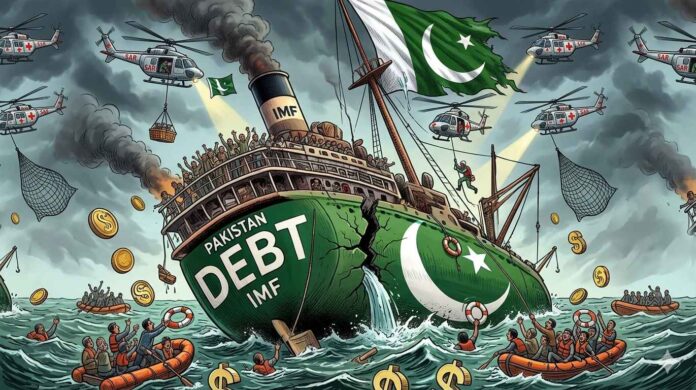

IMF Doubts Pakistan’s Ability to Repay Loans Smoothly Next Fiscal Year
Pakistan’s economic outlook has once again come under scrutiny after the International Monetary Fund expressed concerns regarding the country’s ability to repay its loans smoothly during the next fiscal year. The warning comes at a time when Pakistan continues to struggle with high debt levels, persistent fiscal deficits, inflationary pressure, and dependence on external financial support to stabilize its economy.
According to recent projections, Pakistan’s debt burden is expected to remain well above sustainable levels in the coming years, creating additional pressure on the government’s finances. The debt-to-GDP ratio is projected to stay above 67 percent next fiscal year, far exceeding the legal threshold of 60 percent outlined under the country’s fiscal responsibility framework.
The concerns raised over Pakistan’s repayment capacity have intensified discussions among economists, policymakers, and financial analysts who fear that the country may face deeper financial challenges if structural reforms are delayed or external financing conditions become tighter.
Pakistan’s Debt Burden Continues to Rise
Pakistan’s total public debt has climbed to nearly 72.8 percent of GDP, reflecting the growing pressure on the national economy. Rising debt levels have significantly reduced the government’s fiscal space, limiting its ability to invest in development projects, social welfare programs, infrastructure, and economic growth initiatives.
The increasing debt burden has become one of the most critical economic challenges facing Pakistan. A large portion of government revenue is now being consumed by debt servicing obligations, leaving limited resources available for public spending. This situation has made it increasingly difficult for authorities to manage economic stability while simultaneously supporting growth and controlling inflation.
Financial experts believe that Pakistan’s heavy reliance on borrowing over the years has created a cycle in which new loans are often used to repay older liabilities. Such a pattern increases long-term financial vulnerabilities and exposes the economy to risks associated with currency depreciation, rising interest rates, and fluctuations in global financial markets.
The IMF has repeatedly stressed that high debt levels can weaken investor confidence and discourage foreign investment, especially when repayment risks appear elevated. Investors generally seek economies with stable fiscal positions and predictable financial management policies. When debt levels rise sharply, concerns about repayment sustainability also increase.
IMF Raises Concerns Over Fiscal Sustainability
The IMF’s latest assessment suggests that Pakistan’s fiscal position remains fragile despite recent stabilization efforts. While authorities have introduced measures aimed at improving revenue collection and controlling expenditures, the pace of fiscal consolidation remains insufficient to bring debt levels down to safer limits.
The lender believes that Pakistan continues to face substantial financing needs in the coming years. These financing requirements include external debt repayments, interest obligations, budgetary support, and import financing. Without strong economic growth and consistent fiscal reforms, managing these obligations may become increasingly difficult.
The IMF has emphasized that Pakistan’s repayment capacity remains heavily dependent on continued external financial support from multilateral institutions, friendly countries, and international lenders. This dependence creates uncertainty because external financing conditions can change rapidly due to geopolitical tensions, global interest rate movements, or shifts in investor sentiment.
Analysts note that Pakistan’s vulnerability increases whenever foreign exchange reserves decline or export growth slows. In such situations, the country often struggles to meet external payment obligations without securing additional loans or financial assistance packages.
The IMF has therefore urged Pakistan to maintain strict fiscal discipline and continue implementing structural reforms designed to strengthen economic resilience and reduce long-term debt risks.
Debt-to-GDP Ratio Remains Above Legal Limits
Pakistan’s debt-to-GDP ratio remaining above 67 percent next fiscal year has become a major point of concern for economic observers. Under fiscal responsibility laws, the country is expected to maintain public debt at or below 60 percent of GDP. However, persistent budget deficits, currency depreciation, and weak economic growth have pushed debt levels far beyond this threshold.
A higher debt-to-GDP ratio indicates that the government owes a large amount relative to the size of the economy. This situation can become problematic because economic growth may not be strong enough to support debt repayment obligations efficiently.
The debt ratio has also been affected by the depreciation of the Pakistani rupee in recent years. Since a significant portion of Pakistan’s debt is denominated in foreign currencies, the weakening rupee has substantially increased the local currency value of external liabilities.
At the same time, higher domestic and international interest rates have increased borrowing costs for the government. Rising interest payments have placed additional pressure on public finances and limited the government’s flexibility in managing economic priorities.
Economists warn that unless debt levels are gradually reduced through stronger growth and improved fiscal management, Pakistan could continue facing recurring balance of payments crises and financing challenges.
Structural Reforms Seen as Critical
The IMF has consistently highlighted the importance of structural reforms in stabilizing Pakistan’s economy and improving repayment capacity. These reforms are considered essential for addressing long-standing weaknesses in the country’s fiscal and economic framework.
One of the key areas requiring reform is tax collection. Pakistan’s tax-to-GDP ratio remains relatively low compared to many developing economies, reducing the government’s ability to generate sustainable revenue. Authorities have been encouraged to broaden the tax base, reduce exemptions, improve documentation, and strengthen enforcement mechanisms.
Energy sector reforms have also become a major focus. The country’s power sector continues to face circular debt problems, inefficiencies, transmission losses, and subsidy-related financial pressures. Without meaningful reforms, these issues could continue draining public resources and increasing fiscal burdens.
State-owned enterprises represent another major challenge. Many public sector entities operate at substantial financial losses and require continuous government support. The IMF has repeatedly advised authorities to improve governance, reduce inefficiencies, and consider privatization where appropriate.
In addition, reforms aimed at improving the investment climate are viewed as necessary to attract foreign direct investment and stimulate economic growth. Investors often seek policy consistency, regulatory stability, transparent governance, and efficient administrative processes before committing capital to emerging markets.
External Financing Dependency Remains High
Pakistan’s economic stability remains closely linked to its ability to secure external financing support. The country frequently relies on international lenders, bilateral partners, and multilateral institutions to bridge financing gaps and maintain foreign exchange reserves.
This dependency has increased concerns regarding long-term debt sustainability because continued borrowing may further elevate repayment obligations in future years. Financial analysts believe that Pakistan needs to shift toward a more sustainable economic model driven by exports, industrial growth, and domestic revenue generation.
Export performance remains a critical factor in determining the country’s external financial position. Although exports have shown periods of improvement, Pakistan continues to face challenges in expanding its export base and competing effectively in international markets.
The country’s import requirements, particularly for energy and industrial inputs, place additional pressure on foreign exchange reserves. Whenever imports rise significantly or global commodity prices increase, Pakistan’s external financing needs also grow.
Remittances sent by overseas Pakistanis have historically provided important support to the economy. However, reliance on remittance inflows alone may not be sufficient to offset broader structural weaknesses in the external sector.
Economists argue that sustainable economic stability can only be achieved through higher productivity, diversified exports, industrial modernization, and long-term investment in key sectors of the economy.
Inflation and Interest Rates Add Pressure
Pakistan’s debt challenges are further complicated by inflationary pressures and elevated interest rates. High inflation has reduced purchasing power, increased business costs, and created economic uncertainty across multiple sectors.
To control inflation and stabilize the currency, authorities have maintained relatively high interest rates. While tighter monetary policy may help contain inflation, it also increases borrowing costs for both the government and the private sector.
Higher interest rates raise the cost of servicing domestic debt, which forms a large portion of Pakistan’s overall liabilities. As debt servicing expenditures rise, the government faces greater difficulty allocating resources toward development and economic growth programs.
Businesses also face challenges in accessing affordable financing for expansion and investment. Slower private sector activity can reduce economic growth momentum, making it harder for the country to improve fiscal indicators and generate higher revenues.
Economic experts believe that balancing inflation control with growth support will remain a difficult challenge for policymakers in the coming fiscal year.
Economic Growth Remains Crucial for Stability
Sustainable economic growth is widely regarded as the most effective long-term solution to Pakistan’s debt problems. Stronger growth can increase government revenues, improve employment opportunities, strengthen investor confidence, and reduce the relative burden of debt over time.
However, achieving stable growth requires consistent policy implementation, macroeconomic stability, and structural improvements across key sectors. Political uncertainty, policy reversals, and governance challenges have historically affected Pakistan’s economic performance and weakened reform momentum.
Agriculture, manufacturing, information technology, and exports are among the sectors with significant growth potential. Expanding these industries could help improve foreign exchange earnings and create broader economic opportunities.
Infrastructure development, energy reliability, digital transformation, and education reforms may also play important roles in supporting long-term economic competitiveness.
Analysts believe that maintaining economic stability will require coordinated efforts across fiscal policy, monetary policy, trade policy, and institutional reforms.
Future Outlook Remains Challenging
Pakistan’s financial outlook for the next fiscal year remains challenging as debt obligations continue rising and fiscal pressures persist. While recent stabilization measures have provided some short-term relief, long-term sustainability concerns remain unresolved.
The IMF’s caution regarding Pakistan’s repayment capacity highlights the urgent need for continued reforms and prudent financial management. Without stronger fiscal discipline and consistent economic reforms, repayment risks could intensify in the years ahead.
The government is expected to continue negotiations and coordination with international financial institutions to secure external financing support and maintain macroeconomic stability. However, reliance on external borrowing alone may not provide a permanent solution to underlying economic vulnerabilities.
Experts stress that Pakistan must focus on improving domestic revenue generation, boosting exports, attracting investment, and reducing unnecessary expenditures to strengthen its economic foundation.
The coming fiscal year is likely to be critical for Pakistan’s economic trajectory. Decisions taken regarding fiscal policy, debt management, taxation, and structural reforms could significantly influence the country’s financial stability and repayment capacity in the future.
As global economic conditions remain uncertain, Pakistan’s ability to implement reforms effectively and maintain investor confidence will play a key role in determining whether the country can successfully navigate its debt challenges and achieve sustainable economic growth.
Read More