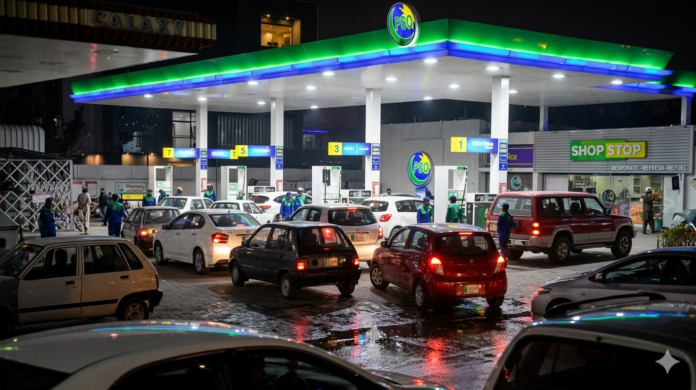

GOVT PLANS MASSIVE FUEL SUBSIDY TO HELP BIKERS AND RICKSHAW OWNERS
The federal government has unveiled plans to introduce a substantial fuel subsidy aimed at reducing the financial burden on motorcyclists and rickshaw owners amid rising global fuel prices. Sources confirm that the scheme is expected to cost approximately Rs. 300 billion over the next six weeks, highlighting the government’s focus on easing everyday fuel expenses for these critical segments of the transport sector.
To make the plan operational, the federal government has formally approached provincial administrations, requesting them to allocate Rs. 154 billion to support the subsidy program. Officials have emphasized that the initiative will initially target two‑ and three‑wheeled vehicles, which are heavily affected by soaring fuel prices and play a vital role in local transportation and commuting.
TARGETED SUBSIDY PROGRAM TO PRIORITIZE MOTORCYCLES AND AUTO-RICKSHAWS
The proposed subsidy aims to directly assist motorcyclists and auto-rickshaw drivers who are struggling with the rising cost of fuel. By focusing on these vehicles, the government intends to provide immediate relief to individuals and small businesses that depend on affordable fuel for their livelihood.
Under the current proposal, eligible vehicles would receive subsidized fuel quotas. Motorcycles could be allocated up to 20 litres, while auto-rickshaws may receive up to 30 litres per subsidy cycle. This targeted approach is designed to balance affordability for consumers while managing the overall fiscal impact on the national budget.
OPTIONS UNDER CONSIDERATION TO ADDRESS FUEL PRICES
Officials are reportedly weighing two main approaches to handle the ongoing surge in international oil prices:
Option 1: Pass the full burden of rising oil costs directly to consumers, allowing market forces to determine fuel prices.
Option 2: Implement the targeted fuel subsidy, providing limited but meaningful relief for motorcycles and rickshaws, ensuring affordability for the most affected commuters.
By comparing these two approaches, policymakers aim to develop a strategy that protects vulnerable citizens while maintaining fiscal responsibility and minimizing the strain on national finances.
FINANCIAL IMPLICATIONS OF THE SCHEME
The proposed subsidy program is estimated to cost Rs. 300 billion over six weeks. This significant investment underscores the government’s commitment to supporting small-scale transport operators and ordinary commuters, who face daily challenges due to escalating fuel expenses.
Provincial contributions of Rs. 154 billion are expected to play a crucial role in ensuring the successful rollout of the scheme. By collaborating closely with provincial authorities, the federal government hopes to implement the subsidy efficiently and reach the intended beneficiaries without delays.
HIGH-LEVEL DECISIONS PENDING
A final decision regarding the subsidy program is expected following a high-level meeting involving the President, the Prime Minister, and Provincial Chief Ministers. The meeting is likely to take place next week and will determine the structure, funding, and implementation plan for the initiative.
This coordinated approach aims to ensure that all stakeholders are aligned on the objectives and operational details of the subsidy program, minimizing confusion and ensuring transparency in execution.
FUEL RESERVES REMAIN STABLE
Despite concerns over rising international prices, government data indicates that domestic fuel reserves are sufficient to meet the country’s demand through May 10, 2026. This stability in supply provides a buffer for the planned subsidy program and ensures that vehicles eligible for support will have uninterrupted access to fuel.
By maintaining adequate reserves, the government aims to implement the subsidy without facing immediate supply challenges, reinforcing the reliability of the program for everyday commuters.
POTENTIAL IMPACT ON BIKERS AND RICKSHAW OWNERS
The introduction of a targeted fuel subsidy is expected to significantly ease financial pressures on motorcyclists and auto-rickshaw drivers. Lower fuel costs would increase disposable income for these individuals, improve operational efficiency, and potentially allow them to expand their services.
For many small business owners, fuel expenses constitute a major portion of daily operational costs. By providing affordable fuel, the subsidy could stabilize livelihoods, support local economies, and reduce the financial strain caused by rising international oil prices.
GOVERNMENT FOCUS ON CONSUMER RELIEF
This initiative highlights the government’s broader focus on consumer relief measures during periods of global economic volatility. By prioritizing key segments of the population, such as bikers and rickshaw owners, policymakers aim to mitigate the social and economic impact of fuel price fluctuations.
Targeted support ensures that assistance reaches those most in need, while broader economic strategies continue to manage the overall fiscal and energy challenges facing the country.
CONCLUSION
The government’s proposed Rs. 300 billion fuel subsidy marks a significant step toward supporting motorcyclists and auto-rickshaw operators amid rising fuel costs. By seeking provincial cooperation and focusing on targeted quotas, the scheme aims to provide immediate relief while maintaining fiscal responsibility.
As the high-level meeting approaches, the final structure and rollout of the program will become clearer. Meanwhile, citizens and transport operators are advised to stay informed through official announcements to understand eligibility and implementation details.
This initiative has the potential to stabilize the livelihoods of small-scale transport providers, improve access to affordable fuel, and demonstrate the government’s commitment to addressing the everyday challenges faced by ordinary commuters.
Read More
Govt Weighs Smart Lockdown Measures! Has It Been Declared Yet?