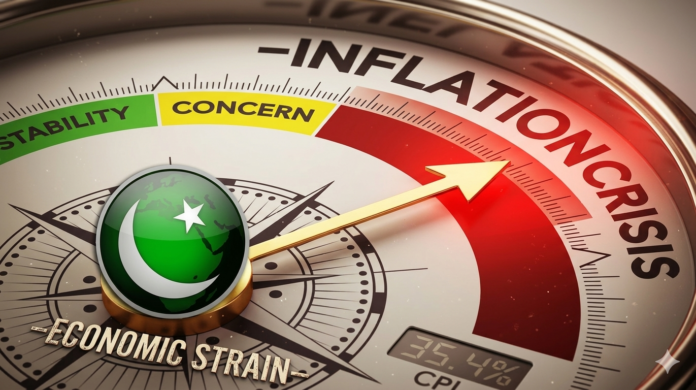

Pakistan’s Inflation Outlook Turns Upward Again
Pakistan’s inflation trajectory is expected to reverse course from April, with rising global oil prices beginning to impact domestic costs across multiple sectors. After a period of relative easing, inflationary pressures are now building once more, raising concerns among policymakers, businesses, and consumers alike. The anticipated increase is largely being driven by external energy shocks that are quickly feeding into the local economy.
Economists believe that the recent uptick in international oil prices is setting the stage for a renewed wave of inflation. As fuel remains a critical input for transportation, electricity generation, and industrial activity, any sustained increase in global energy prices tends to ripple through the entire economic system. This time appears to be no different, as the cost burden is gradually shifting onto domestic consumers.
Rising Fuel Prices Driving Inflationary Pressure
One of the primary factors behind the expected rise in inflation is the sharp increase in fuel prices. Over the past month, fuel costs have surged significantly, creating immediate pressure on transportation and logistics. Since transportation plays a central role in the supply chain, higher fuel costs directly translate into increased prices for goods and services across the board.
This surge in fuel prices has already begun to impact everyday expenses. Transport fares have risen noticeably, affecting both individual commuters and businesses that rely on distribution networks. The increase in transportation costs has, in turn, pushed up the prices of essential commodities, contributing heavily to overall inflation.
Analysts estimate that fuel and transportation together have accounted for a major portion of the recent monthly rise in inflation. This highlights how deeply energy prices influence broader economic stability, especially in a country that relies heavily on imported fuel.
Electricity Costs Add to the Burden
In addition to rising fuel prices, electricity costs are also contributing to the growing inflationary pressure. Recent adjustments in electricity tariffs, including fuel cost adjustments, have led to higher utility bills for households and businesses. These increases are particularly significant because they affect a wide range of economic activities, from manufacturing to daily household consumption.
The expansion of these cost adjustments to a broader segment of consumers has intensified the financial strain. Higher electricity bills not only reduce disposable income for households but also raise operational costs for businesses. As companies attempt to maintain profit margins, these higher costs are often passed on to consumers in the form of increased prices.
The combined effect of rising fuel and electricity costs is creating a strong cost-push inflation environment. This type of inflation is particularly challenging to manage, as it is driven by supply-side factors rather than demand.
Broader Economic Impact and Cost-Push Inflation
The inflationary trend is no longer limited to food or basic commodities. Instead, it is spreading across various sectors of the economy, reflecting a broader cost-push dynamic. Increased logistics costs, higher industrial input prices, and rising energy expenses are all contributing to a generalized increase in price levels.
Businesses are facing mounting pressure as production costs climb. Manufacturers, in particular, are experiencing higher expenses for raw materials, transportation, and energy. This is likely to result in further price increases in the coming months, as companies adjust their pricing strategies to cope with the rising cost environment.
For consumers, this means a continued squeeze on purchasing power. Even as wages remain relatively stagnant, the cost of living is expected to rise, making it more difficult for households to manage their finances.
Monetary Policy Under Close Watch
With inflation expected to climb again, attention is now turning to the central bank’s upcoming monetary policy decision. The policy rate has remained unchanged in recent months, reflecting a cautious approach amid uncertain economic conditions. However, the evolving inflation outlook may force policymakers to reconsider their stance.
Higher inflation typically calls for tighter monetary policy to control price stability. This could mean an increase in interest rates, which would have implications for borrowing costs, investment, and overall economic growth. Businesses and investors are closely monitoring the situation, as any change in policy direction could significantly impact market conditions.
The central bank faces a delicate balancing act. On one hand, it must address rising inflation to protect consumers and maintain economic stability. On the other hand, aggressive tightening could slow down economic activity and hinder growth.
External Pressures and Economic Risks
Beyond domestic factors, external conditions are also playing a crucial role in shaping the inflation outlook. Persistently high global oil prices could increase the country’s import bill, putting additional pressure on the current account. This, in turn, could weaken the national currency and further amplify inflationary pressures.
Foreign exchange reserves may also come under strain if import costs continue to rise. A weaker external position can create additional challenges for economic management, limiting the government’s ability to cushion the impact of rising prices.
Geopolitical uncertainties and disruptions in global energy markets remain key risks. If these factors persist, the inflation outlook could worsen, making it more difficult to achieve price stability in the near term.
Conclusion: A Challenging Road Ahead
Pakistan appears to be entering another phase of rising inflation, driven largely by external energy shocks and their domestic impact. The combination of higher fuel prices, increased electricity costs, and broader supply-side pressures is creating a challenging economic environment.
While policymakers have some tools at their disposal, managing cost-push inflation remains complex. The coming months will be critical in determining how effectively the country can navigate these challenges. For now, both businesses and consumers should prepare for a period of elevated inflation and continued economic uncertainty.
Read More
6GB Smartphones Prices Surge Up to 50% in Pakistan Within Months