
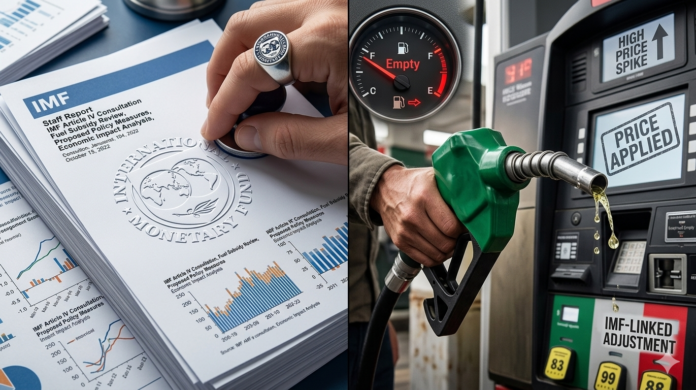

Government Moves to Cushion Fuel Price Impact Amid Global Oil Surge
The federal government is taking proactive steps to protect consumers from the rising burden of fuel costs as global oil prices continue to climb. With international markets experiencing volatility due to geopolitical tensions, authorities are now considering adjustments to domestic fuel pricing mechanisms. A key part of this strategy involves engaging with international financial partners to explore flexibility in existing fiscal commitments related to petroleum levies.
At the center of these efforts is a plan to review and potentially adjust the current fuel levy structure applied to petrol and diesel. These levies form a significant portion of the final price consumers pay at the pump. By revisiting this structure, policymakers aim to ease the financial strain on households and businesses without compromising broader economic stability.
Focus on Fuel Levy Adjustments to Protect Consumers
Fuel levies currently represent a major revenue source for the government, contributing significantly to fiscal targets. However, in times of rising global oil prices, these levies can amplify the impact on consumers. Recognizing this challenge, the government has initiated discussions to determine whether temporary adjustments could help offset price increases.
The idea is to use the flexibility within the existing framework to balance revenue needs with consumer relief. By reducing or restructuring levies, authorities may be able to prevent sharp increases in fuel prices, thereby maintaining economic stability. This approach reflects a careful balancing act between fiscal discipline and public welfare.
Efforts to Manage Rising Oil Prices Without Burdening the Public
Over recent weeks, the government has taken significant steps to shield consumers from the full impact of rising oil prices. Instead of passing on the increase directly, authorities have absorbed a substantial financial burden to maintain stable fuel prices. This strategy has helped prevent sudden inflationary pressures that could affect daily life and business operations.
The financial cost of this approach has been considerable, highlighting the government’s commitment to protecting the public. By absorbing these costs, policymakers aim to provide short-term relief while exploring more sustainable solutions for the future. However, such measures are not without challenges, as they place additional pressure on public finances.
Fiscal Trade-Offs and Budgetary Adjustments
To support the ongoing relief measures, the government has made adjustments to its spending priorities. Funds have been reallocated from development projects and other expenditure areas to cover the cost of maintaining stable fuel prices. This reallocation demonstrates the extent to which fuel price stability has become a priority in the current economic environment.
While these measures provide immediate relief, they also underscore the need for a long-term strategy. Continued reliance on budgetary adjustments may not be sustainable, particularly if global oil prices remain elevated for an extended period. This has prompted policymakers to seek alternative solutions that can provide both stability and fiscal balance.
Exploring International Support for Policy Flexibility
In light of these challenges, the government is looking to secure support for adjusting its fuel pricing framework. Engaging with international financial institutions is a key part of this process, as existing economic programs include commitments related to fuel levies. Any changes to these commitments would require careful negotiation and approval.
The objective is to create room for temporary adjustments that can help mitigate the impact of rising oil prices without undermining broader economic goals. By presenting a well-structured proposal, the government hopes to demonstrate that such measures are necessary and justified under current circumstances.
Impact of Global Tensions on Energy Markets
The recent surge in oil prices is closely linked to geopolitical developments that have disrupted energy supply chains. These disruptions have created uncertainty in global markets, leading to higher prices and increased volatility. For countries that rely heavily on imported fuel, such fluctuations can have significant economic implications.
In this context, managing fuel prices becomes not just an economic issue but also a matter of social stability. Rising fuel costs can lead to higher transportation expenses, increased production costs, and overall inflation. By taking steps to control these impacts, the government aims to maintain economic stability and protect vulnerable segments of the population.
Balancing Economic Stability and Consumer Relief
The challenge facing policymakers is to strike a balance between maintaining fiscal discipline and providing relief to consumers. Fuel levies play an important role in revenue generation, but they also influence the cost of living. Adjusting these levies requires careful consideration of both short-term and long-term implications.
By exploring options such as levy rationalization, the government is attempting to find a middle ground. This approach allows for targeted relief while preserving the integrity of the overall economic framework. It also highlights the importance of flexible policymaking in responding to changing global conditions.
Looking Ahead: Building a Resilient Energy Pricing Strategy
As the situation continues to evolve, the need for a resilient and adaptable energy pricing strategy becomes increasingly clear. Policymakers must consider a range of factors, including global market trends, domestic economic conditions, and long-term sustainability goals.
Future strategies may involve greater diversification of energy sources, improved efficiency in fuel consumption, and enhanced coordination between fiscal and energy policies. By taking a comprehensive approach, the government can reduce its vulnerability to external shocks and create a more stable economic environment.
In the meantime, ongoing efforts to adjust fuel levies and manage price pressures will remain critical. These measures are essential for ensuring that the impact of global oil price fluctuations is minimized, allowing the economy to continue functioning smoothly despite external challenges.
Read More
Pakistan Confronts LNG Supply Disruptions for Power Sector Amid Rising Gulf Tensions