

Imran Khan’s Old Warning on Petrol Prices Now Comes True
A previously recorded video of former prime minister Imran Khan has recently resurfaced, capturing a moment that now appears strikingly relevant. In the clip, he warns that petrol prices in Pakistan could surge to nearly Rs. 500 per litre if a regional conflict involving Iran were to escalate. At the time, the statement was viewed by many as speculative, but recent developments have brought his prediction back into the spotlight.
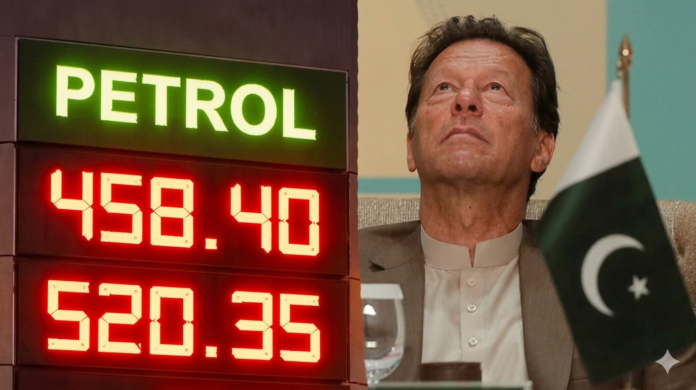
Pakistan has just witnessed one of the most dramatic fuel price increases in its history, pushing petrol prices to Rs. 458.40 per litre. While still slightly below the Rs. 500 mark mentioned in the earlier warning, the current level is close enough to spark renewed debate and public attention. The rapid rise in fuel costs has not only validated concerns expressed in the past but has also intensified economic pressure on citizens.
Record-Breaking Fuel Price Surge
The latest adjustment in fuel prices has been described as one of the steepest increases ever recorded in the country. Petrol prices jumped by Rs. 137.23 per litre, while high-speed diesel saw an even larger increase of Rs. 184.49 per litre. As a result, diesel prices have crossed Rs. 520 per litre, setting a new benchmark for fuel costs in Pakistan.
Before this surge, petrol was priced at Rs. 321.17 per litre. The sudden increase means consumers are now paying over Rs. 137 more per litre almost overnight. Similarly, diesel prices rose from Rs. 335.86 per litre to above Rs. 520, marking the largest single adjustment in the nation’s fuel pricing history.
This sharp escalation has had immediate consequences, affecting transportation costs, industrial operations, and everyday household expenses. The speed and scale of the increase have left little time for consumers and businesses to adjust, amplifying the economic impact.
Policy Changes and Tax Adjustments
Alongside the price hike, the government has introduced significant changes in taxation related to fuel. The petroleum levy on petrol has been increased from Rs. 106 to Rs. 161 per litre, further contributing to the overall price rise. This move reflects the government’s effort to boost revenue amid ongoing fiscal challenges.
In contrast, the petroleum levy on diesel has largely been removed, except for a carbon tax of Rs. 2.5 per litre. This adjustment indicates a shift in taxation strategy, possibly aimed at balancing the impact on different sectors of the economy, particularly those heavily reliant on diesel such as transportation and agriculture.
These policy changes highlight the complexity of managing fuel pricing in a challenging economic environment. While revenue generation remains a priority, the burden on consumers continues to grow.
A Pattern of Continuous Price Increases
Recent data shows that fuel prices in Pakistan have been on a consistent upward trajectory. In the last six pricing revisions, increases have been recorded in four instances, reflecting a broader trend of rising energy costs.
This pattern underscores the structural nature of the issue. Rather than being a one-time adjustment, the latest hike is part of a continuing cycle driven by global oil prices, currency fluctuations, and domestic fiscal policies. As a result, consumers are facing sustained pressure rather than temporary spikes.
The cumulative effect of these increases has been significant. Each successive adjustment adds to the financial burden on households and businesses, making it increasingly difficult to maintain stability in daily expenses.
Resurfaced Prediction Sparks Political Debate
The reappearance of Imran Khan’s earlier remarks has added a political dimension to the current situation. His prediction that petrol prices could approach Rs. 500 in the event of regional instability has gained renewed attention, particularly as current prices move closer to that threshold.
The timing of the video’s resurgence has fueled discussions across various platforms, with many drawing comparisons between past warnings and present realities. While the exact figure of Rs. 500 per litre has not yet been reached, the current price level is close enough to raise questions about the factors driving the increase.
This has led to broader debates about economic management, energy policy, and the country’s preparedness for external shocks. The situation has become a focal point for both political discourse and public concern.
Impact on Economy and Daily Life
The implications of rising fuel prices extend far beyond the cost of petrol and diesel. Transportation expenses have increased sharply, affecting commuters, logistics services, and public transport systems. As fuel becomes more expensive, the cost of moving goods rises, leading to higher prices for essential commodities.
Businesses are also facing mounting challenges. Increased fuel costs translate into higher operational expenses, reducing profitability and, in some cases, forcing companies to pass on the burden to consumers. This creates a ripple effect throughout the economy, contributing to inflation and slowing growth.
For households, the impact is immediate and tangible. Higher fuel prices mean increased spending on transportation, electricity, and daily necessities. With incomes largely unchanged, many families are finding it difficult to keep up with rising costs, leading to reduced purchasing power and changes in consumption patterns.
How Close Is the Prediction to Reality
While petrol prices have not yet reached the Rs. 500 mark, they are now within a relatively narrow range. The difference of around Rs. 50 per litre highlights how close the current situation is to the earlier prediction.
This proximity has added to the sense of urgency and concern among the public. It also raises questions about whether further increases could push prices even higher in the coming months, particularly if global conditions remain unstable.
The comparison serves as a reminder of how external factors, such as geopolitical tensions and global energy markets, can have a direct and profound impact on domestic economies.
Conclusion
The resurfacing of Imran Khan’s past warning has brought new attention to Pakistan’s ongoing fuel price crisis. What was once seen as a distant possibility is now approaching reality, as petrol and diesel prices reach unprecedented levels.
The recent surge, combined with ongoing policy changes and global pressures, has created a challenging environment for both consumers and businesses. As the country navigates these economic difficulties, the focus will remain on managing costs, stabilizing prices, and addressing the broader impact on affordability.
With fuel prices already near historic highs, the situation underscores the need for long-term strategies that can reduce vulnerability to external shocks and ensure greater economic resilience in the future.
Read More
Pakistan Becomes Second Most Expensive Fuel Market After Ethiopia