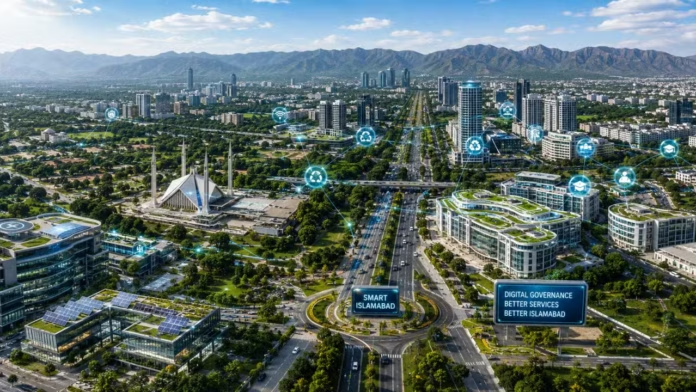

A major reform plan has been presented to Prime Minister Shehbaz Sharif with the goal of transforming Islamabad into a modern, smart, and digitally managed capital city over the next five years.
Under the proposal, Islamabad would get its own elected regional government to manage local affairs more effectively. A 27-member Islamabad Assembly would be created, and its members would be responsible for overseeing public services and local governance. The assembly would elect its own leader, who could serve as either a Chief Minister or Mayor, depending on the final structure approved by the government.
To support these changes, the government plans to introduce a new Islamabad Capital Territory Government Act. Existing laws related to municipal services and development would be merged into a single, unified system to improve coordination and reduce administrative complications.
The proposal also suggests transferring many powers currently held by federal institutions to the new local government. This would allow Islamabad’s elected representatives to make decisions on local matters more quickly and efficiently. However, important areas such as law and order, security, and city master planning would continue to remain under federal government control.
A special transition committee would be formed to oversee the transfer of responsibilities and ensure that the reforms are implemented smoothly over time.
One of the key goals of the plan is to turn Islamabad into a smart city through the use of modern technology and digital governance. To achieve this, six specialized agencies would be established to manage important sectors such as health, education, tourism, and digital services.
The reform blueprint also proposes creating a single digital platform that would bring together multiple government services in one place. This platform would include land records, tax services, licenses, permits, and public complaint systems. Citizens would be able to access these services online, making government processes faster, easier, and more transparent.
The plan further recommends giving Islamabad greater financial independence. An independent finance committee would be established to oversee local taxes, budgeting, and resource allocation. This would allow the city to generate and manage more of its own revenue instead of relying heavily on the federal government.
In addition, the proposed “Destination Islamabad” initiative aims to make the capital a more attractive place for tourists, businesses, and investors. Authorities hope that improved infrastructure, better public services, and advanced digital systems will help attract local and foreign investment while boosting tourism.
If implemented, the reforms could significantly change how Islamabad is governed, making it more autonomous, technology-driven, and efficient. The government believes these changes could help improve service delivery, increase transparency, encourage investment, and transform Islamabad into one of the region’s leading smart cities.