
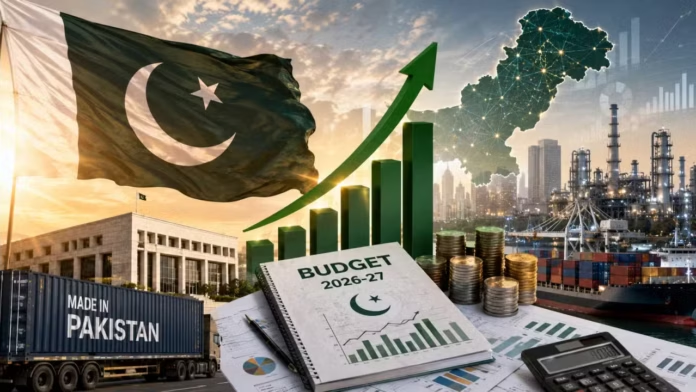

Pakistan’s leading business organization, the Federation of Pakistan Chambers of Commerce and Industry (FPCCI), has urged the federal government to shift its focus from economic stabilization to economic growth in the upcoming Budget 2026-27.
The business community believes that while economic stability is important, Pakistan now needs policies that encourage investment, industrial expansion, exports, and job creation. According to FPCCI, sustainable economic growth is the only way to solve many of the country’s long-term economic problems and improve living standards.
Speaking on behalf of businesses and industries across Pakistan, Atif Ikram Sheikh, President of FPCCI, said that the organization’s Shadow Budget contains recommendations gathered from businesses, industrialists, traders, and exporters from across the country.
He called on the government to include these proposals in the federal budget and adopt a growth-oriented economic strategy rather than focusing mainly on increasing tax collection.
According to Atif Ikram Sheikh, many industries are currently struggling due to high electricity and gas prices, expensive financing costs, and weak business activity. He said that industries cannot grow and exports cannot increase unless businesses are provided with a more competitive and supportive environment.
The FPCCI president emphasized that Pakistan’s economy needs major structural reforms, especially in the tax system. He said the government should expand the tax base by using digital technologies, improving data sharing between institutions, and encouraging undocumented businesses and individuals to become part of the formal economy.
He argued that the current system places too much pressure on people and companies that already pay taxes, while millions of potential taxpayers remain outside the tax net.
According to FPCCI, the total tax burden on many industrialists can reach as high as 65 percent when all direct and indirect taxes are added together. The organization believes such high taxes make Pakistani industries less competitive compared to businesses in neighboring countries.
To support industrial growth and exports, FPCCI has proposed reducing the overall tax burden to between 35 and 40 percent in the upcoming budget. The business community believes lower taxes would encourage investment, help businesses expand operations, and improve Pakistan’s export performance in international markets.
Senior Vice President Saquib Fayyaz Magoon said the government should use modern data analytics and technology to identify wealthy non-filers and tax evaders instead of increasing pressure on existing taxpayers.
He also stressed the need to simplify tax procedures for small and medium-sized businesses. According to him, complicated regulations and excessive paperwork discourage businesses from entering the formal economy.
FPCCI further recommended that the government invest heavily in modern technologies to strengthen Pakistan’s economy. The organization highlighted sectors such as Artificial Intelligence (AI), digital services, and the nationwide rollout of 5G technology as key areas that could help local businesses compete globally.
Business leaders believe that investment in technology will improve productivity, attract foreign investment, and create new opportunities for young professionals and entrepreneurs.
FPCCI Vice President and Sindh Regional Chairman Abdul Mohamin Khan highlighted the financial difficulties faced by businesses, particularly in Sindh.
He said that high interest rates have made borrowing expensive, limiting business expansion and reducing investment activity. Many manufacturers are finding it difficult to increase production, purchase new machinery, or create additional jobs because financing costs remain high.
According to Abdul Mohamin Khan, reducing manufacturing costs and creating a business-friendly environment should be among the government’s top priorities in the upcoming budget. He believes such measures would encourage industrial growth, attract domestic and foreign investment, and generate employment opportunities across the country.
The FPCCI leadership concluded that its Shadow Budget offers a practical plan for economic recovery and long-term growth. The organization warned that if key recommendations from the business community are ignored, Pakistan could face continued economic stagnation, lower investment, and further closures of industrial units.
Business leaders say the upcoming Budget 2026-27 is an important opportunity for the government to support industries, boost exports, widen the tax base, and create conditions that encourage economic growth rather than simply focusing on revenue collection targets.
According to FPCCI, a growth-focused budget could help revive business confidence, strengthen the industrial sector, increase employment opportunities, and put Pakistan on a more sustainable path toward economic development.


