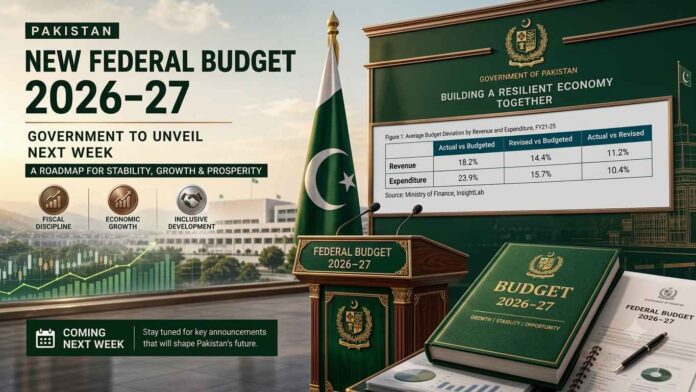

Pakistan’s fiscal management has come under renewed scrutiny as budget performance over the past five years reveals a persistent gap between official projections and actual outcomes. The repeated failure to meet revenue and expenditure targets has sparked concerns among economists, investors, businesses, and policymakers about the credibility of the country’s budgetary process and the effectiveness of public financial planning.
Budget documents are intended to serve as the government’s primary economic roadmap, outlining how much revenue will be collected, where funds will be spent, and how fiscal priorities will be managed throughout the year. However, when actual results consistently differ from planned targets, questions inevitably arise regarding forecasting accuracy, policy execution, and fiscal discipline.
Recent assessments of federal budget performance indicate that Pakistan has experienced significant deviations between projected and actual fiscal outcomes for five consecutive years. These recurring discrepancies have weakened confidence in budget estimates and highlighted structural challenges within the country’s financial management framework.
The findings suggest that unless improvements are made in revenue forecasting, expenditure planning, and fiscal oversight, budget documents may continue to lose their effectiveness as reliable guides for economic decision-making.
Budget Targets Continue to Miss the Mark
One of the most significant concerns highlighted by recent fiscal assessments is the repeated inability of federal budgets to accurately predict revenue collection and government spending.
Over the past five fiscal years, actual revenue collections have consistently differed from the amounts originally projected in annual budgets. At the same time, government expenditures have also diverged significantly from planned allocations.
The scale of these deviations has been substantial enough to raise concerns about the reliability of official fiscal projections. Budget estimates are expected to provide a realistic picture of government finances, enabling policymakers, businesses, investors, and citizens to make informed decisions. When actual outcomes differ sharply from those projections, confidence in the budgeting process can erode.
The issue becomes even more concerning when deviations persist over multiple years rather than occurring as isolated incidents. Repeated forecasting errors suggest underlying weaknesses in budget preparation methodologies and fiscal planning practices.
Why Budget Accuracy Matters
Budget accuracy is critical for economic stability and effective governance. A national budget is not merely an accounting document; it serves as a comprehensive financial plan that influences economic expectations, investment decisions, development priorities, and public service delivery.
Businesses rely on budget announcements to assess future economic conditions and policy direction. Investors use fiscal projections to evaluate risks and opportunities. International financial institutions monitor budget performance to assess fiscal sustainability. Citizens look to the budget for insights into taxation, government spending, and economic priorities.
When budgets consistently fail to align with actual outcomes, uncertainty increases across the economy. Businesses may become hesitant to invest, investors may question government forecasts, and policymakers may find it more difficult to achieve long-term economic objectives.
Reliable budgets also contribute to transparency and accountability. By comparing actual outcomes against planned targets, stakeholders can evaluate government performance and identify areas requiring improvement.
Frequent deviations weaken this accountability mechanism and make it more challenging to assess fiscal effectiveness.
Revenue Forecasting Remains a Major Challenge
The report indicates that revenue projections have been among the weakest-performing components of federal budgets during the review period.
Revenue forecasting is one of the most important aspects of budget preparation because it determines how much money the government expects to collect through taxes, duties, levies, and other sources. These projections form the foundation upon which spending plans are built.
When revenue estimates are overly optimistic, governments may plan expenditures based on resources that ultimately fail to materialize. This can create financing gaps and force authorities to make difficult fiscal adjustments during the year.
Several factors can contribute to inaccurate revenue forecasting. Economic growth may fall short of expectations, inflation may evolve differently than anticipated, tax collection efforts may underperform, or external economic conditions may negatively affect economic activity.
Pakistan’s experience over recent years demonstrates the challenges associated with predicting revenue performance in a rapidly changing economic environment. Economic volatility, inflationary pressures, exchange rate fluctuations, and shifting business conditions have all complicated forecasting efforts.
The recurring revenue shortfalls suggest that future budgets may require more conservative assumptions and stronger analytical frameworks to improve forecasting accuracy.
Expenditure Planning Also Faces Persistent Deviations
Revenue forecasting is not the only area where budget targets have been missed. Government spending has also shown significant differences between planned allocations and actual expenditures.
Expenditure planning involves estimating how much money will be required for various government functions, including administration, defense, development projects, subsidies, debt servicing, pensions, and social welfare programs.
Ideally, spending estimates should reflect realistic expectations regarding policy implementation, economic conditions, and funding availability. However, actual expenditures frequently differ from original allocations due to changing priorities, unforeseen economic developments, and implementation challenges.
Some expenditure categories are particularly difficult to forecast accurately. Debt servicing costs can fluctuate due to interest rate changes and borrowing requirements. Subsidy expenditures may rise unexpectedly because of energy prices or economic support measures. Emergency spending needs can emerge during economic disruptions or natural disasters.
The repeated divergence between expenditure estimates and actual outcomes indicates that fiscal planning processes may require significant strengthening to improve reliability and budget credibility.
Revised Estimates Still Miss Final Outcomes
An especially noteworthy finding is that even revised budget estimates have often failed to align closely with final fiscal outcomes.
Governments typically update budget projections during the fiscal year to reflect changing economic conditions and emerging financial realities. These revised estimates are intended to provide a more accurate picture of expected performance compared to the original budget.
However, the persistence of substantial deviations between revised estimates and final results suggests that forecasting challenges extend beyond initial budget preparation.
This pattern raises questions about the effectiveness of ongoing fiscal monitoring and adjustment mechanisms. If revised projections continue to miss actual outcomes, policymakers may need to strengthen their ability to assess fiscal trends and respond to changing circumstances more effectively.
Accurate revisions are essential because they help governments make informed policy adjustments and communicate realistic expectations to stakeholders.
The Growing Credibility Gap
One of the most significant consequences of repeated budget deviations is the emergence of a credibility gap.
Credibility is a fundamental requirement for effective fiscal management. Governments must be able to convince stakeholders that their financial plans are realistic, achievable, and based on sound economic assumptions.
When budgets consistently miss their targets, confidence in official projections begins to decline. Businesses may discount government forecasts when making investment decisions. Financial markets may become more cautious in evaluating fiscal commitments. Citizens may question whether announced priorities will ultimately be implemented.
A credibility gap can have far-reaching economic consequences. Reduced confidence may discourage investment, increase borrowing costs, and complicate efforts to implement economic reforms.
Restoring credibility requires not only improved forecasting accuracy but also greater transparency regarding budget assumptions, risks, and implementation challenges.
Impact on Economic Planning and Investment
Reliable fiscal planning plays a crucial role in supporting economic growth and investment. Businesses and investors often make decisions based on expectations regarding government policies, infrastructure spending, taxation, and broader economic conditions.
When budget projections prove unreliable, uncertainty increases. Companies may delay investment projects until greater clarity emerges regarding fiscal conditions and government priorities.
Investors may demand higher risk premiums when evaluating financial assets, particularly if they perceive elevated fiscal uncertainty. This can increase financing costs for both the government and private sector.
Long-term economic planning also becomes more difficult when fiscal projections frequently change. Infrastructure development, industrial policies, and social programs often require multi-year planning horizons that depend on predictable funding arrangements.
Improving budget reliability can therefore contribute to stronger economic performance by reducing uncertainty and enhancing confidence in public financial management.
Structural Factors Behind Budget Deviations
Several structural factors may explain why budget targets have repeatedly been missed over the past five years.
Economic volatility remains one of the most important challenges. Rapid changes in inflation, interest rates, exchange rates, and economic growth can significantly affect both revenue collection and expenditure requirements.
Tax administration challenges may also contribute to forecasting errors. If tax compliance rates differ from expectations or economic activity evolves unexpectedly, revenue collections can deviate from budget projections.
On the expenditure side, unforeseen obligations frequently emerge during the fiscal year. Debt servicing costs, subsidy requirements, and emergency spending needs can increase beyond original estimates.
Institutional weaknesses in forecasting methodologies may further contribute to recurring deviations. Limited data availability, insufficient analytical capacity, and optimistic assumptions can reduce the accuracy of budget estimates.
Addressing these structural issues will be essential for improving fiscal planning and strengthening budget credibility.
Strengthening Fiscal Discipline and Accountability
Improving budget performance requires a comprehensive approach that addresses both technical and institutional challenges.
One important step is strengthening fiscal discipline throughout the budget cycle. This includes setting realistic revenue targets, developing evidence-based expenditure projections, and implementing stronger monitoring mechanisms.
Governments can also improve accountability by regularly evaluating budget performance and identifying the causes of significant deviations. Transparent reporting enables stakeholders to understand fiscal developments and assess policy effectiveness.
Data-driven forecasting techniques can enhance budget accuracy by incorporating historical trends, economic indicators, and risk assessments into planning processes.
Greater coordination among government agencies may further improve the quality of fiscal projections and reduce inconsistencies across budget documents.
Institutional reforms aimed at enhancing public financial management can also support more credible budgeting over the long term.
The Need for More Realistic Budget Assumptions
A recurring theme in discussions about fiscal performance is the importance of realistic assumptions.
Optimistic forecasts may create the appearance of stronger fiscal prospects, but they often result in disappointing outcomes when expectations fail to materialize. Realistic assumptions, even if less ambitious, provide a more reliable foundation for decision-making and accountability.
Budget estimates should reflect historical performance, current economic conditions, and credible expectations regarding future developments. Risk factors should be clearly identified, and contingency plans should be incorporated where appropriate.
By prioritizing realism over ambition, governments can improve budget credibility and strengthen confidence among investors, businesses, and citizens.
Rebuilding Confidence in Public Financial Management
The repeated failure to meet budget targets over the past five fiscal years has highlighted the urgent need for improvements in fiscal planning and budget management.
Significant deviations between projected and actual outcomes have weakened the budget’s role as a reliable roadmap for economic policy and public finance. Revenue forecasting has consistently underperformed, expenditure estimates have frequently diverged from reality, and even revised projections have often failed to accurately predict final outcomes.
These challenges have contributed to a growing credibility gap that affects investor confidence, business planning, and public trust in government financial management.
Moving forward, stronger forecasting methodologies, realistic assumptions, enhanced transparency, and improved fiscal discipline will be essential for restoring confidence in the budgeting process.
A credible budget is one of the most important tools available to any government. It provides direction for economic policy, supports accountability, and helps ensure that public resources are allocated effectively. For Pakistan, improving budget accuracy and strengthening fiscal credibility will be critical not only for better financial management but also for achieving long-term economic stability and sustainable growth.
The findings serve as a clear reminder that successful fiscal management depends not merely on setting ambitious targets but on ensuring that those targets are realistic, achievable, and consistently aligned with actual economic conditions.
Read More