
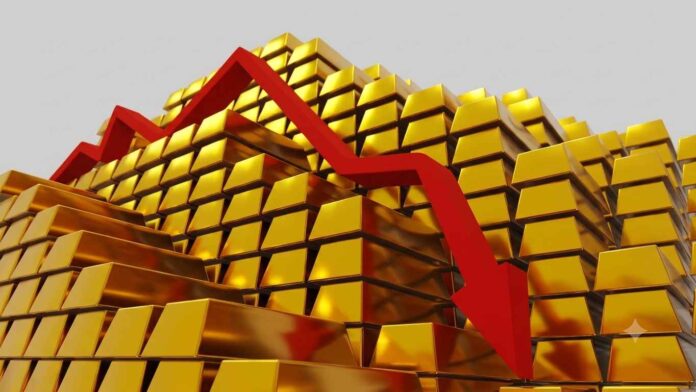

Gold prices in Pakistan experienced one of the sharpest declines in recent months, with the precious metal losing more than Rs. 12,000 per tola in a dramatic market correction. The steep fall came after international gold markets recorded substantial losses during the final trading session of the week, triggering a corresponding decline in local bullion prices.
The sudden drop has attracted significant attention from investors, traders, jewelers, and consumers who closely monitor precious metal prices as an indicator of economic trends and investment opportunities. Gold has traditionally served as a safe-haven asset during periods of uncertainty, inflation, and market volatility. However, the latest correction highlights how quickly market sentiment can shift when global economic conditions change.
The decline has also extended to silver, which recorded notable losses on the same day. Together, the movements in gold and silver prices underscore the close relationship between domestic precious metals markets and international commodity trends.
For investors and consumers alike, the latest price correction raises important questions about the future direction of bullion markets, the factors driving the decline, and whether current levels represent a temporary adjustment or the beginning of a broader trend.
Gold Suffers Major Decline in Local Market
The local gold market witnessed significant selling pressure as prices fell sharply following weakness in international markets. The value of gold per tola dropped by more than Rs. 12,000, marking one of the largest single-day declines seen in recent times.
The price reduction brought considerable relief to potential buyers who had been struggling with historically elevated gold rates over the past several months. However, for investors holding gold positions at higher prices, the decline represents a substantial reduction in market value.
The price of 10 grams of gold also recorded a major decrease, reflecting the broad-based weakness observed across the bullion market. Such declines often create uncertainty among investors who rely on precious metals as a store of value and hedge against inflation.
Market participants noted that the pace of the decline surprised many traders, particularly given the strong upward momentum gold had maintained during previous weeks. The sharp correction demonstrates the inherent volatility that can emerge even in traditionally stable assets such as gold.
International Gold Markets Trigger Local Sell-Off
The primary driver behind the decline in Pakistan’s gold market was the significant drop in international gold prices. Since local bullion rates are closely linked to global market movements, changes in international pricing often translate directly into domestic price adjustments.
Global gold prices fell sharply during the final trading session of the week, resulting in substantial losses across major bullion markets. The decline reflected shifting investor sentiment and changing expectations regarding global economic conditions.
International gold prices are influenced by a wide range of factors, including interest rates, inflation expectations, central bank policies, currency movements, geopolitical developments, and investor demand. Any significant changes in these variables can trigger large price movements within a short period.
The latest downturn highlights how interconnected global commodity markets have become. Even though gold is traded worldwide, developments in major financial centers can rapidly affect prices in local markets across different countries.
As a result, domestic investors often monitor international bullion trends closely to anticipate potential price movements and make informed investment decisions.
Why Gold Prices Are Falling
Several factors may have contributed to the recent decline in gold prices at both the international and domestic levels.
One major factor is changing expectations regarding interest rates. Gold does not generate interest or dividend income, making it less attractive when interest-bearing investments offer higher returns. If investors expect interest rates to remain elevated or rise further, demand for gold may weaken.
Strength in major global currencies can also place downward pressure on gold prices. Since gold is typically priced in international currencies, fluctuations in exchange rates can affect purchasing power and investor demand.
Another factor is profit-taking by investors. Following extended periods of strong price gains, many investors choose to lock in profits by selling their holdings. When large numbers of market participants engage in profit-taking simultaneously, prices can decline rapidly.
Market sentiment also plays a crucial role. If investors become more optimistic about economic growth or financial market performance, they may shift funds away from safe-haven assets such as gold and into equities, bonds, or other investments offering higher potential returns.
These factors often combine to create periods of heightened volatility, resulting in significant price corrections such as the one recently witnessed.
Impact on Investors
The sharp decline in gold prices has produced mixed outcomes for investors.
Those who purchased gold at lower levels and held their investments through the recent rally may still be sitting on substantial gains despite the latest correction. For these investors, the decline may simply represent a temporary pullback within a broader upward trend.
However, investors who entered the market near recent highs may experience losses as a result of the sudden decline. Short-term traders are particularly vulnerable to price volatility, especially when markets move rapidly in either direction.
Long-term investors often view such corrections differently. Many consider periods of price weakness as opportunities to accumulate additional holdings at lower prices, particularly if they remain confident in gold’s long-term prospects.
The latest decline serves as a reminder that even assets perceived as safe havens are not immune to market fluctuations. Effective risk management and diversification remain essential components of any investment strategy.
Relief for Jewelry Buyers
While falling prices may concern some investors, consumers looking to purchase jewelry could benefit from the decline.
Gold jewelry remains an important part of cultural traditions, weddings, celebrations, and investment practices throughout Pakistan. Rising gold prices over recent years have significantly increased the cost of jewelry purchases, making them less affordable for many households.
A substantial decline in gold rates can improve affordability and potentially stimulate consumer demand. Buyers who had postponed purchases in anticipation of lower prices may now find market conditions more favorable.
Jewelry retailers often experience increased customer interest following significant price corrections, particularly if consumers believe prices have reached attractive levels.
Whether the recent decline leads to sustained growth in jewelry demand will depend on future price movements and overall consumer confidence.
Silver Also Records Sharp Losses
The weakness in precious metals markets was not limited to gold. Silver prices also moved lower, recording notable losses during the same trading session.
Silver often follows gold’s direction because both metals are influenced by similar macroeconomic factors, including investor sentiment, inflation expectations, and currency movements.
However, silver possesses unique characteristics because it serves both as a precious metal and an industrial commodity. Demand from manufacturing sectors, renewable energy industries, electronics production, and technological applications can significantly influence silver prices.
The decline in silver reflects broader weakness across the precious metals complex and suggests that investor sentiment shifted away from these assets during the latest trading session.
Although silver typically attracts less attention than gold, it remains an important investment and industrial commodity with substantial market significance.
Historical Context of Gold Price Volatility
While the latest decline appears dramatic, sharp price movements are not unusual in the gold market.
Throughout history, gold has experienced periods of rapid appreciation followed by substantial corrections. These cycles are often driven by changing economic conditions, investor psychology, and shifts in monetary policy.
During times of uncertainty, gold tends to attract strong demand as investors seek protection against inflation, currency depreciation, and financial market instability. This increased demand can push prices to record highs.
However, when economic conditions stabilize or investor confidence improves, some of that demand may fade, leading to price corrections.
The current decline should therefore be viewed within the broader context of gold’s long-term market behavior. Temporary setbacks are a normal feature of commodity markets and do not necessarily indicate a permanent change in trend.
What Investors Should Watch Next
The future direction of gold prices will largely depend on developments in global financial markets and economic conditions.
Investors are likely to monitor central bank decisions closely, particularly regarding interest rates and monetary policy. Changes in borrowing costs can significantly affect demand for non-yielding assets such as gold.
Inflation trends will also remain important. Gold is often viewed as a hedge against inflation, meaning persistent price pressures could support future demand.
Currency movements, especially in major international markets, may influence gold pricing as well. A stronger global reserve currency can reduce demand for precious metals, while currency weakness may provide support.
Geopolitical developments continue to be another key consideration. Political uncertainty, conflicts, and economic disruptions frequently increase safe-haven demand for gold.
Monitoring these factors can help investors better understand the forces shaping future market movements.
Market Sentiment Remains a Key Driver
One of the most important lessons from the latest decline is the significant role that investor sentiment plays in determining gold prices.
Even when fundamental economic conditions remain relatively unchanged, shifts in market psychology can produce substantial price movements. Investor expectations regarding inflation, growth, interest rates, and risk can influence buying and selling decisions across global markets.
When confidence increases, investors may favor riskier assets such as equities. Conversely, during periods of uncertainty, demand for gold often rises as investors seek safety and stability.
Understanding market sentiment is therefore critical for anyone participating in precious metals markets. Price movements are often influenced as much by expectations and perceptions as by underlying economic data.
Outlook for Pakistan’s Gold Market
The outlook for Pakistan’s gold market will continue to depend heavily on international trends. Since domestic prices closely follow global bullion markets, any recovery or further decline in international rates will likely be reflected locally.
If international gold prices stabilize after the recent correction, domestic markets may experience a period of consolidation. Buyers could return to the market if they perceive current levels as attractive, potentially providing support for prices.
However, if global weakness persists, additional declines cannot be ruled out. Much will depend on economic developments, monetary policy decisions, and investor behavior in major financial markets.
Despite short-term volatility, gold remains one of the most widely held and closely followed assets in the world. Its role as a store of value, hedge against uncertainty, and component of diversified investment portfolios ensures that it will continue to attract attention from investors and consumers alike.
The latest plunge in gold prices serves as a powerful reminder of the dynamic nature of commodity markets. While the decline has created challenges for some investors, it has also generated opportunities for buyers and highlighted the importance of staying informed about global economic developments. As markets continue to evolve, gold is likely to remain at the center of discussions surrounding investment strategy, inflation protection, and financial security.
Read More
Government Misses Budget Targets for Fifth Consecutive Year, Raising Credibility Concerns