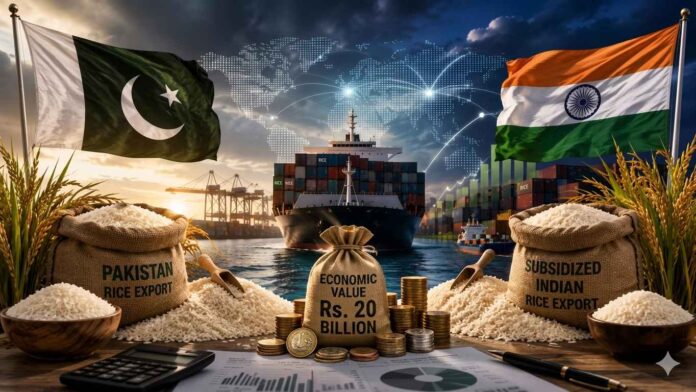

The government has approved a Rs. 20 billion support package aimed at strengthening the country’s rice export sector at a time when exporters are facing mounting challenges in global markets. The initiative is designed to improve competitiveness, support exporters dealing with rising costs, and help the industry regain lost market share amid increasing pressure from international competitors.
The financial assistance comes as rice exporters struggle with declining export earnings, lower global prices, increased competition, and changing market dynamics. Officials believe the package will provide temporary relief to exporters while helping sustain one of the country’s most important export-oriented industries.
Rice remains the second-largest export commodity after textiles and plays a vital role in generating foreign exchange earnings, supporting rural livelihoods, and contributing to overall economic growth. Given its significance to the national economy, policymakers have moved to provide targeted support to ensure the industry remains competitive in an increasingly challenging international environment.
The newly approved package is expected to ease liquidity pressures, improve export performance, and strengthen the position of local exporters in key overseas markets.
Why the Government Introduced the Support Package
The decision to allocate financial assistance was driven by growing concerns over declining competitiveness in the global rice trade.
Over the past several years, rice exports have become a major contributor to export earnings. Strong international demand, favorable crop production, and expanding market access helped the industry achieve significant growth. However, changing market conditions have created new challenges for exporters.
International rice markets have become increasingly competitive due to the return of major exporting countries and aggressive pricing strategies adopted by some global suppliers. These developments have placed significant pressure on exporters, forcing them to compete in a market characterized by lower prices and narrowing profit margins.
Government officials concluded that immediate intervention was necessary to protect export volumes, preserve foreign exchange earnings, and maintain employment opportunities linked to the rice value chain.
The Rs. 20 billion package is therefore intended as a strategic measure to provide temporary support during a difficult period for the industry.
How the Financial Assistance Will Be Funded
The support package was initially financed through existing export development resources as a temporary arrangement.
Under the approved framework, financial assistance was provided to eligible exporters through designated funding mechanisms to ensure timely support. The government is now seeking a formal budget allocation to reimburse the funds already utilized under the program.
Officials have proposed covering the amount through federal budgetary provisions, allowing the support initiative to be fully integrated into the government’s broader economic and export development strategy.
The move reflects the importance policymakers place on preserving export competitiveness and protecting one of the country’s most valuable sources of foreign exchange.
By converting the temporary financing arrangement into a formal budget allocation, authorities aim to ensure transparency, accountability, and long-term sustainability.
Strict Monitoring Mechanism Introduced
One of the key concerns surrounding financial assistance programs is the possibility of misuse or inefficient utilization of public funds.
To address these concerns, authorities have developed a comprehensive monitoring framework designed to ensure that the support package is used exclusively for its intended purpose.
The monitoring system incorporates coordination among financial institutions, trade facilitation platforms, and customs authorities. This integrated approach allows officials to track the utilization of assistance and verify compliance with program requirements.
The objective is to ensure that financial support reaches genuine exporters facing competitiveness challenges while preventing abuse of the system.
By implementing strict oversight measures, policymakers hope to maximize the effectiveness of the package and ensure that public resources generate measurable economic benefits.
The monitoring mechanism also serves as an important safeguard against potential irregularities while improving transparency in the administration of export support initiatives.
Rice Remains a Critical Export Sector
Rice occupies a central position within the country’s agricultural and export economy.
As the second-largest export category after textiles, rice contributes billions of dollars in annual export earnings and supports millions of livelihoods throughout the agricultural supply chain.
Farmers, millers, transporters, exporters, warehouse operators, and logistics providers all depend on the rice industry for economic activity and employment opportunities.
The sector also plays a significant role in generating foreign exchange, which remains essential for financing imports, supporting economic stability, and strengthening external accounts.
Over the years, rice exports have demonstrated remarkable growth potential. Favorable production levels, expanding cultivation areas, and increasing international demand enabled the industry to achieve record export earnings.
However, recent developments have highlighted the vulnerability of export performance to changes in global market conditions.
Protecting the competitiveness of this strategic sector has therefore become a major policy priority.
Rice Export Growth Followed by Sharp Decline
The rice sector experienced strong growth during recent years, with export earnings rising significantly over a relatively short period.
Export revenues increased from approximately $2.04 billion in fiscal year 2021 to nearly $3.93 billion in fiscal year 2024. This impressive growth reflected strong global demand, competitive pricing, and successful market expansion efforts.
The industry became one of the country’s strongest export performers and contributed substantially to foreign exchange reserves.
However, the positive momentum began to weaken in fiscal year 2025 as global market conditions changed.
Export earnings declined to approximately $3.35 billion, marking a significant reversal after years of expansion.
The downturn highlighted the growing challenges facing exporters and underscored the need for policy measures aimed at restoring competitiveness.
Industry experts believe that without timely intervention, export earnings could face further pressure in coming years.
Current Fiscal Year Shows Worsening Trends
The challenges facing rice exporters have become even more pronounced during the current fiscal year.
Data from the first half of the year indicates a substantial decline in export earnings compared with the corresponding period of the previous year.
The reduction in revenues reflects weakening demand conditions, increased competition, and pricing pressures affecting both premium and non-premium rice varieties.
The decline has affected multiple segments of the industry, suggesting that the challenges are broad-based rather than confined to a specific category.
Exporters report increasing difficulties in maintaining profitability as international buyers seek lower-priced alternatives from competing suppliers.
The deteriorating trend has intensified calls for government intervention and strengthened the case for targeted support measures.
The newly approved assistance package is expected to provide relief while exporters adjust to evolving market conditions.
Growing Competition in International Markets
One of the primary reasons behind the decline in export performance is the increasing intensity of competition in global rice markets.
Major rice-exporting countries have returned aggressively to international trade following periods of supply disruptions and export restrictions.
The resulting increase in global supply has placed downward pressure on prices and created a more competitive environment for exporters around the world.
Competitors with lower production costs and government-supported export programs have been able to offer rice at significantly lower prices, making it difficult for local exporters to maintain market share.
Price-sensitive buyers often prioritize cost considerations, creating additional pressure on exporters whose production and financing expenses remain relatively high.
As competition intensifies, exporters face the challenge of balancing profitability with the need to remain attractive to international customers.
The government believes the support package will help narrow this competitiveness gap and enable exporters to compete more effectively.
Higher Domestic Costs Creating Additional Pressure
In addition to international competition, exporters are dealing with several domestic challenges that have increased operating costs.
Higher paddy prices have raised procurement expenses for exporters, while elevated financing costs have made it more expensive to maintain inventories and fund export operations.
Rising interest rates have added further pressure by increasing borrowing costs across the supply chain.
At the same time, inventory accumulation in certain importing countries has reduced demand growth and contributed to weaker market conditions.
Regional trade disruptions and logistical challenges have also affected exporters’ ability to access key markets efficiently.
Together, these factors have created significant liquidity constraints and reduced the ability of exporters to compete on price.
The support package aims to ease some of these financial pressures and provide exporters with greater flexibility in managing operations.
Potential for Billions in Additional Export Earnings
Industry representatives argue that the country’s rice sector retains substantial untapped potential despite current challenges.
The nation continues to maintain a large exportable surplus, providing significant opportunities for revenue generation if competitiveness can be restored.
According to industry estimates, immediate policy support could unlock billions of dollars in additional export earnings over the coming years.
Exporters believe that addressing short-term challenges related to pricing, financing, and market access could enable the industry to expand shipments and recover lost market share.
Increased exports would not only generate additional foreign exchange but also stimulate economic activity throughout the agricultural sector.
Higher export volumes would benefit farmers, processors, logistics providers, and related industries while contributing positively to overall economic growth.
The support package is therefore viewed as an investment in the long-term sustainability and expansion of the export sector.
Benefits for Farmers and Rural Communities
The impact of a stronger rice export sector extends far beyond export companies.
Millions of people in rural areas depend directly or indirectly on rice cultivation and related agricultural activities. Higher export demand can translate into improved incomes for farmers, greater economic activity in rural communities, and increased investment in agricultural productivity.
A thriving export sector also encourages the adoption of modern farming techniques, improved seed varieties, and better crop management practices.
These developments can enhance yields, improve product quality, and increase the overall competitiveness of the agricultural sector.
By supporting exporters, the government is also helping protect livelihoods throughout the broader rice value chain.
This connection between exports and rural development makes the industry’s success particularly important from both economic and social perspectives.
Government Focuses on Long-Term Export Growth
While the Rs. 20 billion support package is intended to provide immediate relief, policymakers recognize that long-term competitiveness will require broader structural improvements.
Future efforts are expected to focus on enhancing productivity, reducing production costs, expanding market access, improving logistics infrastructure, and promoting value-added exports.
Investments in agricultural research, modern irrigation systems, digital trade facilitation, and supply chain efficiency could further strengthen the sector’s position in global markets.
Export diversification and branding initiatives may also help increase the value of rice exports and reduce vulnerability to price competition.
The current support package is therefore viewed as one component of a broader strategy aimed at securing sustainable export growth over the long term.
A Timely Intervention for a Strategic Industry
The approval of a Rs. 20 billion support package represents a significant policy response to the challenges facing the country’s rice export industry.
With export earnings under pressure and competition intensifying in global markets, the assistance package is expected to provide critical support during a period of uncertainty.
By helping exporters manage financial pressures, improve competitiveness, and maintain market presence, the initiative aims to safeguard one of the country’s most important sources of foreign exchange earnings.
The program also reflects the government’s recognition of the strategic importance of rice exports for economic growth, employment generation, and rural development.
As global market conditions continue to evolve, the effectiveness of the support package will play an important role in determining whether exporters can regain momentum and capitalize on the substantial opportunities that remain available in international rice markets.
Read More
Gul Ahmed Unveils $230 Million Plan for Pakistan’s Largest Data Centre