
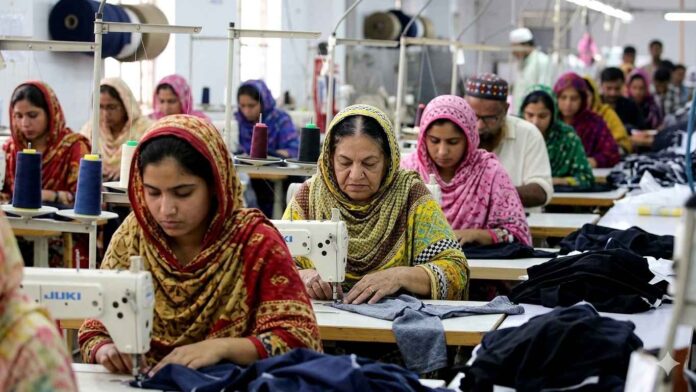

Pakistan’s textile sector, the backbone of the country’s exports and one of the largest contributors to employment and industrial activity, has issued a strong warning ahead of the federal budget, stating that the industry cannot continue to operate effectively without meaningful policy support and targeted relief measures.
Industry leaders have stressed that the upcoming Budget 2026-27 represents a critical opportunity for policymakers to address longstanding structural challenges that have undermined the competitiveness of Pakistan’s export-oriented industries. They argue that without immediate intervention, the textile sector may face further stagnation, declining investment, reduced export growth, and increasing difficulties in competing with regional rivals.
The textile industry has called on the government to introduce a comprehensive package of reforms, including a 10-year fixed-rate financing facility for industrial investments, restoration of the Final Tax Regime for exporters, and the abolition of advance taxes on export-related activities. According to industry representatives, these measures are essential for creating a stable business environment capable of attracting investment and driving sustainable economic growth.
Pakistan’s Textile Industry Remains the Country’s Economic Lifeline
The textile and apparel sector remains the single largest export industry in Pakistan and serves as a major source of foreign exchange earnings. The industry supports millions of jobs directly and indirectly while contributing significantly to manufacturing output, industrial production, and economic activity across the country.
Despite its importance, the sector has faced mounting challenges over the past several years. Rising production costs, elevated energy prices, higher borrowing rates, exchange rate volatility, and increasing taxation have placed considerable pressure on manufacturers and exporters.
Industry stakeholders argue that these factors have collectively reduced Pakistan’s ability to compete with neighboring countries that offer more favorable business environments, lower financing costs, and stronger government support for export-oriented industries.
As global competition intensifies, textile manufacturers believe that policy reforms are urgently needed to prevent further erosion of Pakistan’s market share in international markets.
Industry Calls for 10-Year Fixed Rate Financing Facility
One of the key demands from the textile sector is the introduction of a long-term financing facility that provides industrial investors with fixed borrowing rates for up to 10 years.
Business leaders emphasize that industrial projects require substantial capital investment and often involve long planning horizons. The development of new manufacturing facilities, installation of advanced machinery, adoption of modern technologies, and expansion of production capacity require confidence that financing costs will remain predictable throughout the investment cycle.
Frequent fluctuations in interest rates create uncertainty and discourage businesses from committing capital to long-term projects. Investors often postpone expansion plans when they are unable to accurately estimate future borrowing costs.
A dedicated fixed-rate financing scheme would provide the certainty required for industrial growth. It would allow companies to calculate project costs more effectively, improve financial planning, and accelerate investment decisions.
Industry experts believe that such a facility could encourage modernization across the textile sector, leading to higher productivity, improved efficiency, better product quality, and enhanced export competitiveness.
Long-term financing support could also facilitate the establishment of new export-oriented manufacturing units, creating employment opportunities while increasing the country’s export capacity.
High Financing Costs Continue to Hurt Exporters
Access to affordable financing remains one of the biggest concerns facing Pakistan’s textile industry.
Over the past few years, manufacturers have struggled with elevated financing costs that have significantly increased operational expenses. Higher interest rates have made it more expensive for businesses to finance inventories, purchase raw materials, upgrade equipment, and undertake expansion projects.
Exporters argue that competitors in several regional economies benefit from significantly lower borrowing costs, giving them a major advantage in international markets.
When financing expenses rise, companies often have limited options. They may absorb the additional costs, reducing profitability, or pass them on to customers, making their products less competitive.
In a highly competitive global textile market, even small increases in production costs can impact export performance. Buyers often compare suppliers across multiple countries and prioritize manufacturers capable of offering competitive prices while maintaining quality standards.
Industry representatives therefore believe that reducing financing costs is essential for maintaining Pakistan’s position in global textile supply chains.
Restoration of Final Tax Regime Remains a Major Demand
The restoration of the Final Tax Regime has emerged as another central demand of the textile industry.
Exporters argue that the previous tax structure provided greater simplicity, predictability, and administrative efficiency. Under the Final Tax Regime, exporters could focus more effectively on production and international business development rather than navigating complex tax procedures.
According to industry stakeholders, the current taxation framework has increased compliance burdens and administrative costs while creating uncertainty regarding tax liabilities.
The complexity of tax regulations often requires businesses to devote additional resources to documentation, accounting, and compliance activities. Smaller exporters, in particular, face significant challenges in managing these requirements.
Industry representatives believe that restoring the Final Tax Regime would simplify tax administration, improve ease of doing business, and enhance investor confidence.
A more predictable tax environment could encourage greater investment in export-oriented industries while helping businesses allocate resources toward productivity improvements and market expansion rather than administrative processes.
Exporters Seek Elimination of Advance Taxes
The textile sector has also called for the removal of advance taxes imposed on exporters.
According to industry leaders, advance tax deductions create liquidity challenges by reducing the amount of working capital available to businesses. Since exporters often operate on tight margins and require significant cash flow to manage production cycles, any reduction in available funds can create operational difficulties.
Working capital is essential for purchasing raw materials, paying wages, meeting utility expenses, and fulfilling export orders. When substantial amounts are tied up through advance tax deductions, businesses may be forced to rely on additional borrowing, increasing their financing costs even further.
Industry representatives argue that exporters should not be subjected to multiple advance tax mechanisms that restrict cash flow and increase the cost of doing business.
Removing these taxes could improve liquidity, strengthen operational efficiency, and enable exporters to reinvest resources into production and expansion activities.
Many business leaders believe that improved cash flow management would directly contribute to higher export volumes and stronger economic performance.
Energy Costs Continue to Challenge Competitiveness
Energy prices remain another major concern for textile manufacturers.
The textile sector is highly energy-intensive, requiring significant electricity and gas consumption throughout the production process. Rising utility tariffs have therefore had a direct impact on manufacturing costs.
Industry stakeholders argue that Pakistan’s energy costs are considerably higher than those faced by competitors in several regional economies. This disparity affects pricing competitiveness and reduces the attractiveness of Pakistani products in international markets.
Manufacturers have repeatedly emphasized the importance of competitive energy pricing for sustaining export growth. Without affordable energy, even efficient producers struggle to maintain profitability while competing against suppliers operating under more favorable conditions.
The sector believes that reducing energy costs and ensuring reliable supply would significantly improve industrial performance and encourage additional investment.
Untapped Export Potential Offers Significant Opportunities
Despite current challenges, industry leaders remain optimistic about the long-term prospects of Pakistan’s textile sector.
Global supply chains continue to undergo significant restructuring as international companies seek to diversify sourcing locations and reduce dependence on single-country suppliers. This transformation has created opportunities for emerging manufacturing hubs capable of offering competitive production capabilities.
Pakistan possesses several advantages that position it favorably within this evolving landscape. These include an established textile manufacturing base, a large workforce, extensive experience in textile production, and access to raw materials.
Industry representatives believe that with the right policy framework, Pakistan could significantly increase its share of global textile exports.
However, realizing this potential will require strategic reforms aimed at improving competitiveness, reducing business costs, attracting investment, and supporting industrial modernization.
Without such measures, Pakistan risks missing valuable opportunities as international buyers continue to evaluate alternative sourcing destinations.
Importance of Policy Stability for Investors
Investment decisions are heavily influenced by policy certainty and regulatory stability.
Industrial investors typically evaluate projects over extended periods and require confidence that business conditions will remain relatively predictable. Frequent policy changes, shifting tax structures, and regulatory uncertainty can discourage investment and delay expansion plans.
The textile industry has therefore stressed the importance of establishing a stable and predictable policy environment.
Long-term consistency in taxation, financing, and industrial policies can strengthen investor confidence and encourage both domestic and foreign investment.
A stable framework also enables businesses to develop long-range strategies focused on growth, innovation, and export expansion.
Industry leaders argue that policy stability should become a central component of Pakistan’s economic development strategy.
Budget 2026-27 Viewed as a Defining Moment
The upcoming federal budget is widely viewed as a defining moment for Pakistan’s textile sector.
Industry stakeholders believe the government has an opportunity to shift economic policy toward investment-led and export-driven growth by implementing practical reforms that address key challenges faced by manufacturers and exporters.
Supporters of reform argue that targeted measures such as long-term fixed-rate financing, restoration of the Final Tax Regime, elimination of advance taxes, and reduction of business costs could generate substantial economic benefits.
These benefits may include higher exports, increased industrial investment, greater employment opportunities, improved foreign exchange earnings, and stronger overall economic growth.
The textile industry maintains that these reforms should not be viewed as concessions but rather as strategic investments in the country’s most important export sector.
Outlook for Pakistan’s Textile Industry
As Pakistan prepares to announce Budget 2026-27, expectations within the textile sector remain high.
Industry leaders are urging policymakers to adopt growth-oriented measures that support exporters, encourage industrial expansion, and enhance competitiveness in international markets. They believe that the sector possesses enormous potential to drive economic growth, generate employment, and strengthen foreign exchange reserves.
However, achieving these objectives will require decisive policy action and a commitment to creating a business environment that rewards investment and export performance.
The message from the textile industry is clear: without meaningful budgetary relief and structural reforms, the sector’s ability to sustain growth and compete globally will remain under severe pressure. With the right policies in place, however, Pakistan’s textile industry could become a powerful engine of economic transformation, helping the country capitalize on emerging opportunities in global trade and manufacturing.
Read More


